Why US shoppers suspect retailers use AI to raise prices (opens the source in a new tab)
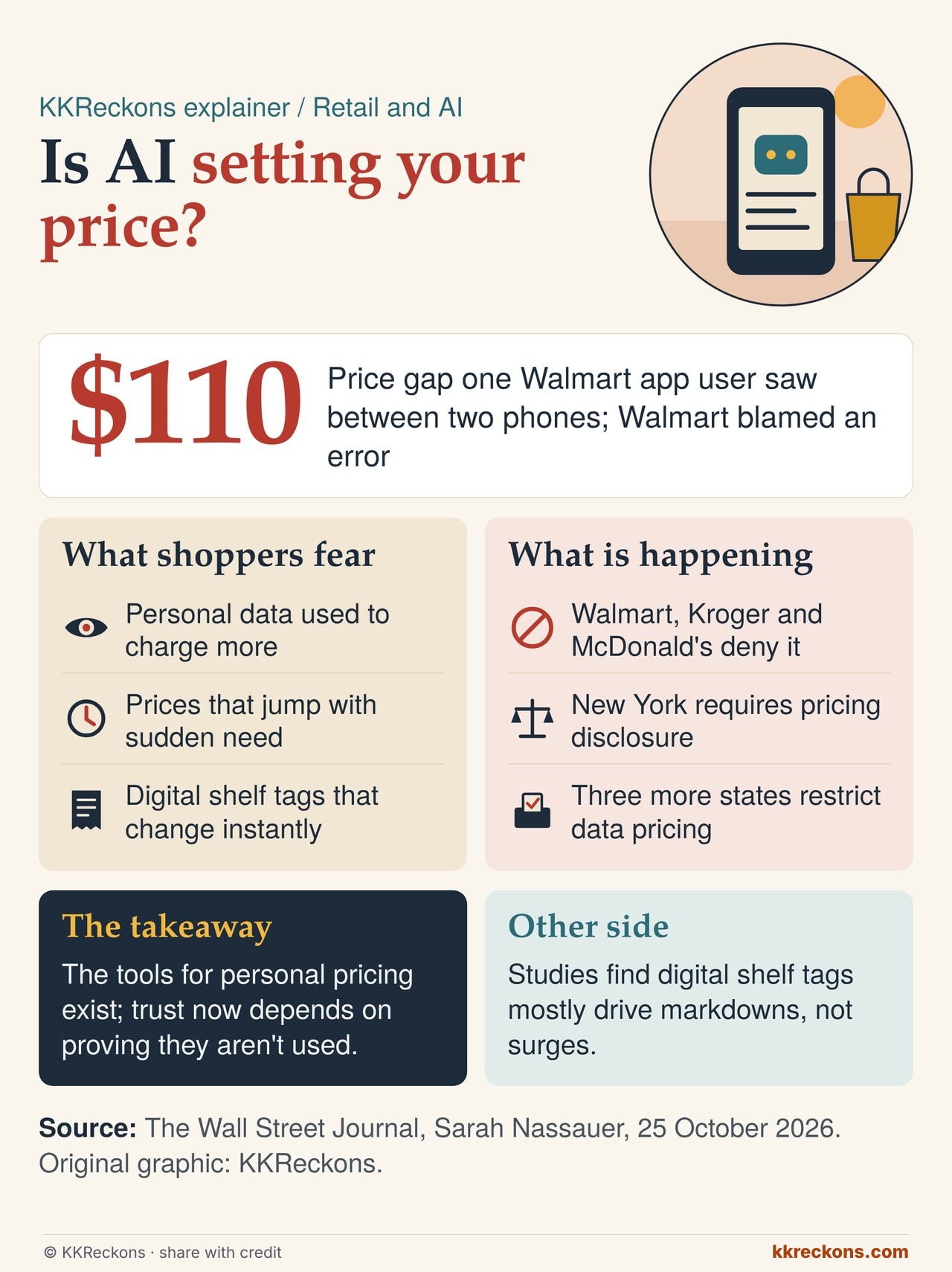
- American shoppers increasingly believe stores, restaurants and ride-hailing apps use AI and personal data to charge them more, the WSJ reports. One Walmart app user saw a hard drive listed $110 cheaper on his wife's phone; Walmart blamed a since-fixed error.
- Walmart, Kroger and McDonald's deny pricing by who is buying. Walmart's chief executive wrote: "We price the product, not the person."
- Lawmakers are moving anyway. New York requires disclosure of algorithmic pricing, Maryland, Connecticut and New Jersey restrict data-driven pricing, and the FTC has proposed penalising deceptive personalised prices.
- $110
- Price gap between two phones
Why it matters Pricing runs on trust. Even if no retailer is doing it, the patents, data and digital shelf tags make it possible, and shoppers squeezed by inflation are ready to assume the worst.
Other side Studies of digital shelf labels in the US and Europe find they mostly enable markdowns on food near expiry, not surge pricing. Colorado's governor vetoed a ban because it would also have outlawed targeted discounts.