France's 10-year bond yield tops 5% as investors weigh euro contagion (opens the source in a new tab)
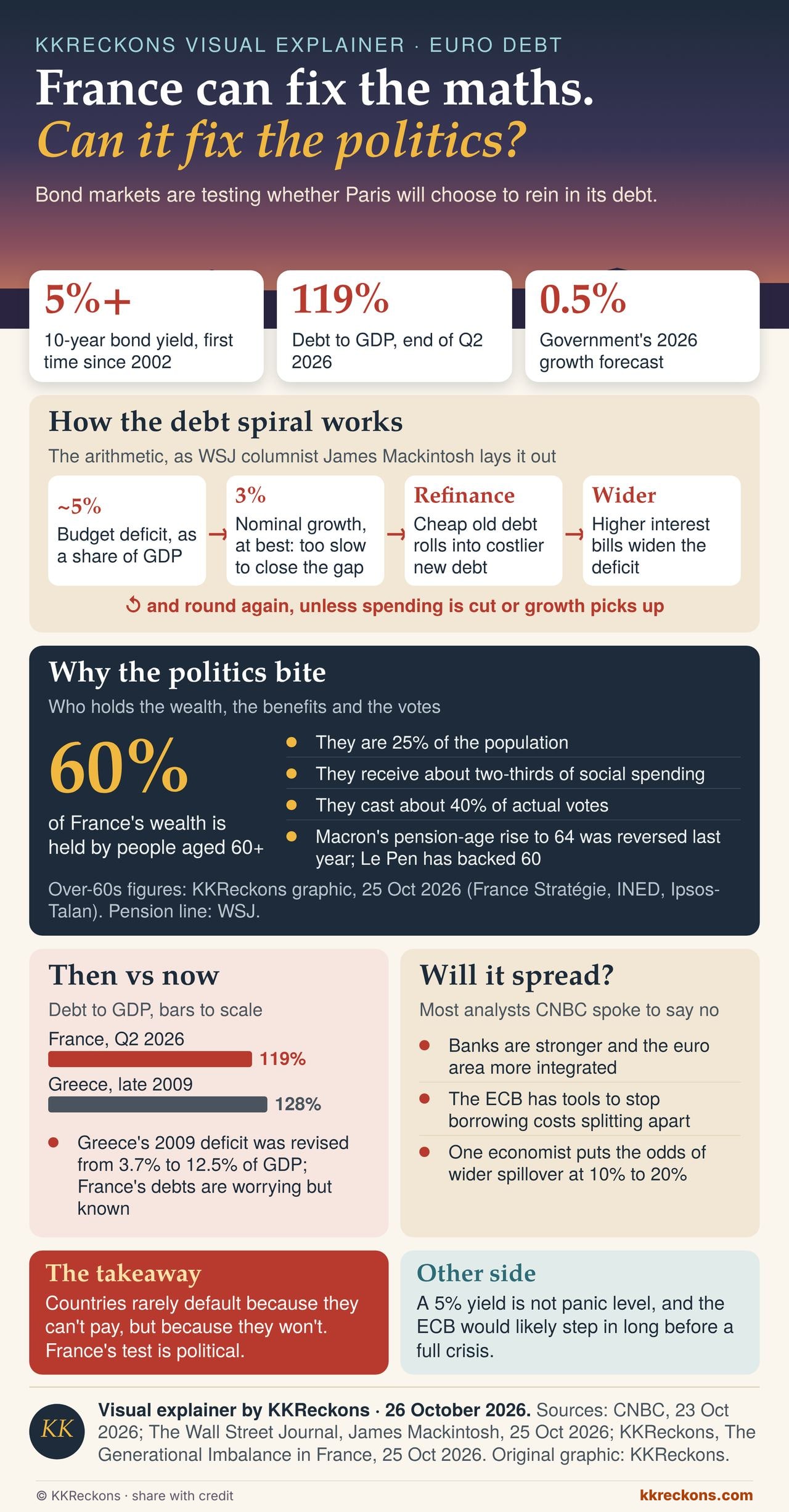
- France's Bond yield The annual return a bond pays at today's price; rising yields mean borrowing is getting dearer. rose above 5% for the first time since 2002, CNBC reports, and its premium over Germany is the widest since the euro crisis. The euro is down almost 5% against the dollar this year, and 2026 growth is forecast at 0.5%.
- A WSJ column by James Mackintosh calls France the weakest link in a world of higher rates: a deficit near 5% of GDP against nominal growth of 3% at best, taxes already near their limit, and voters refusing cuts.
- Most analysts CNBC spoke to see contagion as limited: stronger banks, ECB tools and trusted statistics, unlike Greece in 2009.
- 5%+
- 10-year yield, first since 2002
- 119%
- Debt to GDP, Q2 2026
- 0.5%
- 2026 growth forecast
Why it matters This is a political crisis in a bond-market costume. The maths is fixable; the politics is not, because the older voters who hold most of the wealth and turn out most also defend the pensions that make the sums hard.
Other side A 5% yield is not panic territory, and the ECB would likely step in long before Italy-style spreads. If a credible spending plan emerges after the next election, today's sell-off could look like a buying opportunity.