Rockets rise, wires lag, desks empty, streets burn. All want the upside. Few survive it.
Grids, guards and ratings must hold. So must jobs and living costs: UK back offices are shedding staff, and French protests turned violent over prices.
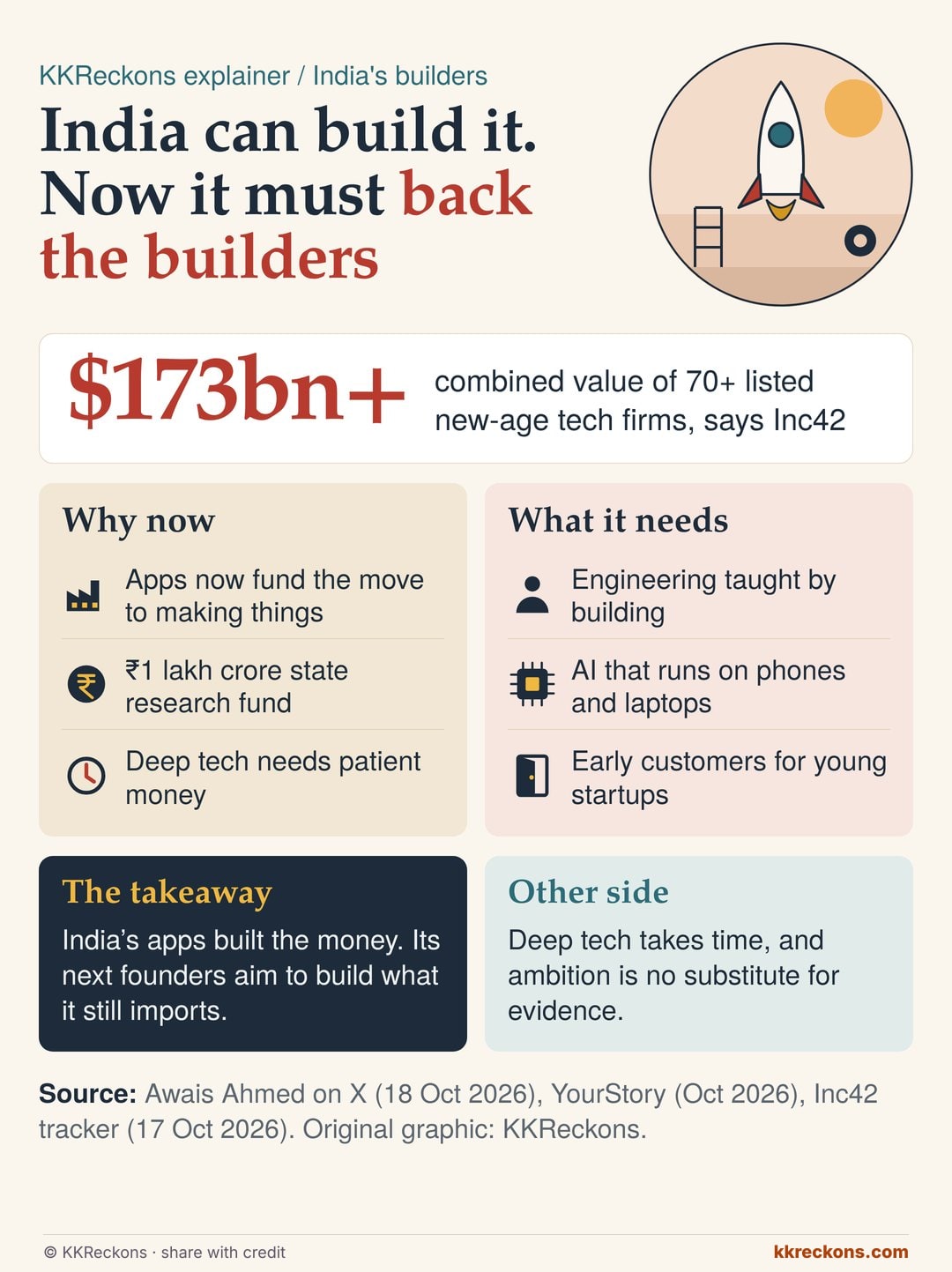
Pixxel founder Awais Ahmed argues India must build rockets, chips and materials as well as apps, noting China’s share of world manufacturing rose from under 3% in 1990 to 32%.
He points to the government’s ₹1 lakh crore research fund, whose first 19 managers have ₹7,131 crore committed. YourStory reports Prof. Ashok Jhunjhunwala telling TechSparks that India can develop any technology and should back young risk-takers.
Inc42’s tracker says over 70 new-age tech companies are now listed, worth over $173bn combined, and over 60 are profitable.
$173bn+
combined value of listed new-age tech
70+
tech firms already listed
₹1L cr
government research fund
Why it matters Consumer apps made India’s startups rich; the next test is whether that money and patience flow into the physical things India still imports.
Other side Ahmed himself says deep-tech founders must meet rigorous standards, because patience is no licence for endless experimenting. Will results arrive as fast as the optimism?
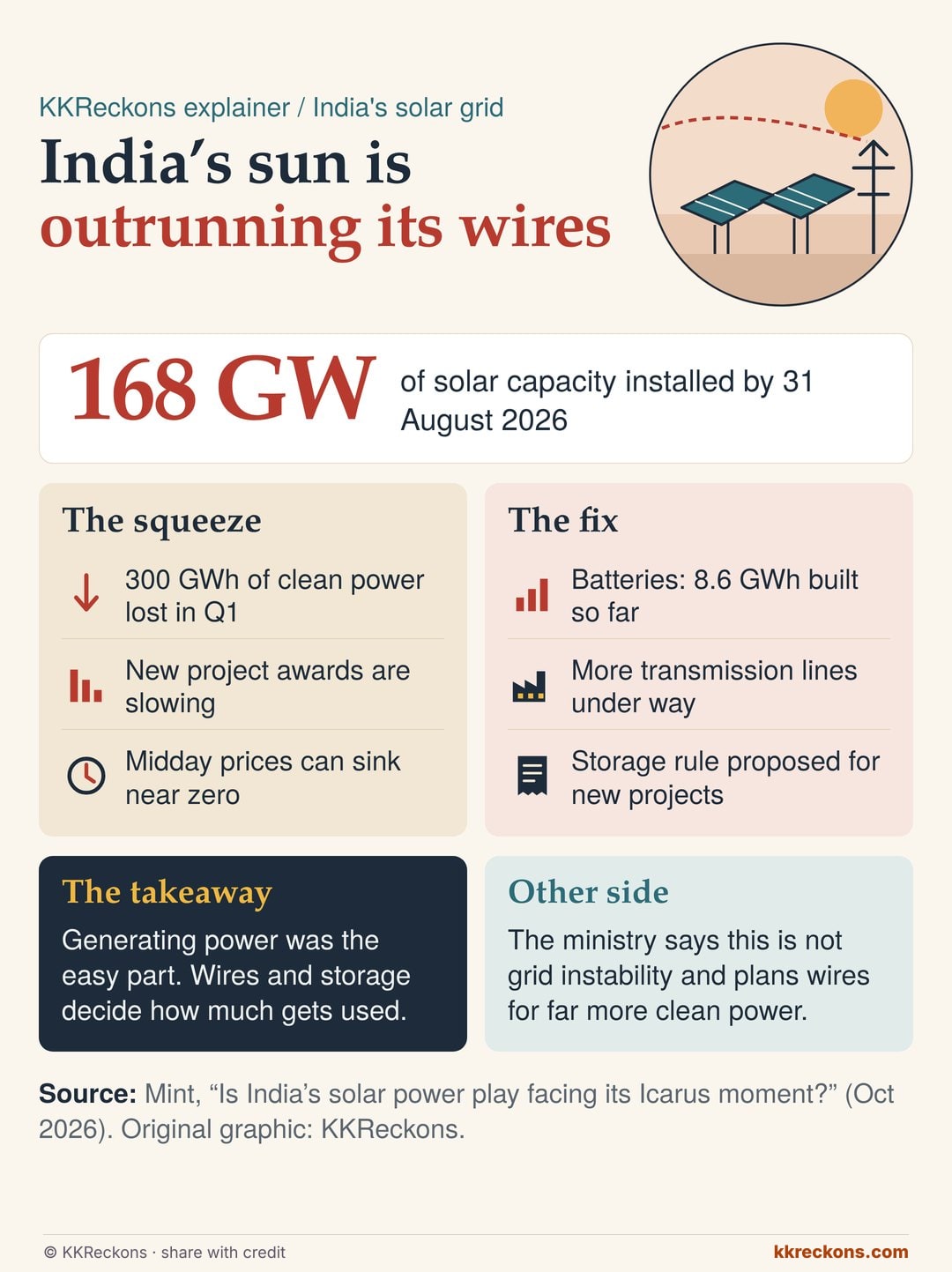
Mint reports India reached 168.04GW of solar capacity by 31 August, but transmission lines and storage are struggling to carry and save the power.
Ember estimates 300 GWh of clean electricity was lost to transmission limits in the first quarter of 2026, and new renewable awards fell to 14.7GW in FY26 from 40.6GW a year earlier.
India has 8.6GWh of battery storage against a projected need of 236GWh by 2032; a proposed rule would require storage on new solar and wind projects from July 2027.
168GW
solar capacity, 31 Aug
300 GWh
clean power lost, Q1
8.6GWh
battery storage vs 236GWh need
Why it matters Cheap sunshine only helps if it can reach users in the evening; wires and batteries now decide how much of India’s solar boom is actually used.
Other side One industry chief says the stress should not be called grid instability, and the ministry says it is expanding transmission and storage. Can the build-out keep pace with the sun?
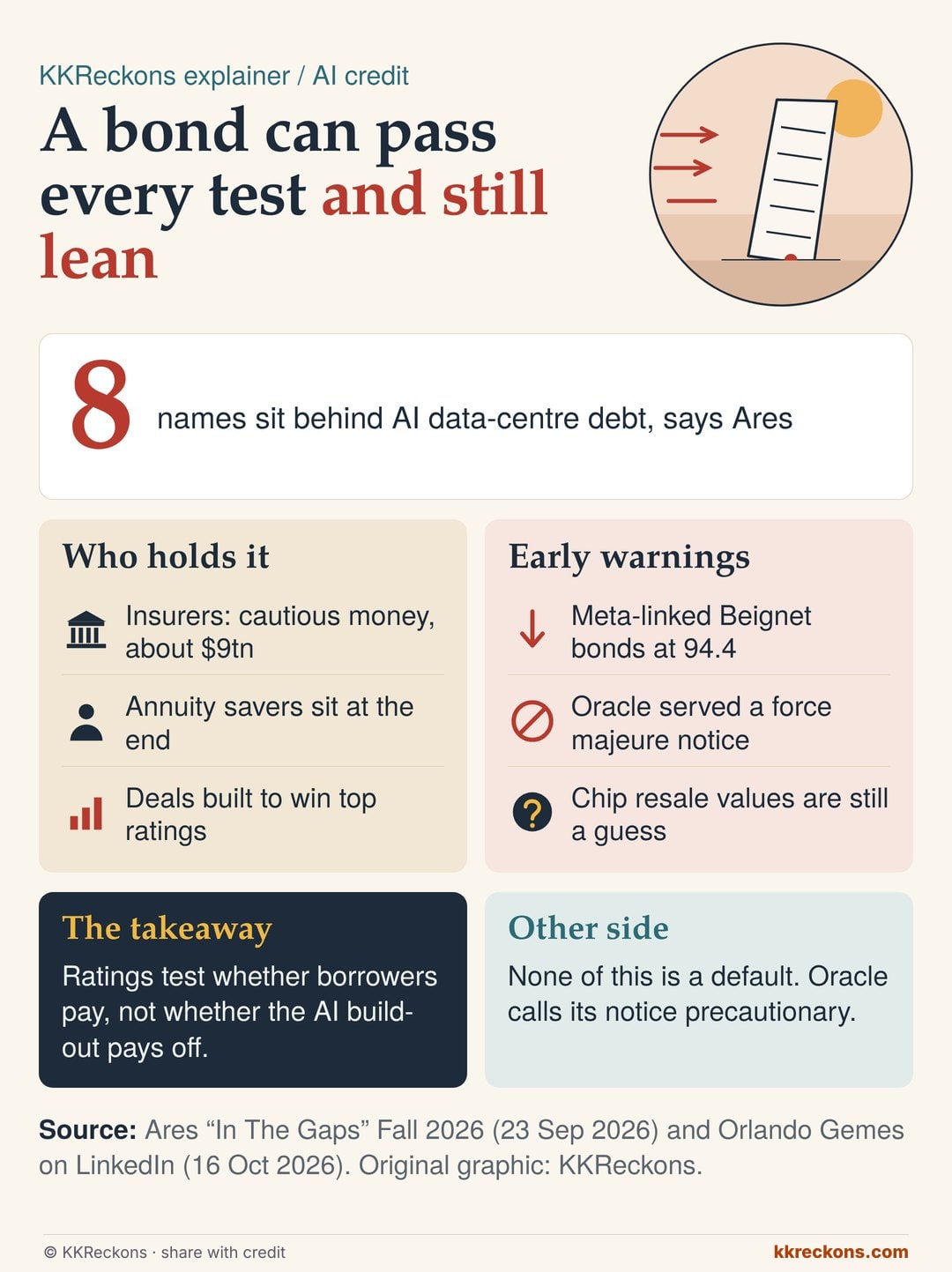
Ares’ Fall 2026 ‘In The Gaps’ says insurers, long the market’s most cautious investors, now hold venture-style risk packaged as investment-grade bonds funding the AI build-out.
Ares traced 100+ financings back to eight names, from Meta and Oracle to OpenAI and Anthropic, and notes chip resale values are assumed anywhere from 10% to 60%.
Orlando Gemes’ LinkedIn summary adds early warnings: Meta-linked Beignet bonds hit a record low near 94.4, and Oracle sent a force majeure notice on its Project Jupiter campus.
100+
financings Ares traced
8
names behind them all
94.4
Beignet bond price, record low
Why it matters A bond can pass every rating test and still fail a load nobody tested, and the insurers holding it are the ones backing retirees’ annuities.
Other side Gemes says none of this is a default yet, Oracle calls its notice precautionary and Blue Owl says its commitments are unchanged. Is this a structural flaw, or partly just rates?
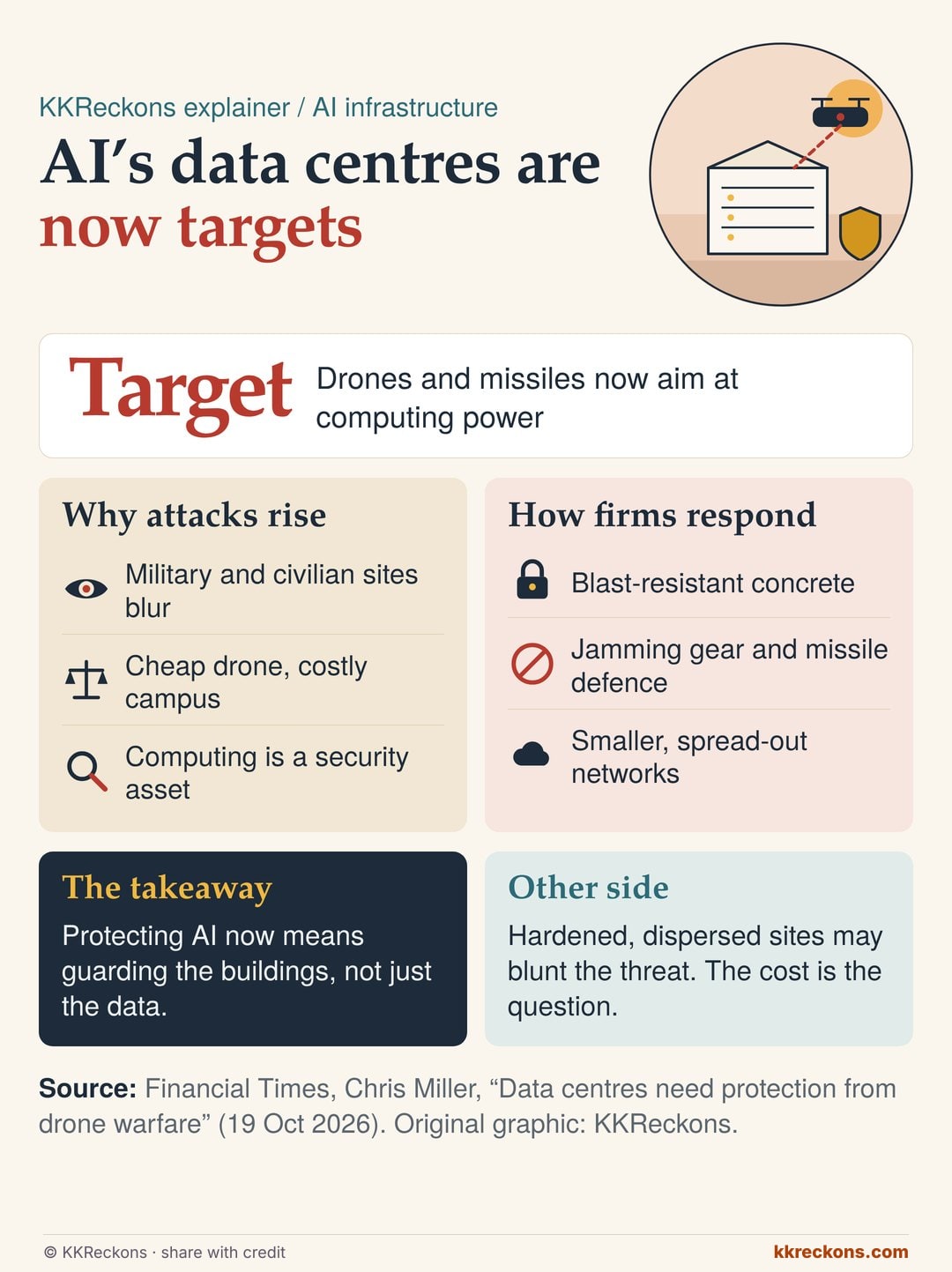
Miller notes Ukraine has damaged a Yandex data centre in Russia, while Iran has hit facilities in Bahrain and the UAE, including ones run by US cloud firms.
Attacks are rising because military and civilian sites blur, campuses are growing costlier and a cheap drone can cause huge disruption.
The UAE is reworking its plans into a network of smaller sites, and designs may add blast-resistant concrete, jamming gear and missile defence.
Why it matters AI’s physical footprint is now a target, which raises the cost and risk for anyone planning sovereign AI.
Other side Hardened, dispersed and underground sites may blunt the threat. The real question is how much they add to the cost, not whether building continues.
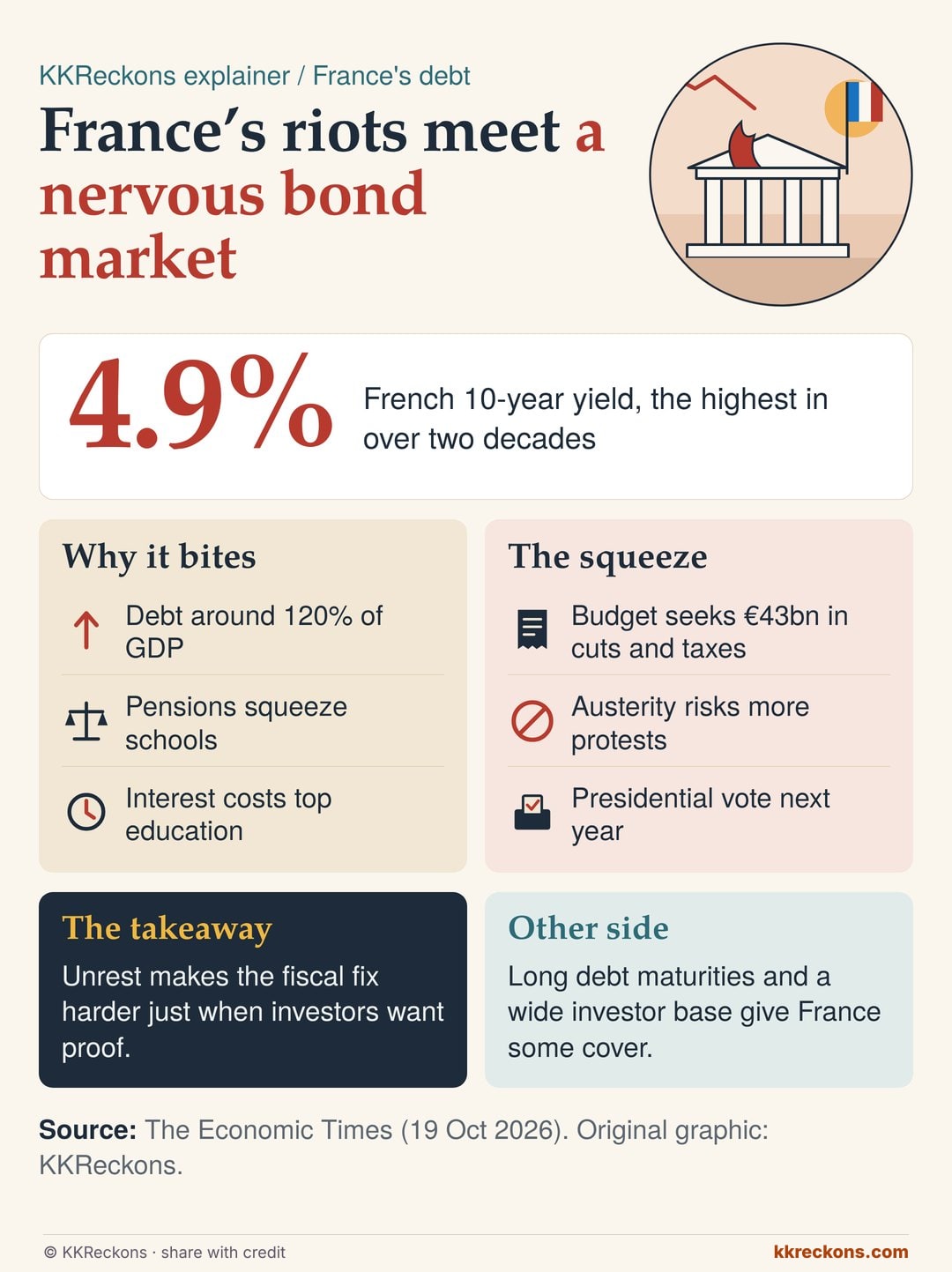
The Economic Times says France’s debt is about €3.5tn, close to 120% of GDP, and its Bond yield The annual return a bond pays at today's price; rising yields mean borrowing is getting dearer. near 4.9% is the highest in over two decades, about 140 Basis point One hundredth of a percentage point: 100 basis points = 1%. above Germany’s.
The 2027 budget seeks €43bn in cuts and tax rises, while interest payments are projected at €91.2bn, more than education or defence.
Pension costs take 32% of the education ministry’s budget, so protests over schools collide with the need for austerity.
4.9%
French 10-year yield
~140bp
gap over Germany
Why it matters A state that cannot fund the services people want ends up paying more to borrow, which squeezes those services further.
Other side The piece notes France is not facing automatic default: long debt maturities and a diversified investor base give some cover, and the IMF calls the rise manageable for now.
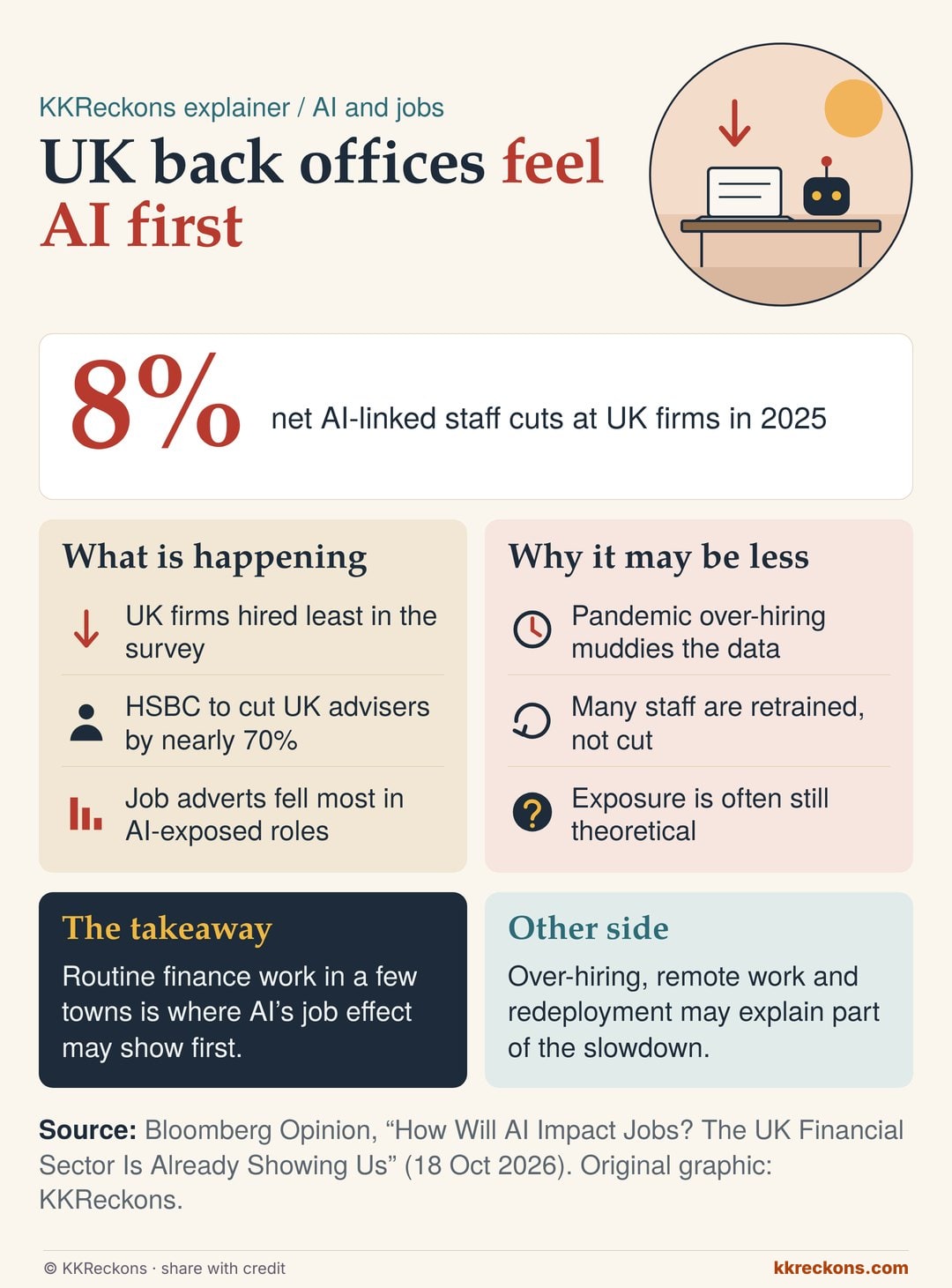
The column says UK firms reported net staff cuts of about 8% due to AI in 2025, double the average in four other rich economies, with the lowest hiring rate in the survey.
Job adverts have fallen most in roles exposed to AI, such as accountants, analysts and finance back-office work, and HSBC plans to cut UK advisers by nearly 70%.
Towns such as Swindon and Bournemouth, home to bank and insurer back offices, could feel it first.
8%
net AI staff cuts, UK firms 2025
~70%
HSBC UK adviser cut planned
Why it matters Back-office finance work is routine and easy to track, and it is concentrated in a few towns, so it is where AI’s job effect may show first.
Other side Pandemic over-hiring and remote work may explain part of the slowdown, firms retrain more staff than they cut, and AI exposure is often still theoretical.