Waist size beats BMI at predicting death risk, Nature study finds (opens the source in a new tab)
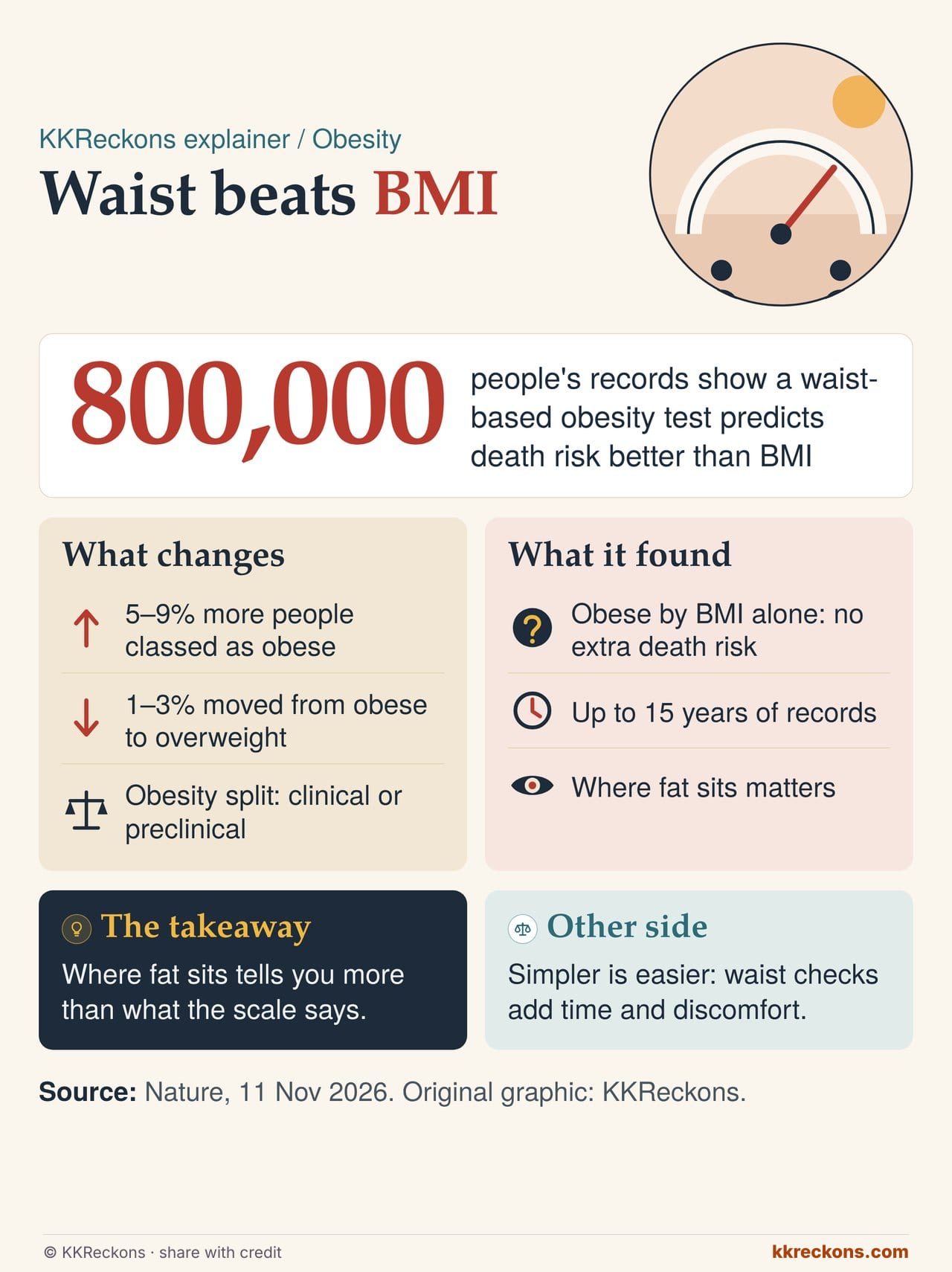
- A study in Nature, using records of more than 800,000 people in China, Spain, the UK and the US, found that an obesity definition adding waist size and other body-fat measures to BMI predicts death risk better than BMI alone.
- The new test classed an extra 5–9% of people as obese whom BMI calls merely overweight, and moved 1–3% the other way. Those flagged obese by BMI alone had no extra risk of death.
- It splits obesity into 'clinical', with at least one of 18 linked illnesses such as heart failure, and 'preclinical'. One critic warns waist checks may make routine visits harder for patients.
- 5–9%
- more people classed as obese
Why it matters BMI cut-offs decide who gets treatment, and the study's lead author says sicker patients were denied surgery for missing the threshold. A test that tracks real risk could steer care to the people who need it.
Other side BMI's strength is its simplicity: a scale and a height are enough. More measurements mean more time and discomfort in a routine visit, and records-based studies show who is at risk, not yet whether changing the definition improves outcomes.
Source:Nature (free to read) ↗