Biomedical engineering is booming, but can health care keep up? (opens the source in a new tab)
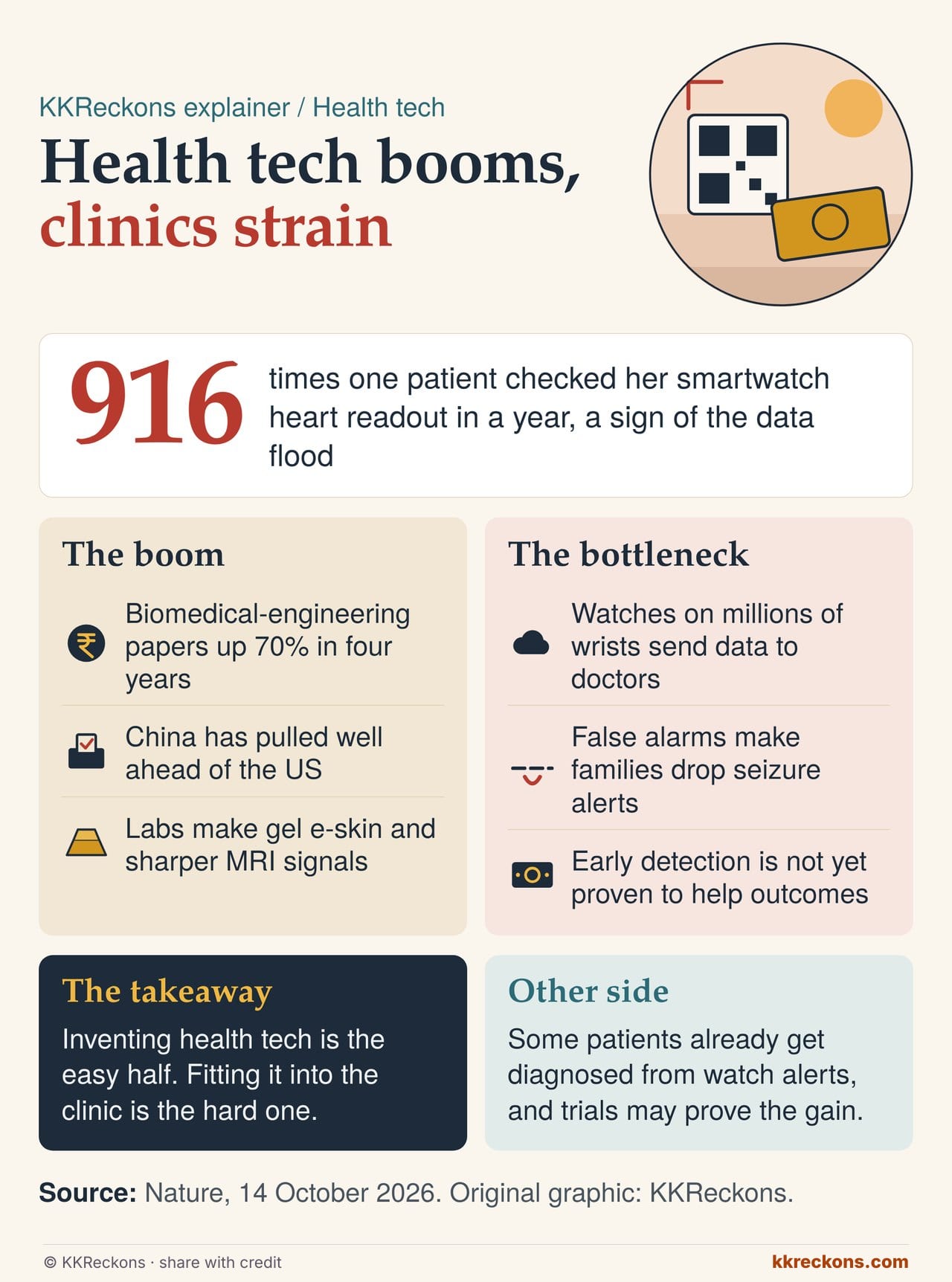
- A Nature editorial says biomedical-engineering papers in the Nature Index grew 70% from 2021 to 2025, with China now well ahead of the US. Its worry: whether the surge reaches patients.
- A Nature feature shows the strain. Smartwatches worn by hundreds of millions pour heart, sleep and stress data on doctors; one patient checked her watch's ECG 916 times in a year. Trials test watch alerts to take blood thinners only when needed, but false alarms put families off seizure alerts.
- Nature also profiles researchers such as Xinyu Dong, who makes tough hydrogel e-skin, and James Eills, who sharpens MRI signals.
Why it matters The hard part of health tech is shifting from invention to absorption. Without standards and clear roles, clinics risk drowning in readings that no one has time to judge, and the promise of cheap, constant monitoring goes unused.
Other side A data flood is also an early-warning system: some patients already get diagnosed from watch alerts, and AI triage could sort the noise. Past lab advances such as hydrogels and MRI did become routine care; this wave may simply need time.
Also read: Hydrogels and MRI: meet three biomedical engineers reshaping health care