A psychotherapist's guide to staying calm with the people you love (opens the source in a new tab)
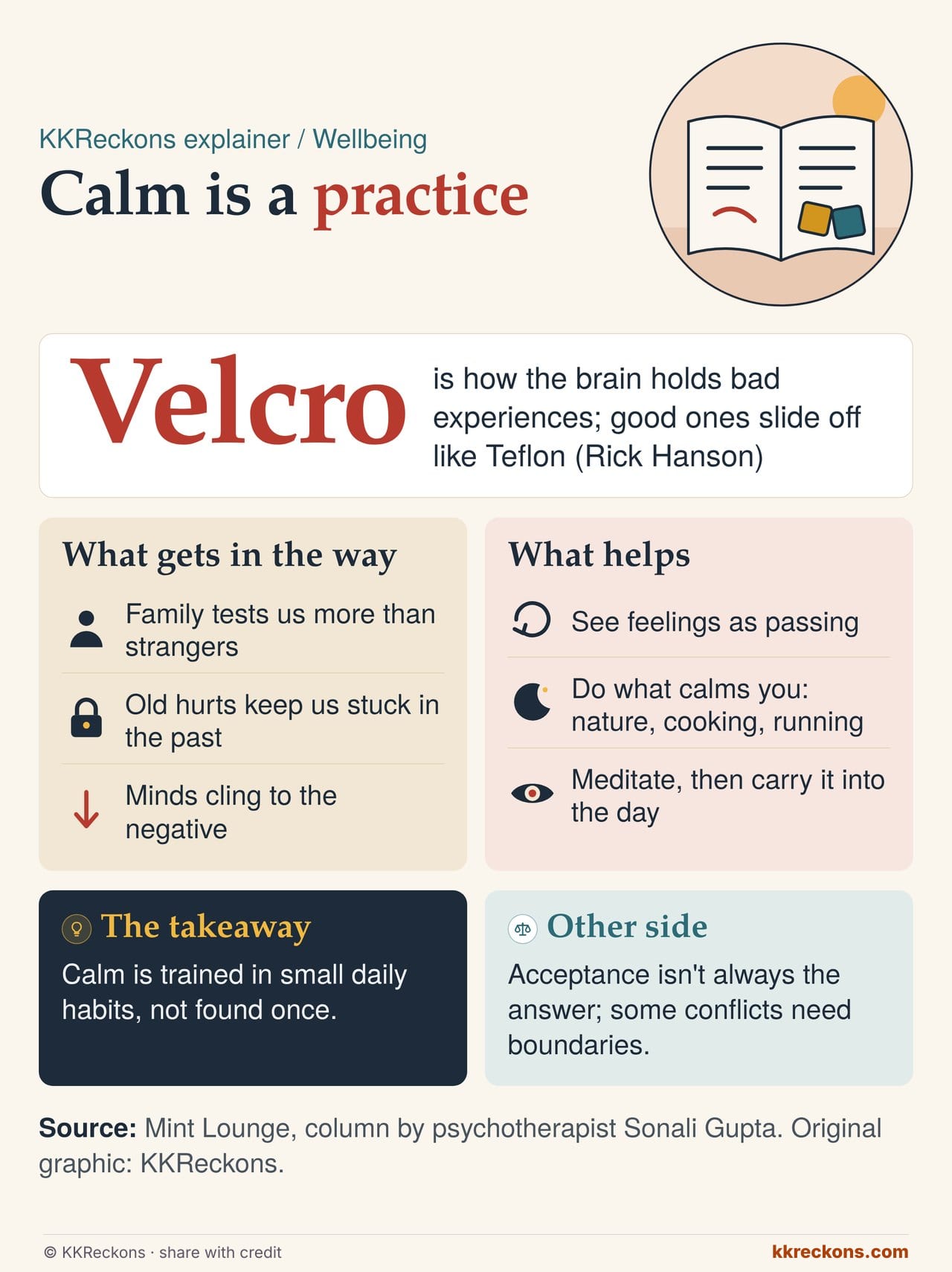
- Mumbai psychotherapist Sonali Gupta, drawing on time at monasteries, writes in Mint Lounge that equanimity is a lifelong practice: easiest with strangers, hardest with family.
- She cites psychologist Rick Hanson: the brain grips bad experiences like Velcro and lets good ones slide off like Teflon. Seeing feelings as impermanent loosens that grip.
- Her tools: notice what calms you, such as nature, cooking, knitting or running, and practise meditation, then carry that steadiness into everyday life.
Why it matters Calm is often treated as a personality trait. Framing it as a skill built through small daily habits makes it something anyone can work on, especially when the hardest tests come from the people closest to us.
Other side Equanimity can slide into detachment, and some family conflicts call for boundaries or change rather than acceptance. Meditation and hobbies also help less when stress has practical causes that need fixing.
Source:Mint (free to read) ↗