How Gemini helped a WSJ writer get an endometriosis diagnosis (opens the source in a new tab)
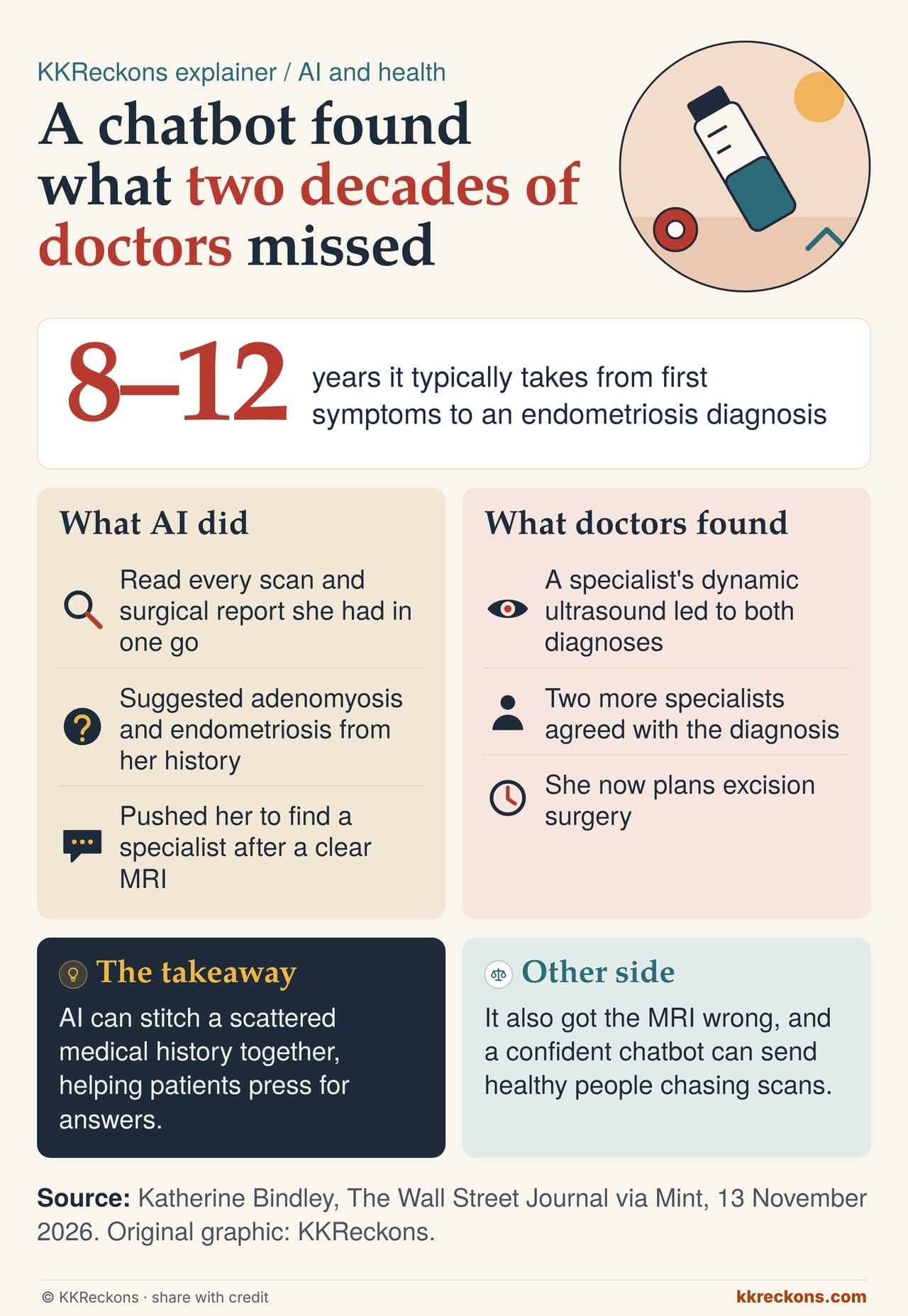
- WSJ writer Katherine Bindley spent two decades with pain episodes, ER visits and negative tests. When she gave Google's Gemini her history, it said she likely had adenomyosis and endometriosis, which earlier scans and surgery had not found.
- An MRI showed no sign of endometriosis, but a specialist's dynamic ultrasound led to both diagnoses, and two more specialists agreed. The disease typically takes eight to 12 years to diagnose. She now plans excision surgery.
- Harvard's Isaac Kohane warns that AI can be wrong and stir anxiety, yet urges patients to use it to prepare for appointments.
Why it matters Doctors see one visit at a time; AI can read a whole scattered history at once. That matters most in women's health, where pain is often waved off as bad periods.
Other side This is one patient's story, and Gemini also got the MRI wrong. Chatbots tend to tell users what they want to hear: for each missed diagnosis they catch, how many healthy people do they send chasing scans and surgery?