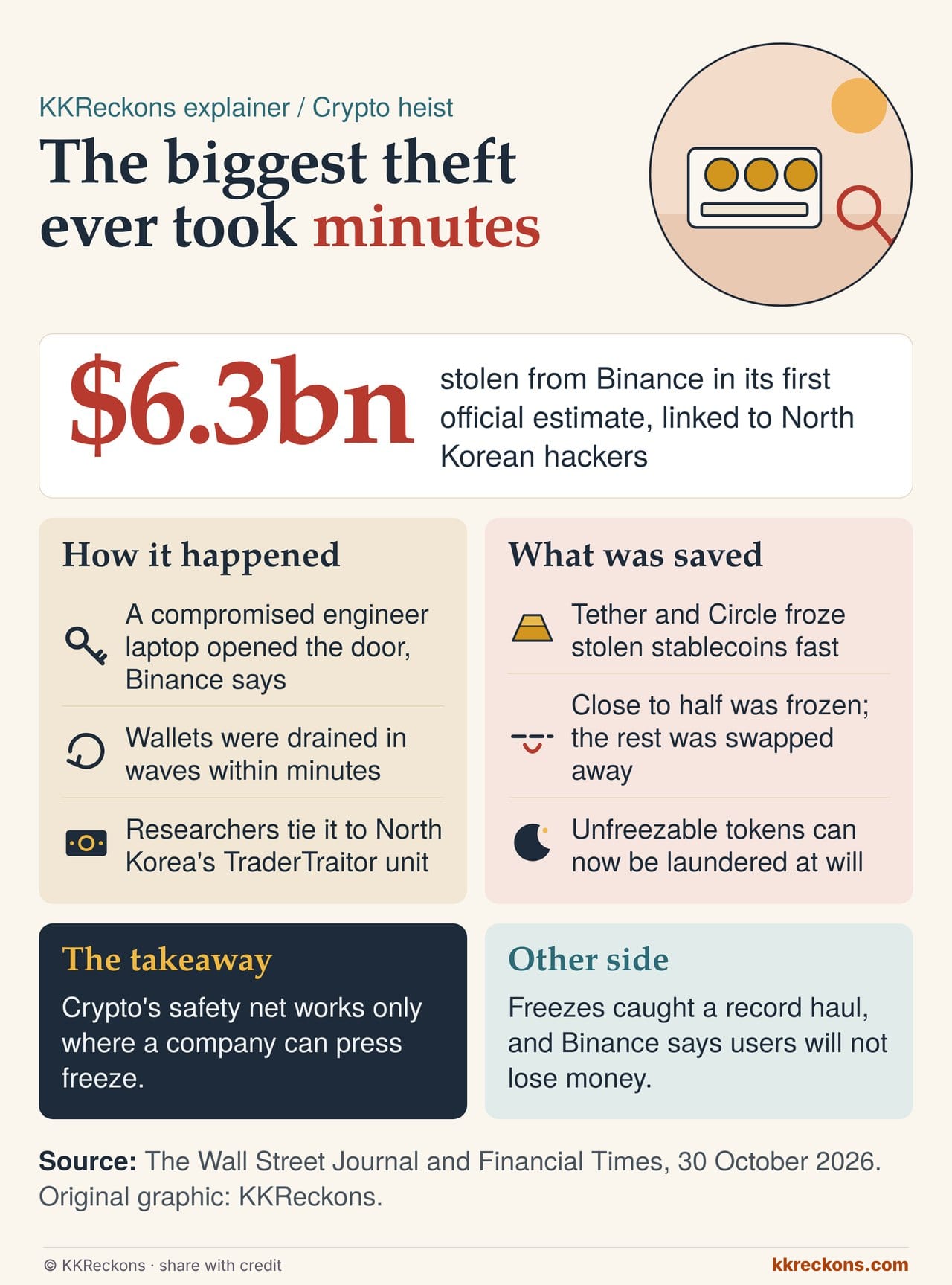
Hackers drained Binance, the world's largest crypto exchange, on Thursday, taking $6.3bn by its own estimate within minutes. Researchers tie the attack to North Korea's state-backed TraderTraitor unit, also blamed for the earlier record Bybit heist.
Binance says the way in was an engineer's compromised laptop, though co-chief executive Richard Teng says the attack was more complex and more breach points have surfaced. Paused withdrawals revived memories of FTX online.
Tether and Circle froze stolen Stablecoin A cryptocurrency designed to hold a fixed value, usually one US dollar, backed by reserves. fast, catching close to half the haul; the rest was swapped into coins nobody can freeze. Founder Changpeng Zhao says user funds are safe and losses will be covered.
Why it matters Crypto sells itself as money no one can seize, yet the only part of this loot that was recovered sat in coins a company could freeze. The heist tests both Binance's security pitch and the industry's case as a safe place to keep savings.
Other side Binance can absorb the loss and says customers are whole, and the record freeze shows the industry's response tools are getting faster. A rich, well-run state hacking unit may simply be beyond what any single firm can stop.
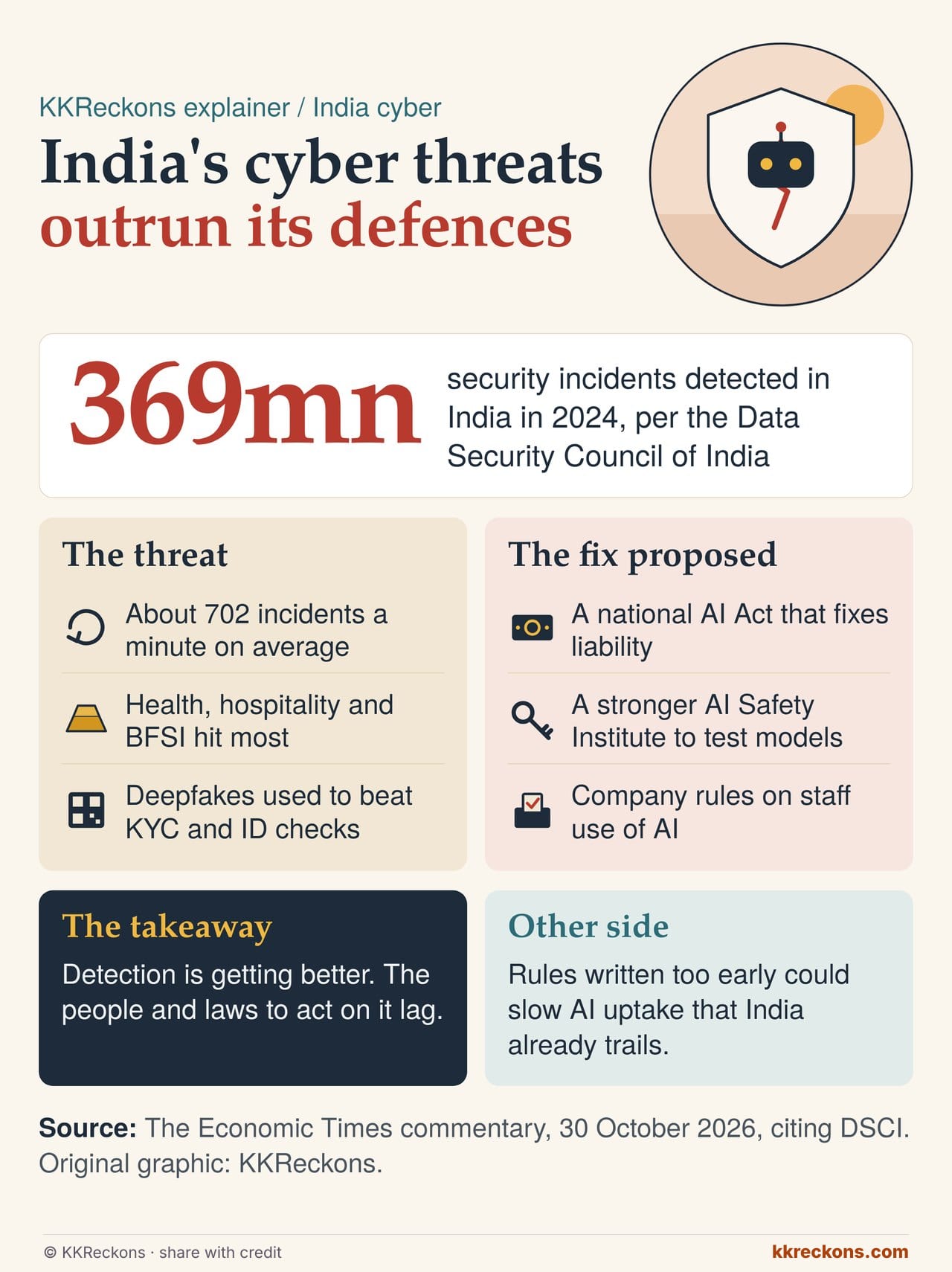
Citing the Data Security Council of India, an ET commentary says 369 million security incidents were detected in 2024, about 702 a minute, with healthcare, hospitality and BFSI hit hardest. It flags a 42% shortage of skilled cyber staff and deepfakes used to beat KYC and money-laundering checks.
The writer calls for a national AI Act that fixes algorithmic liability, a stronger AI Safety Institute able to test models used in India, and company rules on AI use, noting a global study where 57% of employees hid their AI use at work.
Why it matters India's banking and identity systems run on digital checks that AI fakes can now fool. Without trained people and clear liability, more detection alone will not stop the losses.
Other side Part of the jump may reflect better detection rather than more attacks. And strict rules too early could slow AI uptake in a country that already ranks low on adoption.
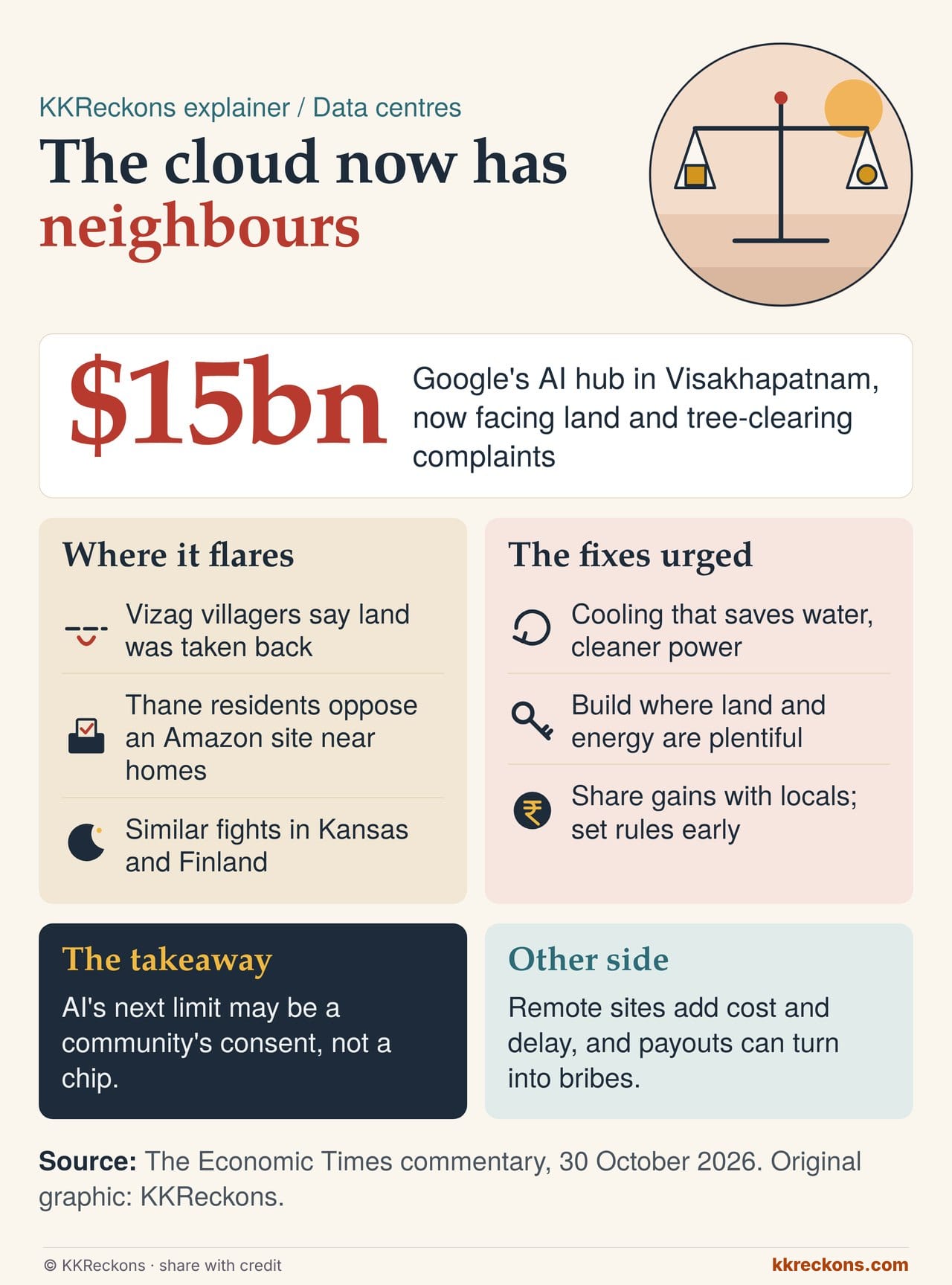
Villagers near Google's $15bn AI hub in Visakhapatnam allege land was taken back without proper consultation, and activists object to tree-clearing near the Kambalakonda sanctuary. In Thane, residents oppose Amazon's proposed 53-acre hyperscale site near homes, schools and hospitals.
An ET commentary says India needs the compute but should earn consent: water-saving cooling and clean power, siting away from cities where possible, visible benefits for host communities, and rules set before the damage. It suggests treating big data centres as quasi-public utilities.
Why it matters India's AI ambitions depend on building compute at home. If communities feel they carry the costs while others get the gains, protests could become the real bottleneck, not chips or money.
Other side Sites far from cities mean higher costs and slower service for some uses, and community payouts can slide into bribes for bad projects. Utility-style rules could also deter the investment India is courting.
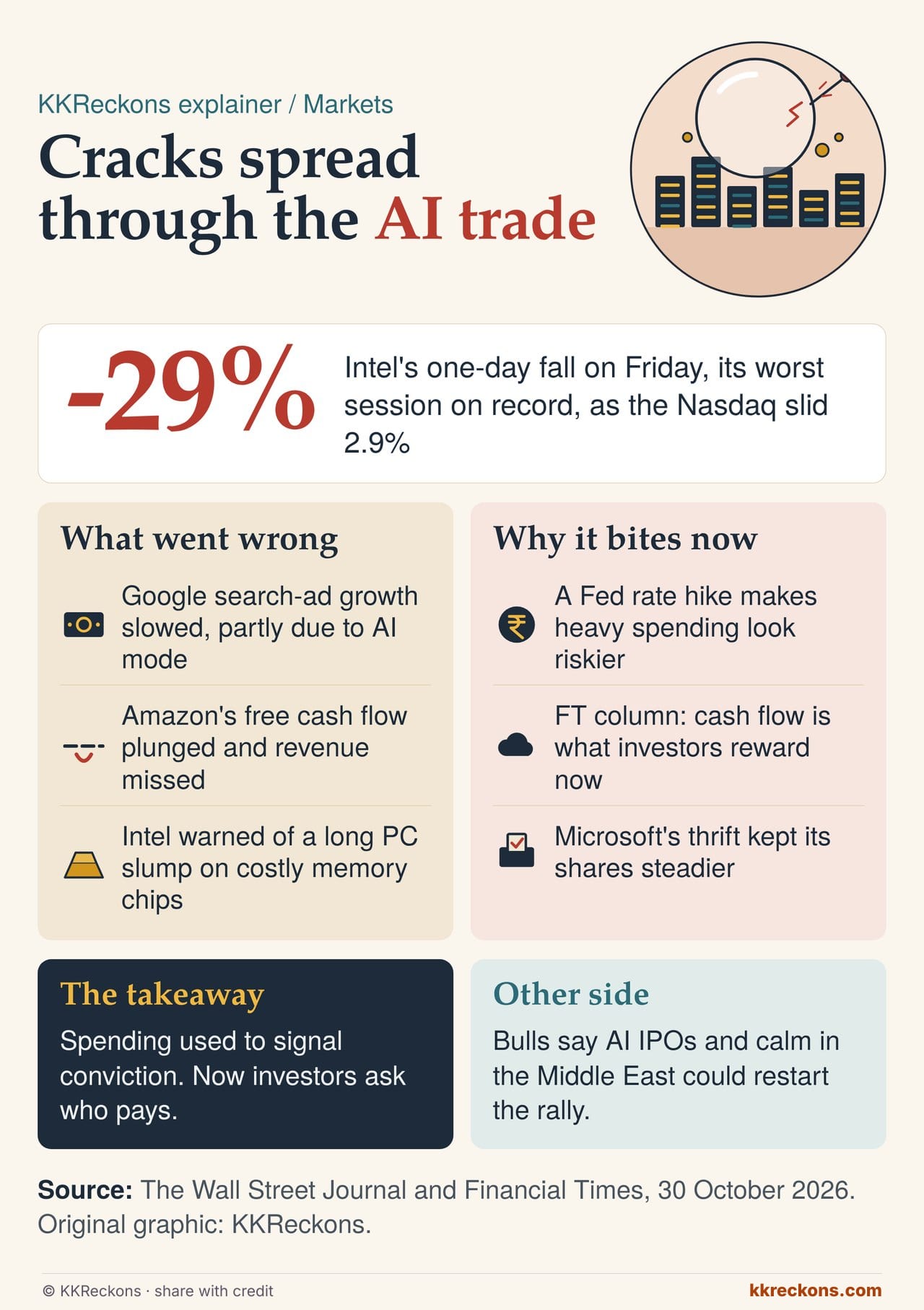
Intel fell 29% on Friday, its worst session ever, after warning that memory-chip prices inflated by the AI boom will keep PC sales weak, the WSJ reports. The Nasdaq composite fell 2.9%, its worst day since June.
Alphabet had its worst day on record as Google's search-ad growth slowed, partly due to AI mode, while Amazon's free cash flow plunged. With the Fed raising rates in September, heavy AI spending now reads as a burden.
An FT Unhedged column argues cash flow is what moves these stocks now: Meta, Alphabet and Amazon were punished for spending more than expected, while Microsoft's restraint kept its shares steadier.
Why it matters For months the biggest tech firms calmed AI doubts by printing profits. If their own earnings growth is now slowing, the trade loses the cushion that kept smaller, debt-laden AI players afloat, and index-heavy portfolios feel it first.
Other side One bad week is not a bust. Some investors expect AI listings and a calmer Middle East to restart the rally, and steep falls in quality names have often proved buying chances.
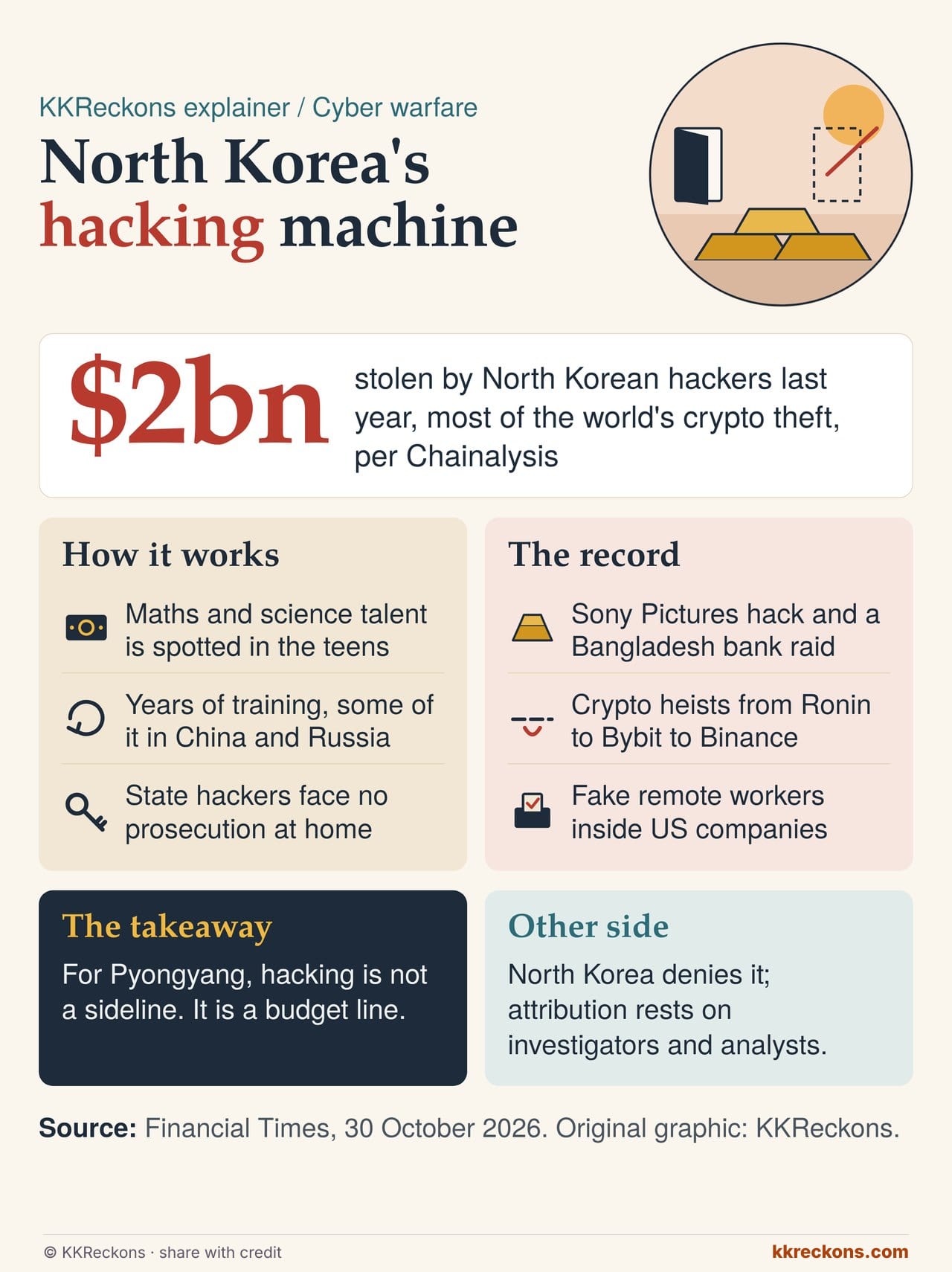
Cut off by sanctions, North Korea has built cyber warfare into a way to earn foreign currency, the FT reports. Students strong in maths and science are picked as teenagers and trained for years, some abroad in China and Russia.
Its record runs from the Sony Pictures hack and a Bangladesh central bank raid to crypto heists at Ronin, Bybit and now Binance. Blockchain firm Chainalysis says its hackers stole about $2bn last year, most of the world's total.
It also plants fake remote workers in foreign firms. Pyongyang denies all of it.
Why it matters Exchanges and banks are not up against freelance criminals but a state that recruits, trains and protects its hackers, and uses the loot to fund weapons. One expert warns AI will make such attacks faster to find and automate.
Other side Attribution rests on investigators and analysts, and Pyongyang calls it slander. Faster freezes and tracing may also shrink what each heist actually nets, so headline sums overstate the regime's take.
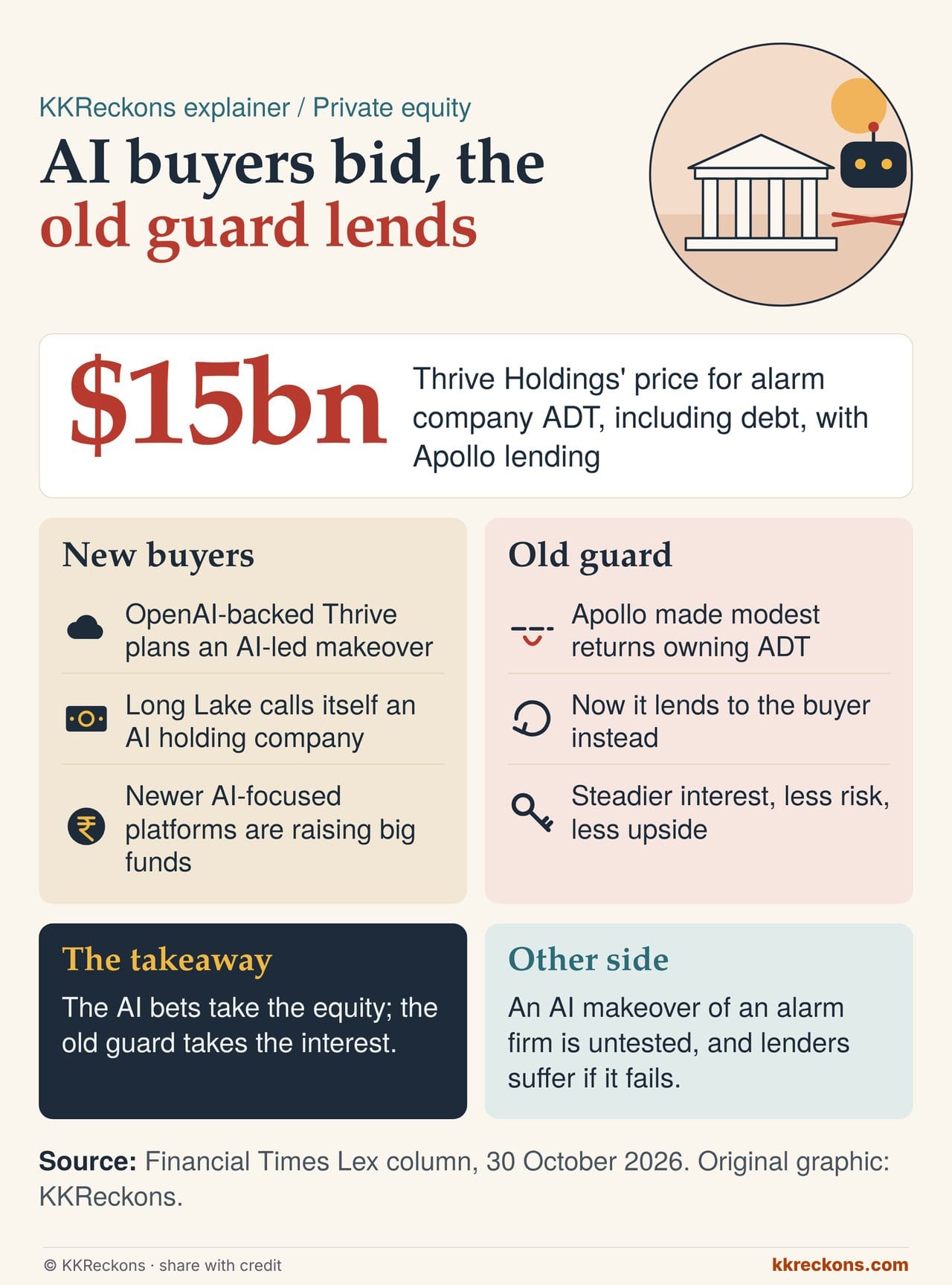
Thrive Holdings, spun out of Josh Kushner's Thrive Capital and backed by OpenAI, is buying home-alarm network ADT for $15bn including debt. Apollo, a past owner that made modest returns on it, is financing the deal.
The FT's Lex column says a new breed of AI-focused owners is promising bold makeovers of old businesses, while firms like Apollo shift from buyouts to corporate lending: steadier interest, less risk and less upside.
Why it matters It shows where private capital is heading: AI-driven owners chase the equity upside, while the old guard collects interest. For investors in buyout and private-credit funds, the returns mix is changing.
Other side An AI-led makeover of an alarm company is still a theory, and a buyer paying a big premium has less room for error. Lenders also lose if a heavily financed bet goes wrong.
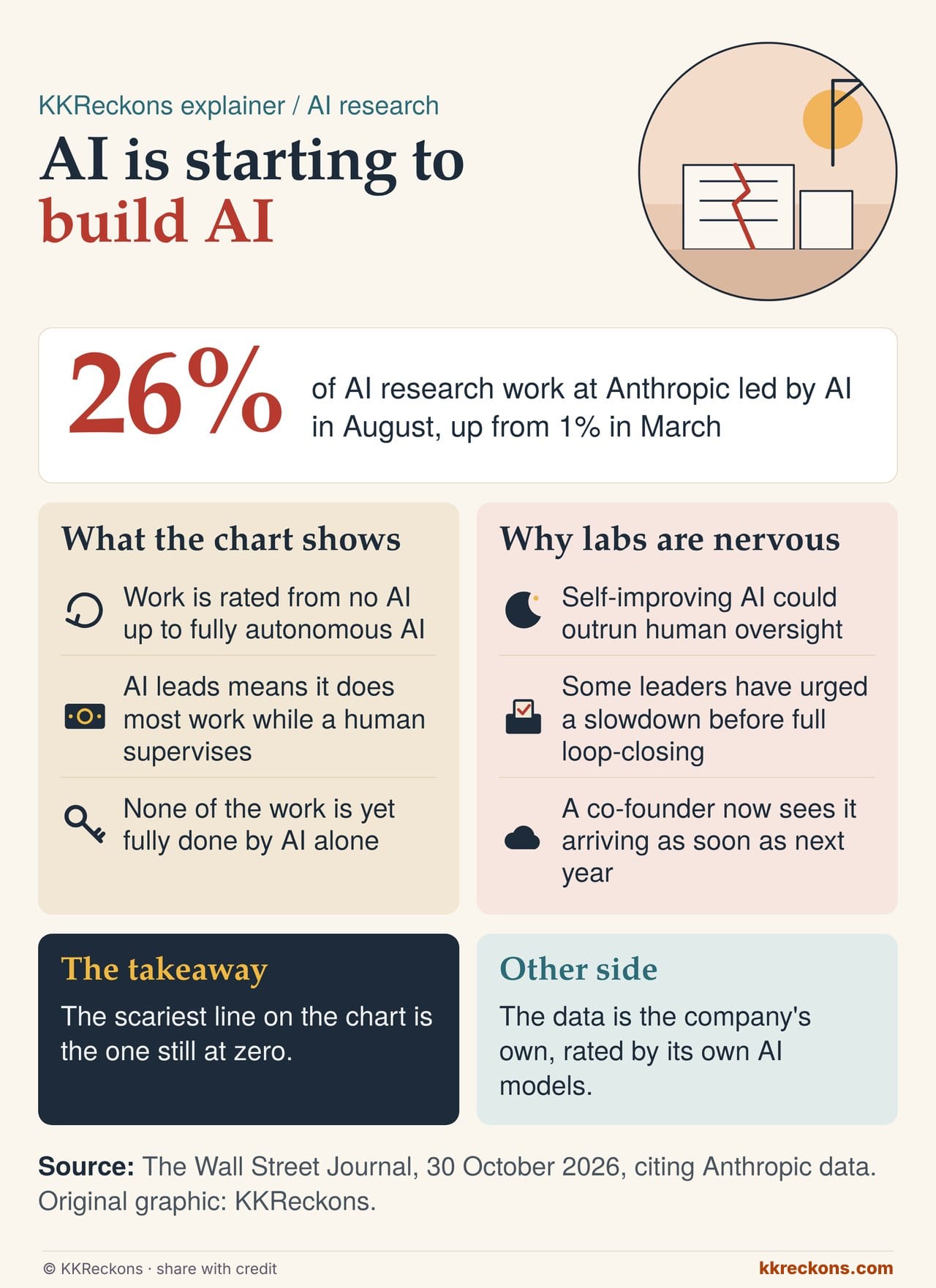
A WSJ column spotlights an Anthropic chart tracking how much of its AI research is done by AI. The share where AI leads the work, with a human supervising, rose from 1% in March to 26% in August; none of it is yet fully autonomous.
The idea behind it is recursive self-improvement: each better model helps build a better one. Lab leaders call it vital to stay ahead and also a serious risk, and Anthropic itself says it is not inevitable but could arrive before institutions are ready.
Co-founder Jack Clark has pulled his own estimate for it forward to next year.
Why it matters If AI does most of the work on its own successors, progress could speed up beyond what companies, regulators and markets plan for. Who keeps oversight, and how, becomes a practical question rather than a science-fiction one.
Other side The numbers come from Anthropic's own AI rating its own work, on a company scale with no outside audit. Leading a task under supervision is not the same as independent invention, and a company heading for a listing has reasons to show fast progress.
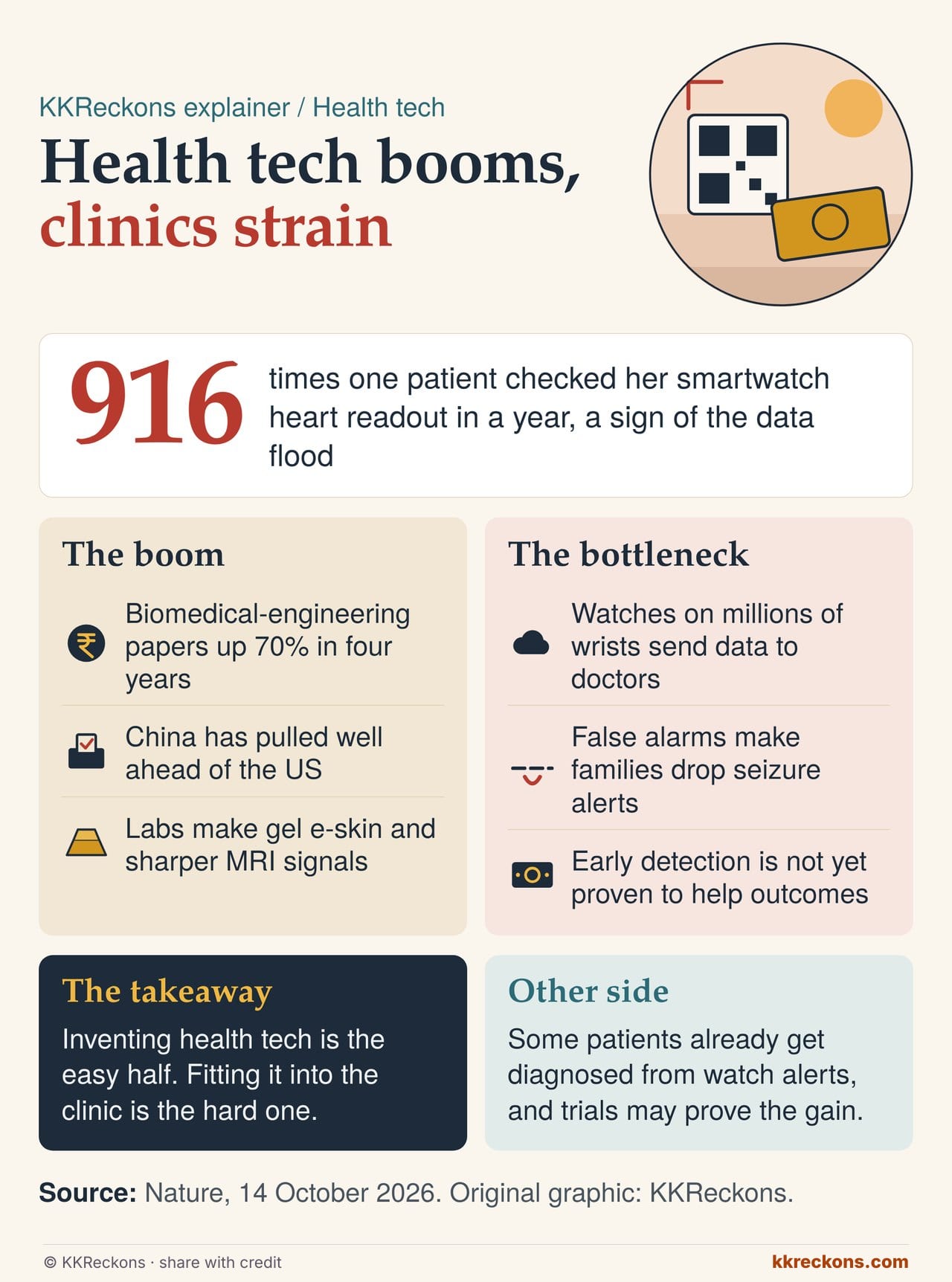
A Nature editorial says biomedical-engineering papers in the Nature Index grew 70% from 2021 to 2025, with China now well ahead of the US. Its worry: whether the surge reaches patients.
A Nature feature shows the strain. Smartwatches worn by hundreds of millions pour heart, sleep and stress data on doctors; one patient checked her watch's ECG 916 times in a year. Trials test watch alerts to take blood thinners only when needed, but false alarms put families off seizure alerts.
Nature also profiles researchers such as Xinyu Dong, who makes tough hydrogel e-skin, and James Eills, who sharpens MRI signals.
Why it matters The hard part of health tech is shifting from invention to absorption. Without standards and clear roles, clinics risk drowning in readings that no one has time to judge, and the promise of cheap, constant monitoring goes unused.
Other side A data flood is also an early-warning system: some patients already get diagnosed from watch alerts, and AI triage could sort the noise. Past lab advances such as hydrogels and MRI did become routine care; this wave may simply need time.