RBI rules turn rupee hedging from a trade into a commitment (opens the source in a new tab)
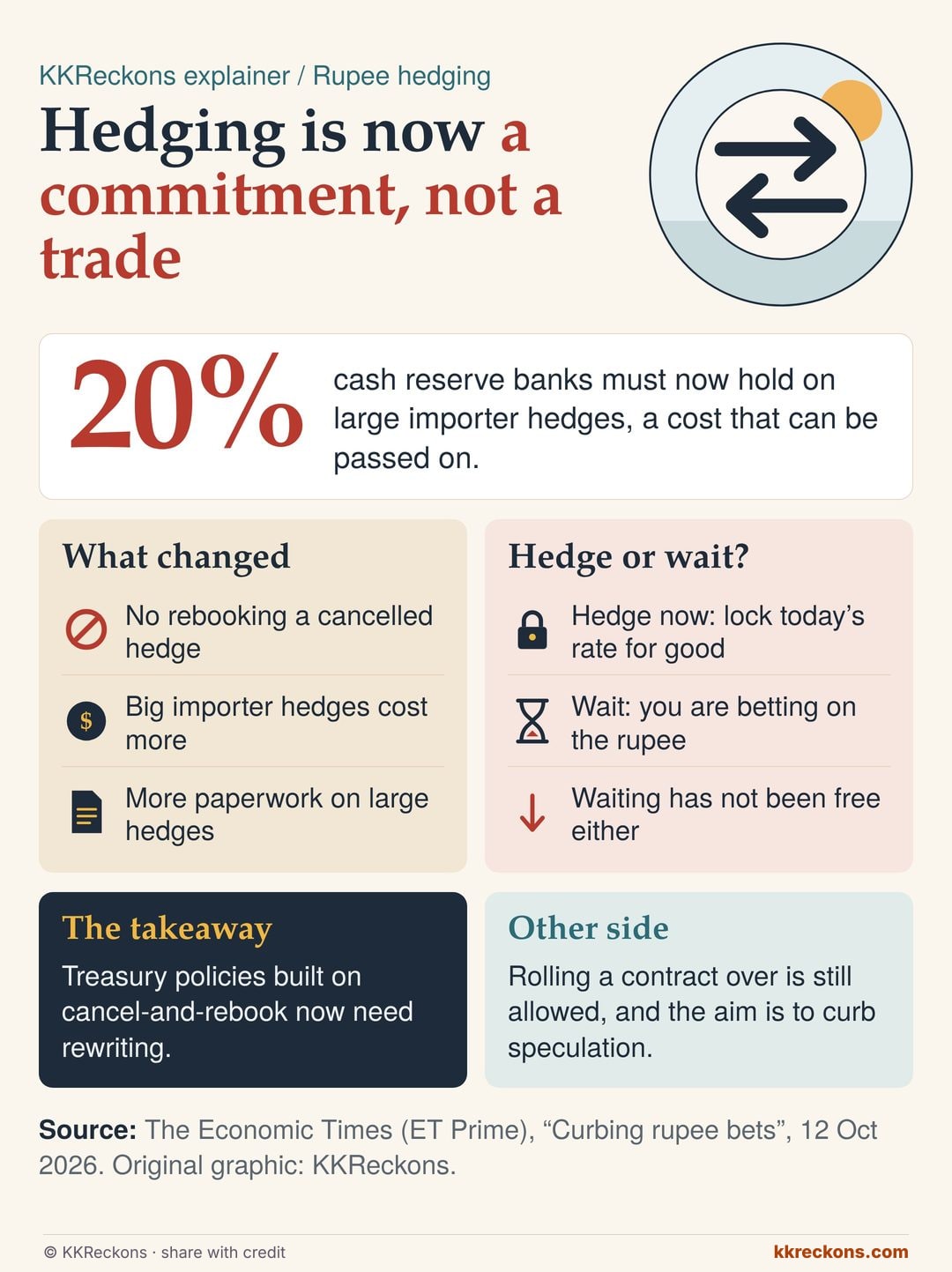
- ET Prime explains what the RBI’s 10 October rules mean for company treasurers. A cancelled forward hedge can no longer be rebooked, so hedging is now a commitment, not a running trade.
- For importers, large hedges cost more because banks must park a 20% cash reserve with the RBI. Bigger hedges also need more paperwork.
- The piece argues waiting is not free either: companies that delayed hedging last month already paid for it.
- 20%
- cash reserve on large importer hedges
Why it matters Finance heads must now decide once, and live with it. Policies built on cancelling and rebooking hedges need rewriting.
Other side Rolling over a contract is still allowed, and the rules aim at speculation rather than ordinary hedging. The cost may ease if the rupee steadies.