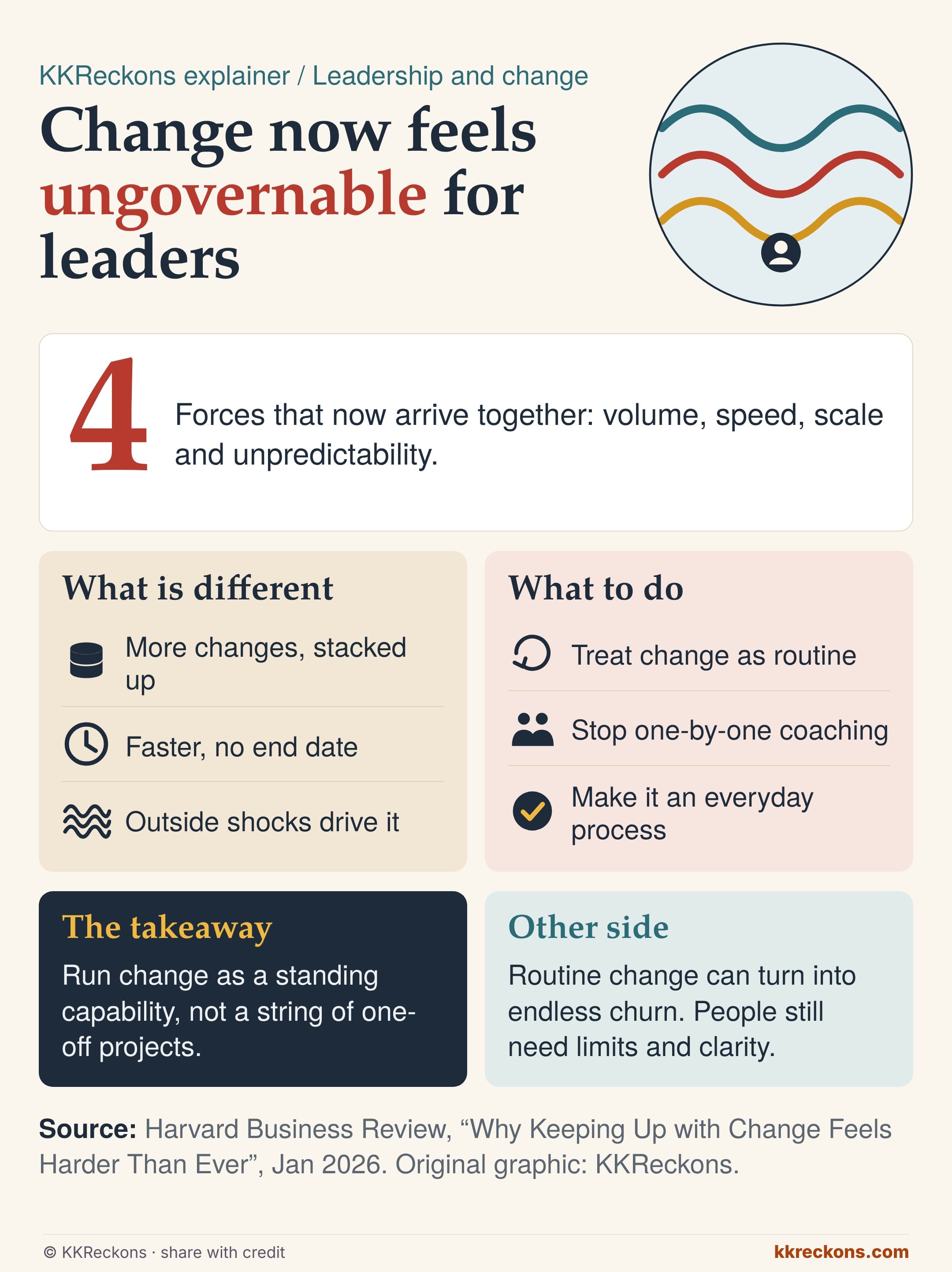
Authors from Gartner’s HR practice say leading through change is harder because four things now arrive together: more change stacked on top of other change, faster and continuous change, bigger and interdependent change, and shocks driven from outside by technology and geopolitics.
They call the result “ungovernable change”, with no clear start or end date to manage.
Their advice: stop coaching staff through each change one by one, and run change as a routine, everyday business process.
4
forces that make change harder
Why it matters Leaders who run each change as a separate project will wear out their people. The practical shift is a standing capacity to absorb change, with clear priorities and routine adjustment.
Other side Treating change as routine can become an excuse for endless churn. People may still need honest limits, rest and clarity about what will not change.
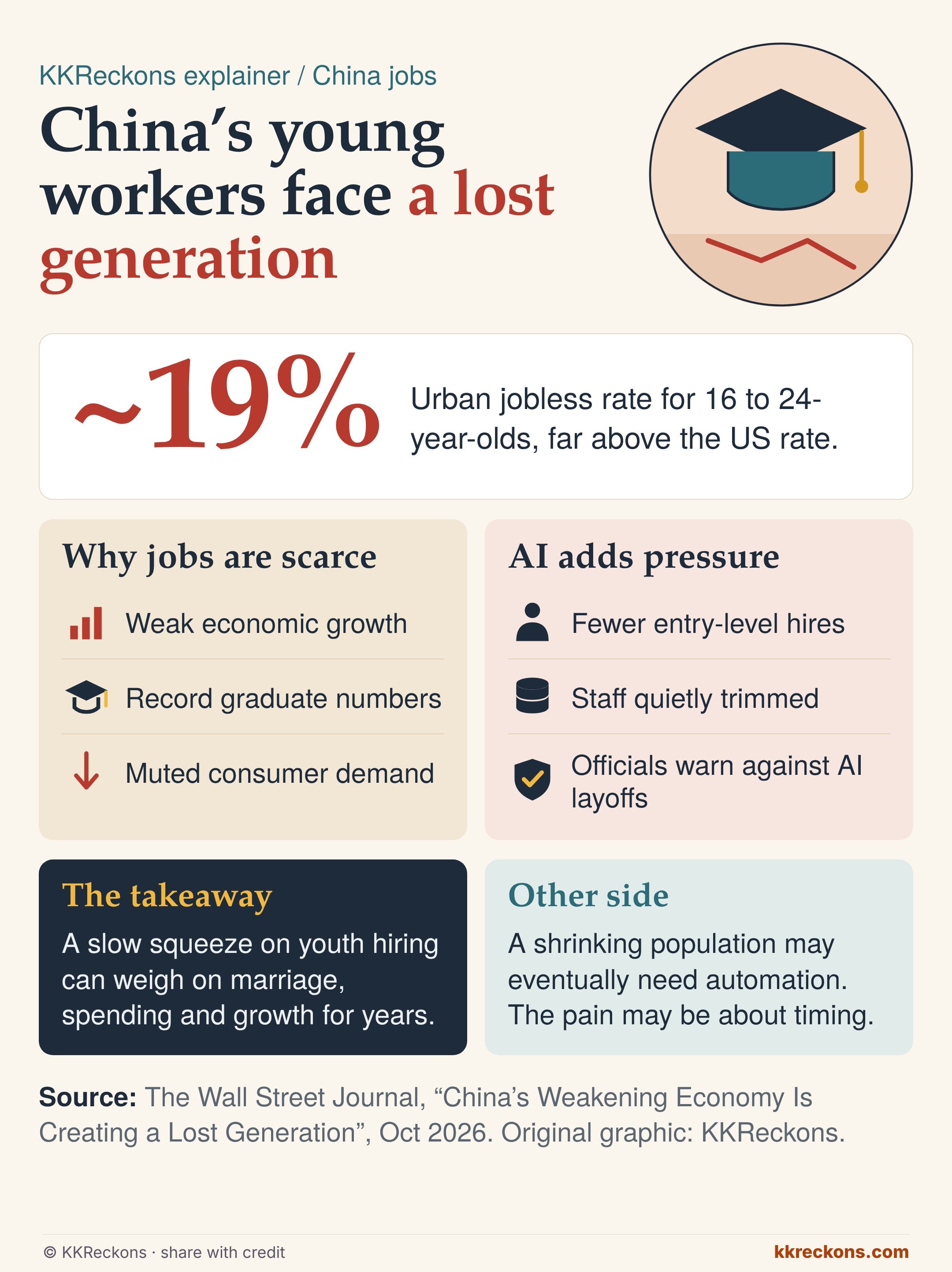
WSJ reports that China’s Gen Z, raised to believe hard work guarantees a better life, now faces a shrinking job market, burnout and delayed marriage, with some living off savings or their parents.
AI adds to the squeeze: big employers are quietly trimming staff, managers are less willing to hire inexperienced people, and officials have warned firms not to cut jobs as they adopt AI.
Urban youth joblessness is near 19%, far above the US rate, and some economists think the true picture is worse than official data.
~19%
urban jobless rate, ages 16 to 24
Why it matters Weak youth hiring is a slow-burning social and consumer problem: delayed marriages and cautious spending can drag on growth for years, and it is an early test of AI’s effect on entry-level work everywhere.
Other side Past technology shifts have created new work, and China’s shrinking population may eventually need automation, so the pain may be about timing rather than permanent.
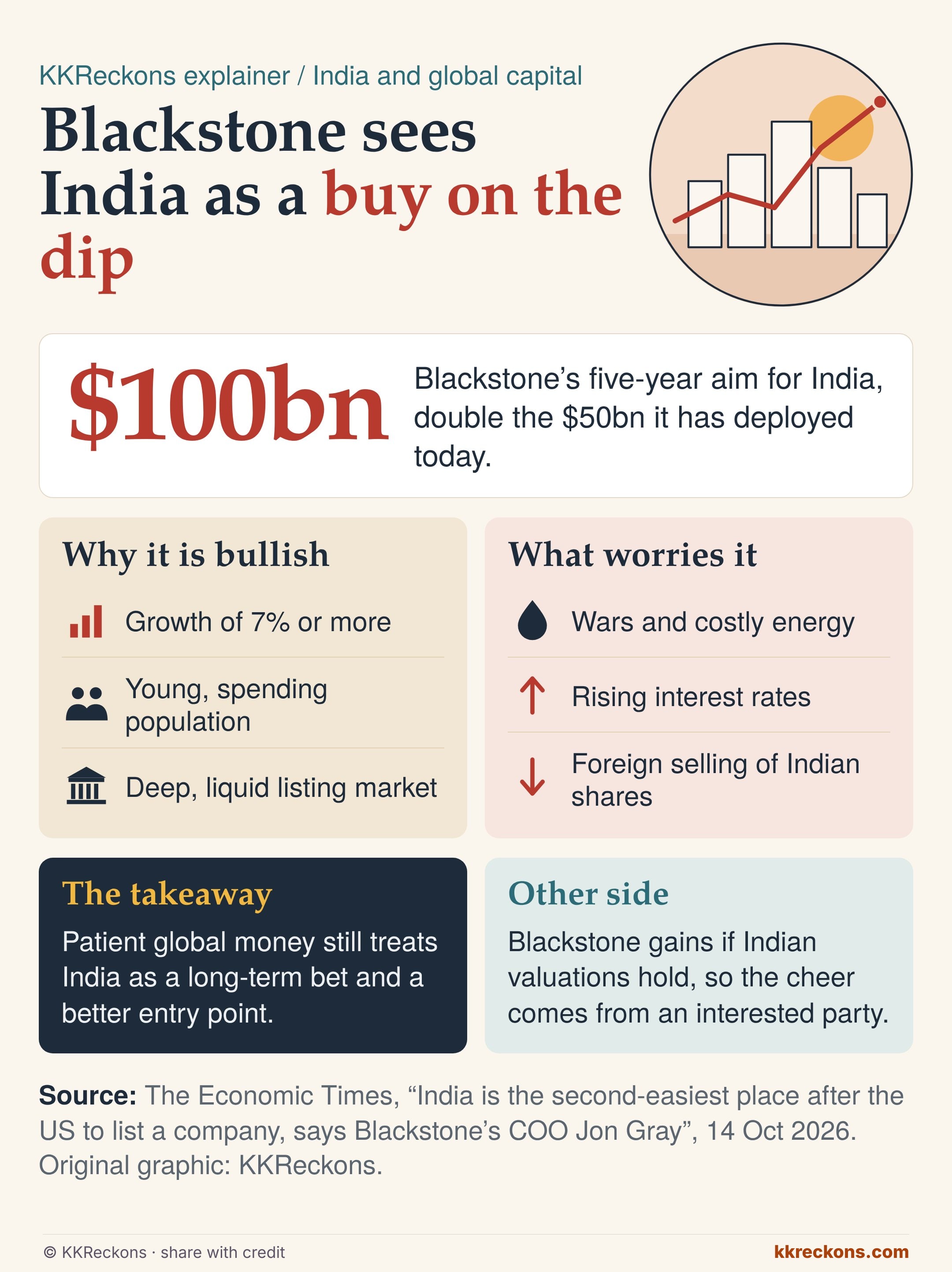
Blackstone’s chief operating officer says India is the firm’s best-performing market and it wants to double its investment there to $100bn in five years, from about $50bn now.
Gray concedes that wars, energy costs, rising rates and heavy AI spending may squeeze asset multiples, but calls India’s pullback a better entry point for a patient investor, citing growth above 7% and a young population.
He points to liquid markets, including a $1bn-plus share sale in August, and says Indian IT firms are turning into AI deployment partners.
$100bn
five-year target in India
$50bn
deployed today
Why it matters A heavyweight global investor still treats India as a long-term allocation and sees the dip as a buying chance, which matters while foreign portfolio investors have been pulling money out this year.
Other side A big investor talks its own book: Blackstone gains if Indian valuations and listings stay strong. Public-market money moves faster, and Gray concedes it can be fickle.
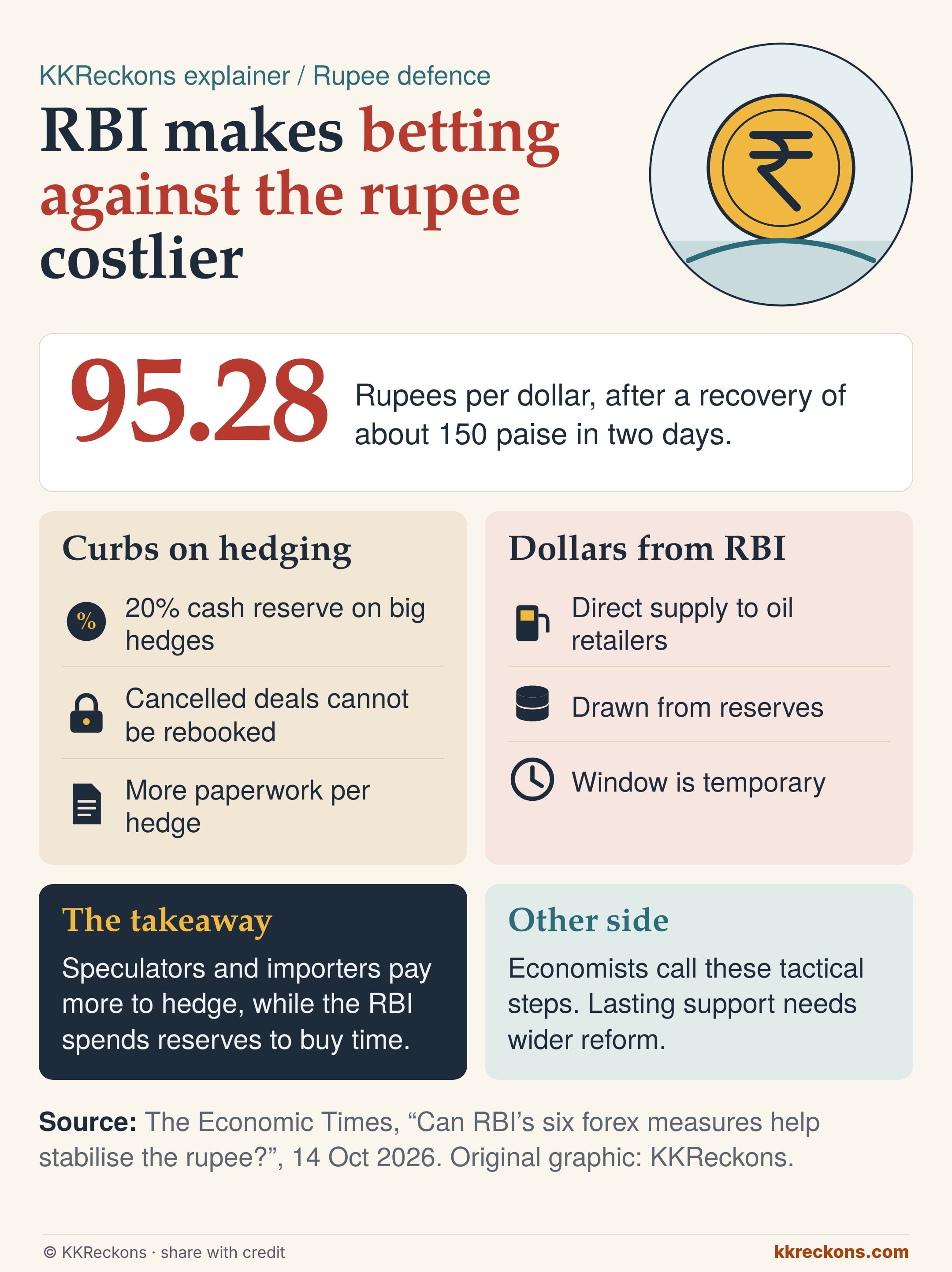
Since Saturday the RBI has taken six steps to lift the rupee to what Governor Sanjay Malhotra calls its “correct” value; the currency has recovered about 150 paise in two days to 95.28 a dollar.
Banks must now hold a 20% cash reserve against forex derivative contracts above $2m, trading limits drop to $5m from $100m, and cancelled contracts cannot be rebooked. Importers’ hedging costs rise by at least 150 Basis point One hundredth of a percentage point: 100 basis points = 1%..
The RBI will also supply dollars directly to three state-run fuel retailers for now. Economists call this tactical, and say defending the rupee is costly without wider reform.
95.28
rupees per dollar now
20%
reserve on hedges above $2m
Why it matters Importers feel this first: hedging gets dearer and speculation harder, while the RBI spends its dollars to buy time for the rupee.
Watch next Whether the rupee holds its gains once the temporary oil-retailer dollar window closes, and whether economists’ calls for broader reform and more flexible rates gain ground.
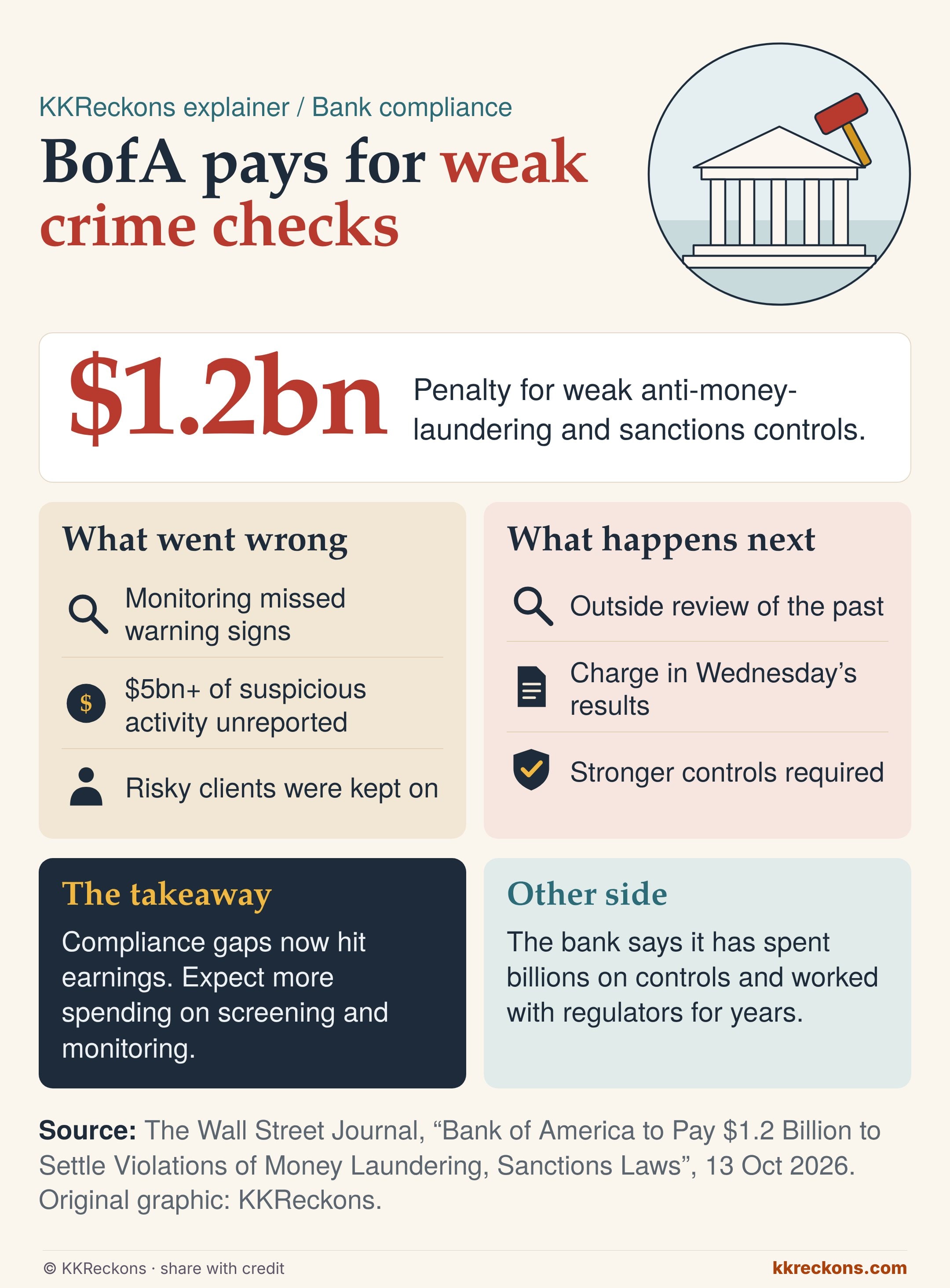
US regulators fined Bank of America about $1.2bn after finding weak systems for spotting and reporting financial crime, including money laundering by Chinese underground bankers and suspicious activity near the southwest border.
Officials say the bank failed to report more than $5bn of suspicious activity, and that tests ordered after a 2024 Treasury order exposed further gaps.
The bank says it has spent billions on compliance and will book a $1.2bn non-deductible charge in Wednesday’s third-quarter results; shares slipped in after-hours trading.
$1.2bn
penalty on the bank
$5bn+
suspicious activity unreported
Why it matters A compliance failure now costs enough to dent quarterly earnings, so expect banks to keep spending on screening and surveillance, and to be pickier about risky clients.
Other side The bank says it has worked with regulators for years and spent billions on controls, and criminal networks adapt faster than supervisors, so some failures may reflect an arms race rather than neglect.
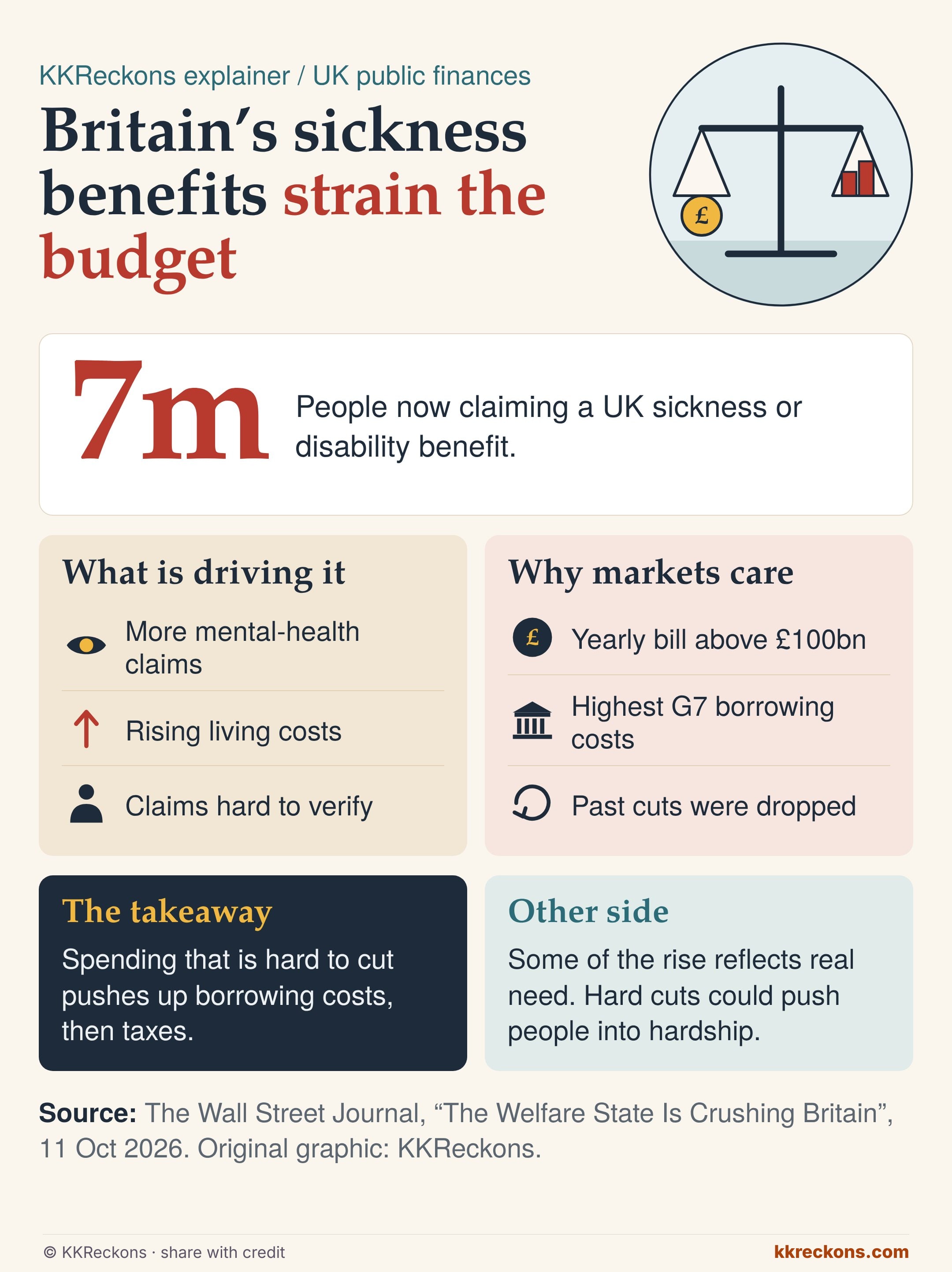
WSJ says Britain has seen an unusual surge in sickness and disability claims: about seven million people now claim, many for mental-health conditions that are hard to verify.
The yearly bill, excluding healthcare, tops £100bn and keeps rising, while Britain’s borrowing costs are the highest in the G7 and investors punish any sign of weak fiscal discipline.
An earlier attempt to tighten eligibility was dropped after a backlash and a bond sell-off; the new Labour leadership promises reform without “crude cuts”, with a budget due later this month.
7m
claim sickness or disability aid
£100bn+
yearly benefit bill
Why it matters It shows why bond investors watch welfare: when spending is politically hard to cut, borrowing costs rise and taxes follow, a squeeze other ageing democracies will recognise.
Other side Some of the rise may reflect genuine need and better recognition of mental-health conditions, and hard cuts could push vulnerable people into hardship rather than into work.
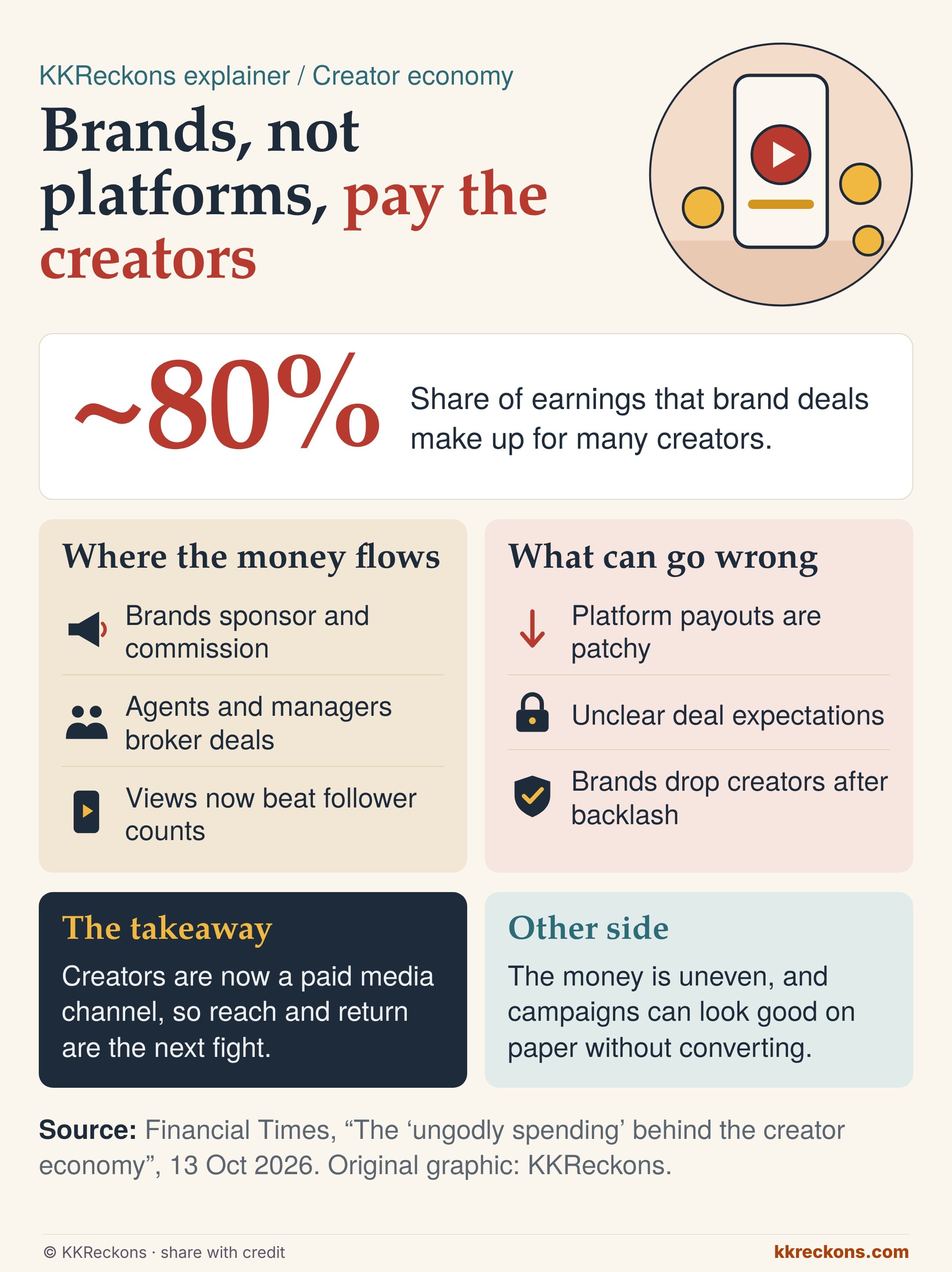
The FT finds that platform payouts are only part of the creator economy; the big money comes from brands that sponsor or commission content, and agencies and talent managers are racing to broker it.
For many creators, brand deals make up about 80% of earnings. Rates climb once an account passes roughly 100,000 followers and gets an agent, and average video views now matter more than follower counts.
YouTube pays most clearly, having shared $100bn with partners from 2022 to 2025, while TikTok, Instagram and X pay less but offer reach. Brands also fear creator misbehaviour and unclear expectations.
~80%
creator earnings from brands
$100bn
YouTube payouts, 2022-25
Why it matters For marketers and media investors, creators are now a distribution channel with agency middlemen, so measuring reach and return is the next battleground.
Other side The money is uneven and platform payouts are patchy, and campaigns that look good on paper may not convert, as marketers themselves warn.