Brinjal, buffalo, bacteria: how India makes firms pay for nature (opens the source in a new tab)
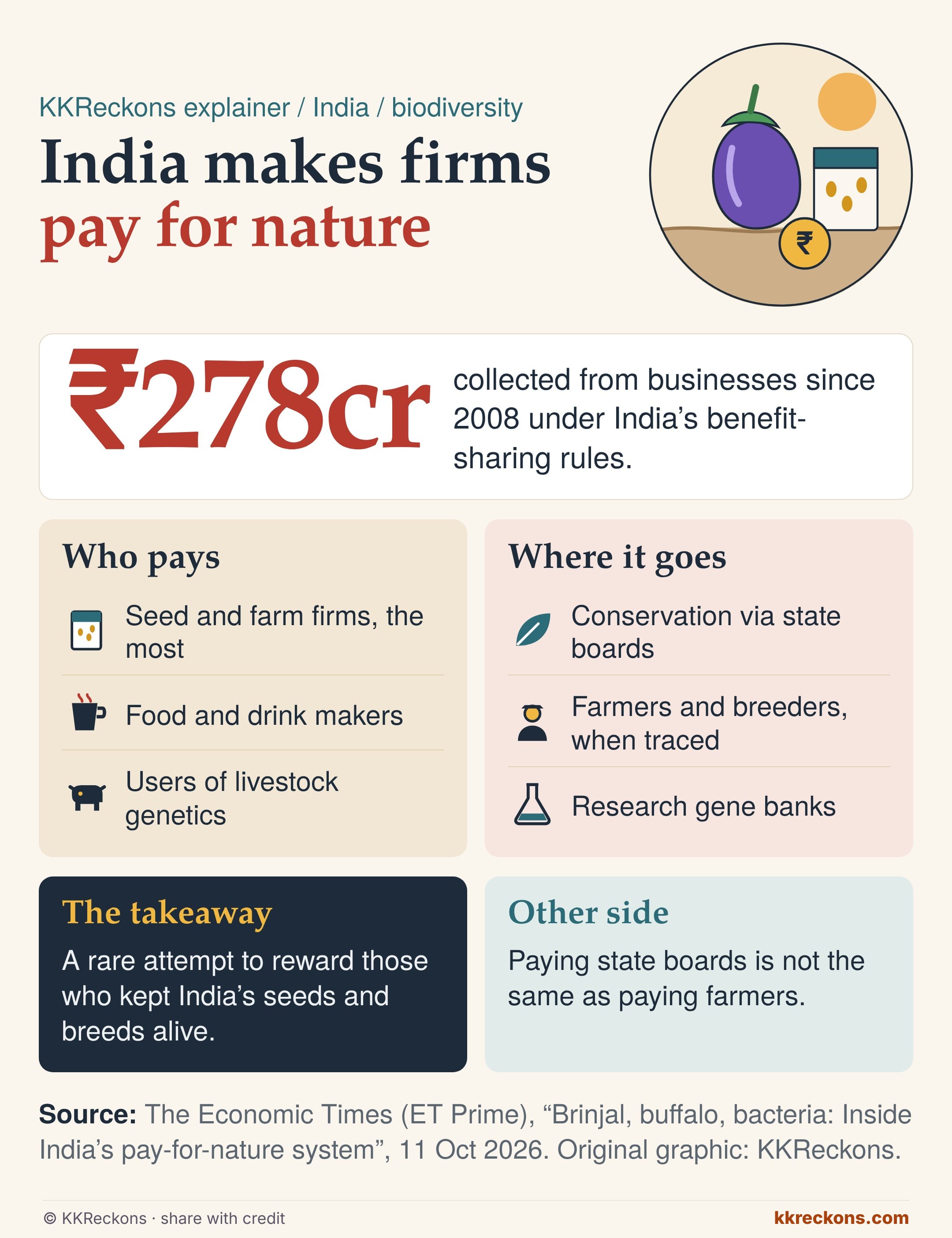
- Under the Biological Diversity Act, companies that commercially use India’s crops, medicinal plants, microbes or livestock genetics can owe a benefit-sharing payment to the National Biodiversity Authority.
- It collected ₹9.68 crore from April to September, mostly from seed and agriculture firms, and about ₹278 crore since 2008, much of it passed on for conservation and to farmers, communities and institutions.
- When seeds came via traders and the original farmers couldn’t be traced, the money was split among states by crop acreage, which funds conservation but not necessarily the growers themselves.
- ₹9.68cr
- collected, Apr–Sep 2026
- ₹278cr
- collected since 2008
Why it matters It is a small but real attempt to reward the people who kept India’s seeds and breeds alive, and a rare case of biodiversity carrying a price at all.
Other side The sums are tiny next to the industries involved, paying state boards is not the same as paying farmers, and experts say communities still have too little say over access.