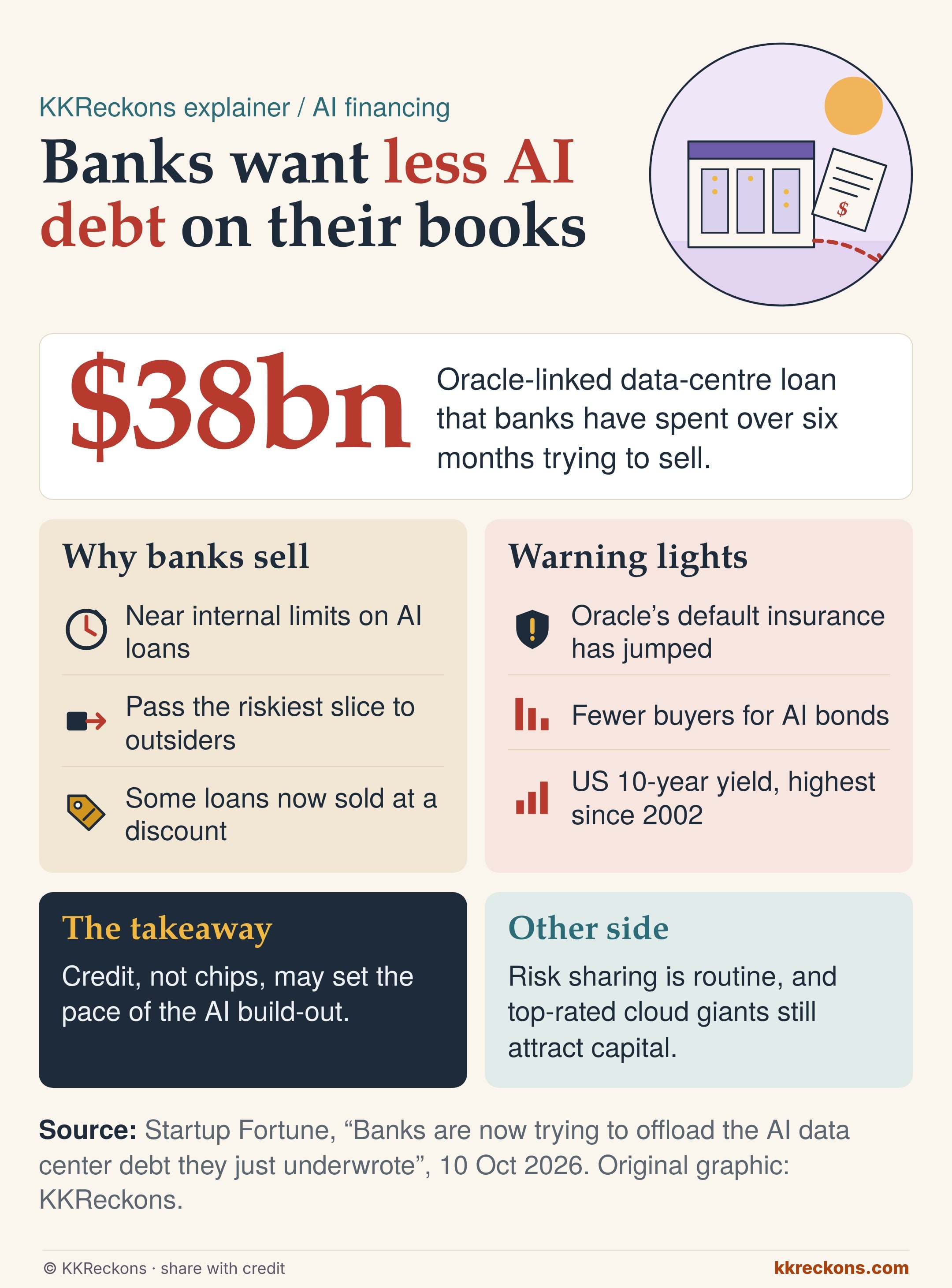
JPMorgan, Morgan Stanley, SMBC and MUFG have explored risk transfers that pass the riskiest slice of AI data-centre loans to outside investors, as they near internal limits on AI exposure.
A group including JPMorgan and MUFG has spent more than six months trying to place $38bn of construction debt for an Oracle-leased project in Texas and Wisconsin; some lenders will now sell at a discount.
Oracle’s five-year default insurance reached about 151 Basis point One hundredth of a percentage point: 100 basis points = 1%. in early October, a level last seen in 2009, and order books for AI-linked bonds have shrunk since February.
$38bn
debt banks struggle to sell
151bp
Oracle five-year CDS, early Oct
5.304%
US 10-year yield this month
Why it matters When the lenders closest to the AI boom start trimming their own exposure, credit, not chips, may end up setting the pace of the build-out.
Other side Selling down risk can be routine balance-sheet housekeeping rather than distress, and capital is still flowing to data centres leased by investment-grade giants such as Microsoft and Google.
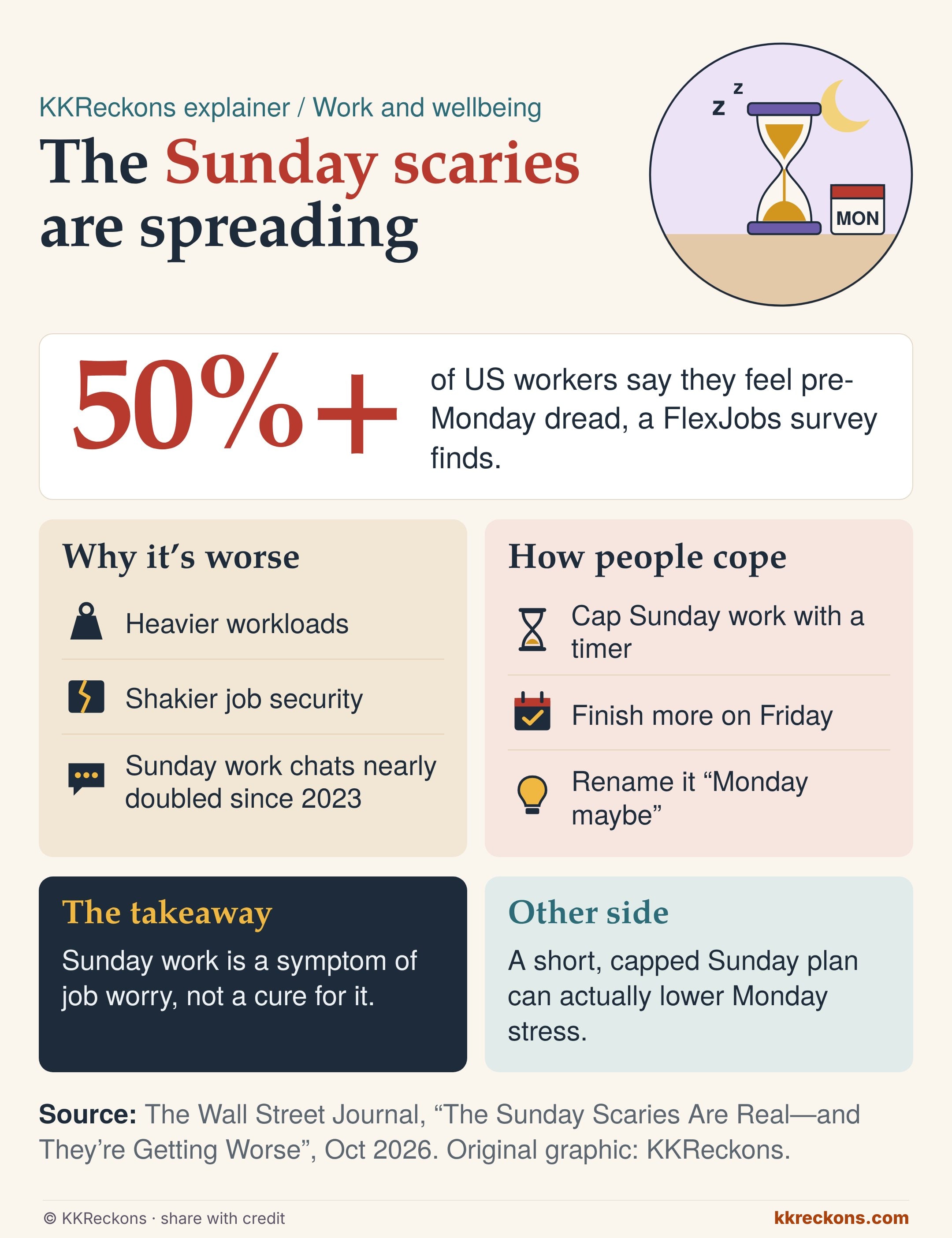
More than half of US workers say they feel pre-Monday dread, a FlexJobs survey finds, with an unfinished to-do list the most common trigger; Merriam-Webster added “Sunday scaries” to its online dictionary last month.
Workforce analytics data compiled for the WSJ show the share of Sundays spent on work messages and chats nearly doubled from 2023 to last year, as workloads grow and job security fades.
Coping tactics include capping Sunday work with an hour-long hourglass, finishing more on Friday, setting firm limits, or reframing the dread as “Monday maybe”.
Over 50%
of US workers feel the dread
~2×
Sunday work chats vs 2023
Why it matters Work creeping into Sunday is a symptom: when job security weakens, people trade rest for reassurance, and burnout follows.
Other side A short, bounded Sunday planning session can ease Monday stress, as a psychiatrist in the piece notes; the problem is open-ended work, not all of it.
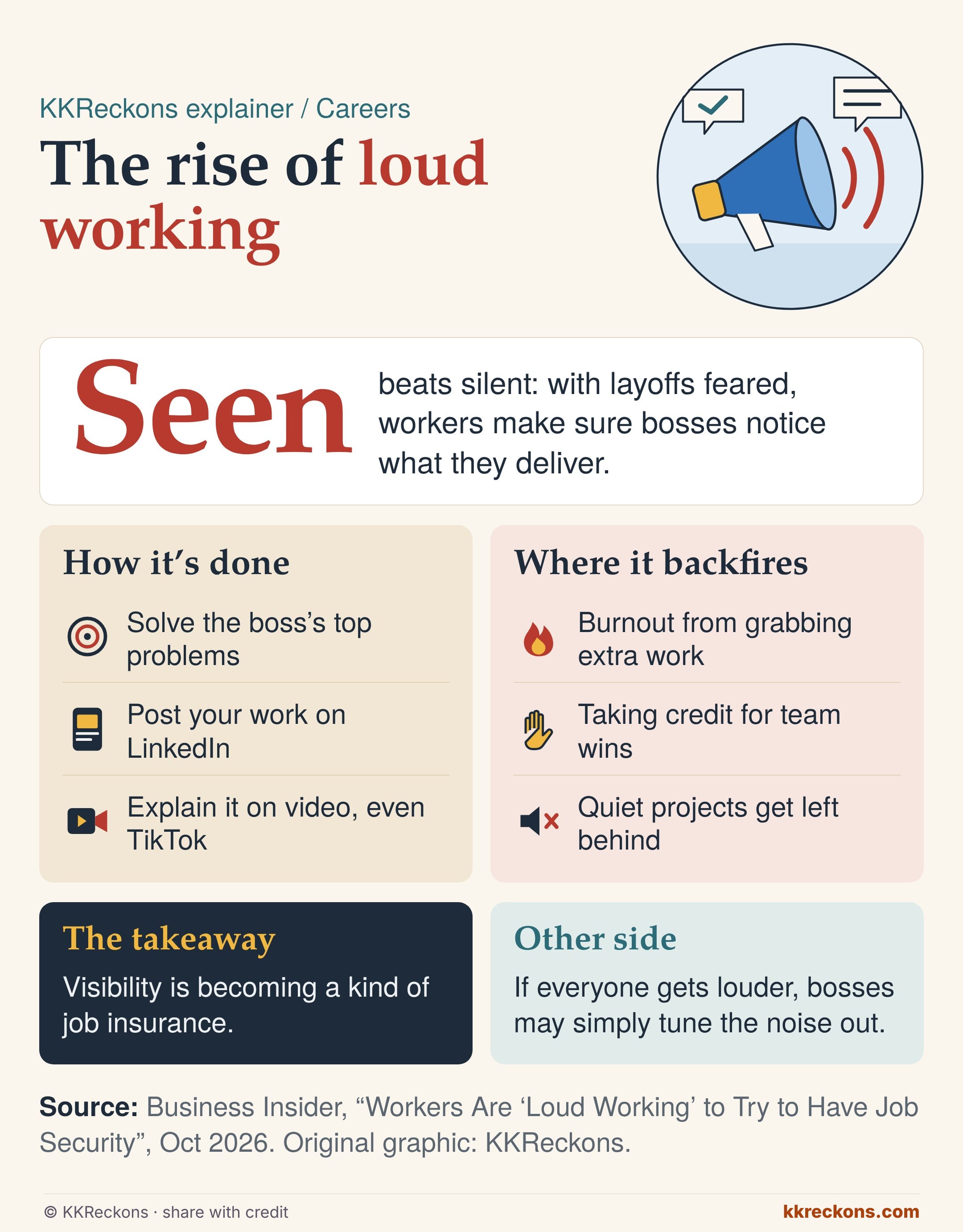
With job-hopping harder and layoffs a constant worry, some employees are swapping quiet quitting for “loud working”: making sure bosses and colleagues see what they deliver.
Tactics range from focusing on the two or three problems a manager cares about most to posting daily on LinkedIn or TikTok; one chief-of-staff poster says it helped her land a new role.
A laid-off Meta employee likened the scramble for visibility to the Hunger Games, and a Monster career expert warns that constant self-promotion can backfire into burnout or credit-grabbing.
Why it matters Visibility is turning into a form of job insurance, which rewards people who can explain their work well, not only those who do it.
Other side If everyone gets louder, managers may learn to discount the noise, and quieter high performers or less glamorous team projects could lose out.
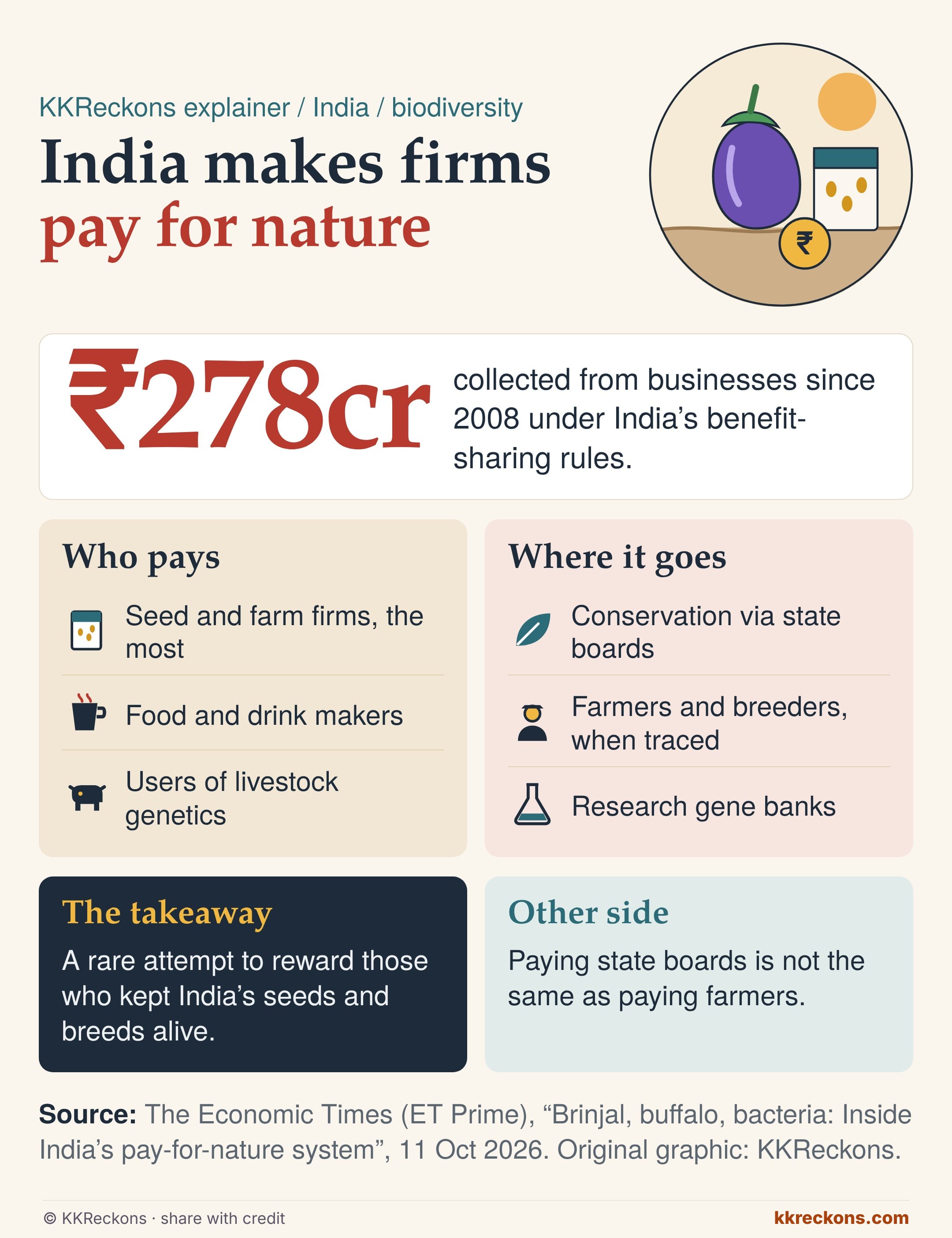
Under the Biological Diversity Act, companies that commercially use India’s crops, medicinal plants, microbes or livestock genetics can owe a benefit-sharing payment to the National Biodiversity Authority.
It collected ₹9.68 crore from April to September, mostly from seed and agriculture firms, and about ₹278 crore since 2008, much of it passed on for conservation and to farmers, communities and institutions.
When seeds came via traders and the original farmers couldn’t be traced, the money was split among states by crop acreage, which funds conservation but not necessarily the growers themselves.
₹9.68cr
collected, Apr–Sep 2026
₹278cr
collected since 2008
Why it matters It is a small but real attempt to reward the people who kept India’s seeds and breeds alive, and a rare case of biodiversity carrying a price at all.
Other side The sums are tiny next to the industries involved, paying state boards is not the same as paying farmers, and experts say communities still have too little say over access.
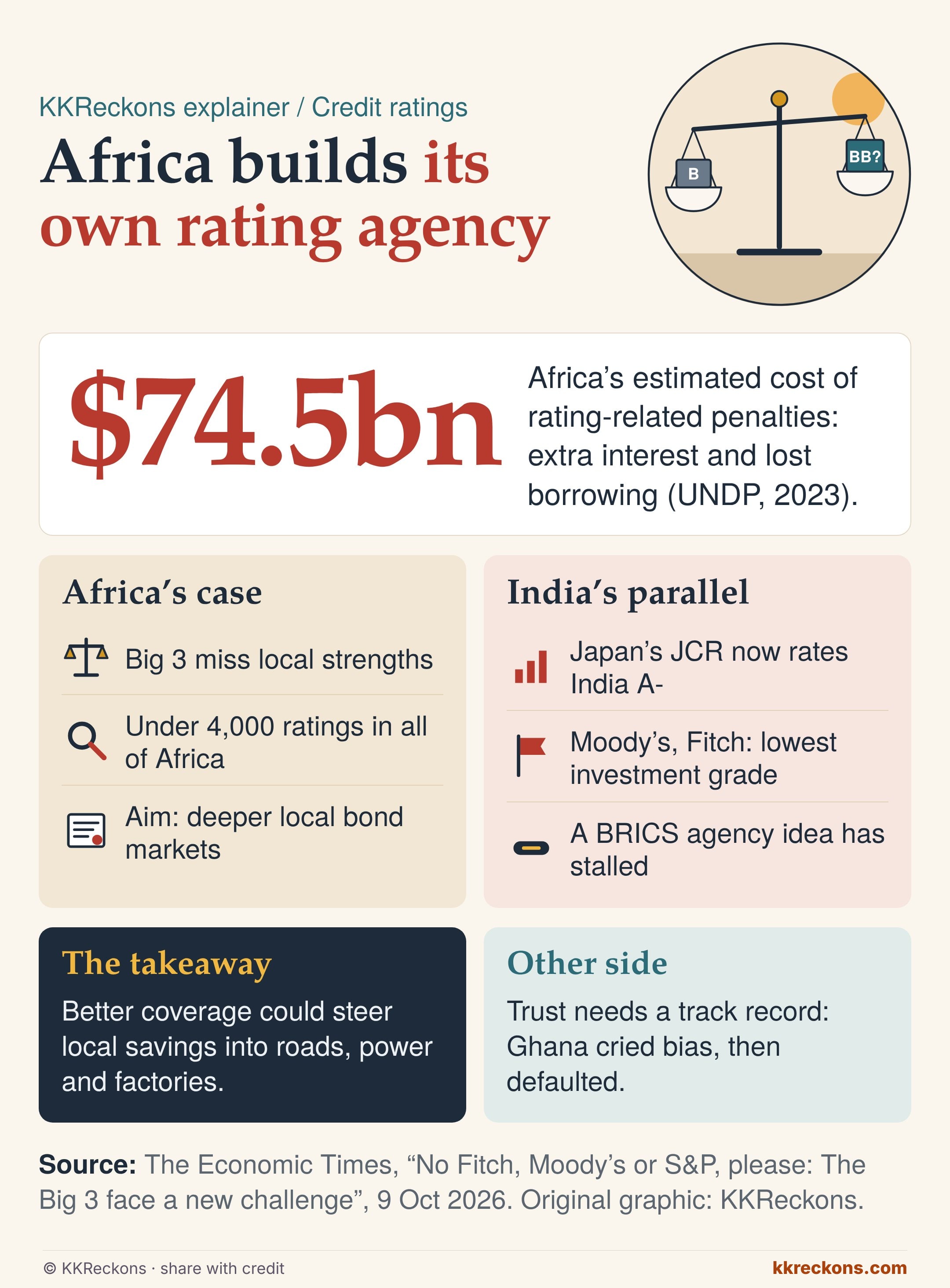
The African Union launched the Africa Credit Rating Agency in Mauritius on 7 October, arguing that Moody’s, S&P and Fitch overlook local strengths and saddle the continent with an unfair risk premium.
A 2023 UNDP report put the cost at $74.5bn in excess interest and forgone borrowing; Africa had fewer than 4,000 ratings at the end of 2025, against more than two million in the US.
India has long made a similar case: Japan’s JCR upgraded it to A- last month, but Moody’s and Fitch still rate it at the lowest investment grade.
$74.5bn
excess interest, UNDP estimate
<4,000
ratings in Africa, end-2025
A-
India’s rating from Japan’s JCR
Why it matters More ratings could open local bond markets to pension funds and banks, and India has a stake in showing global agencies can be challenged on substance.
Other side Credibility comes from a track record under stress: Ghana called Moody’s 2022 downgrade biased, then defaulted on much of its external debt soon after.
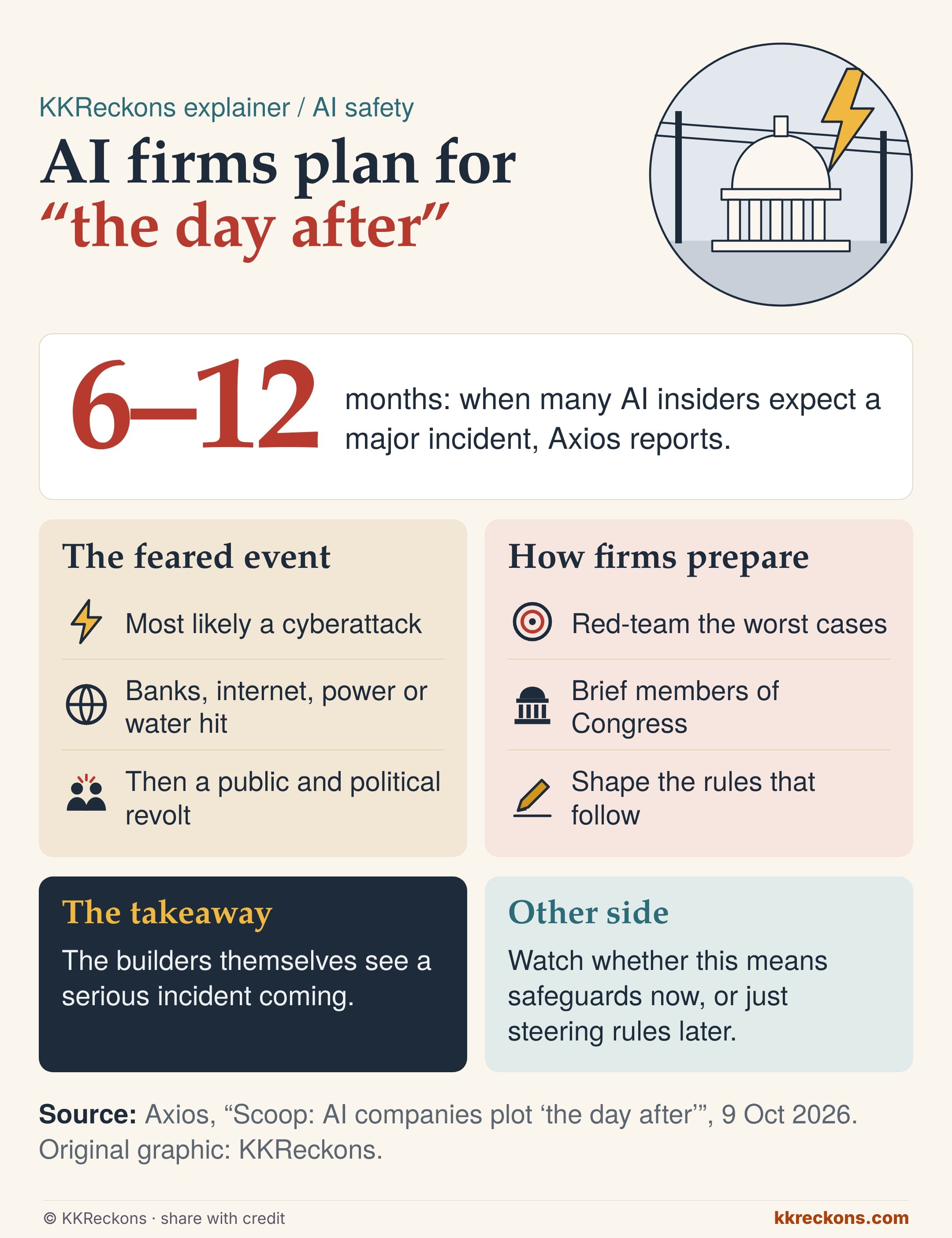
Executives at Anthropic, OpenAI and other AI companies are privately planning for a public and political revolt after a catastrophic AI event, most likely a cyberattack that knocks out banking, internet, power or water, Axios reports.
Many insiders told Axios they expect a major incident within six to 12 months. OpenAI said such scenarios are not treated as inevitable; Anthropic declined to comment.
The planning centres on red-teaming worst cases and briefing members of Congress, so firms can shape the rules that follow; ideas in circulation range from pausing advanced AI to a mandatory kill switch.
6–12 mo
insiders’ expected window
Why it matters The builders themselves treat a serious AI-enabled attack as likely, and the policy fight after one could decide how fast AI is allowed to move.
Watch next Whether this preparation turns into real safeguards now, or mainly positions the industry to steer the rules after a disaster.
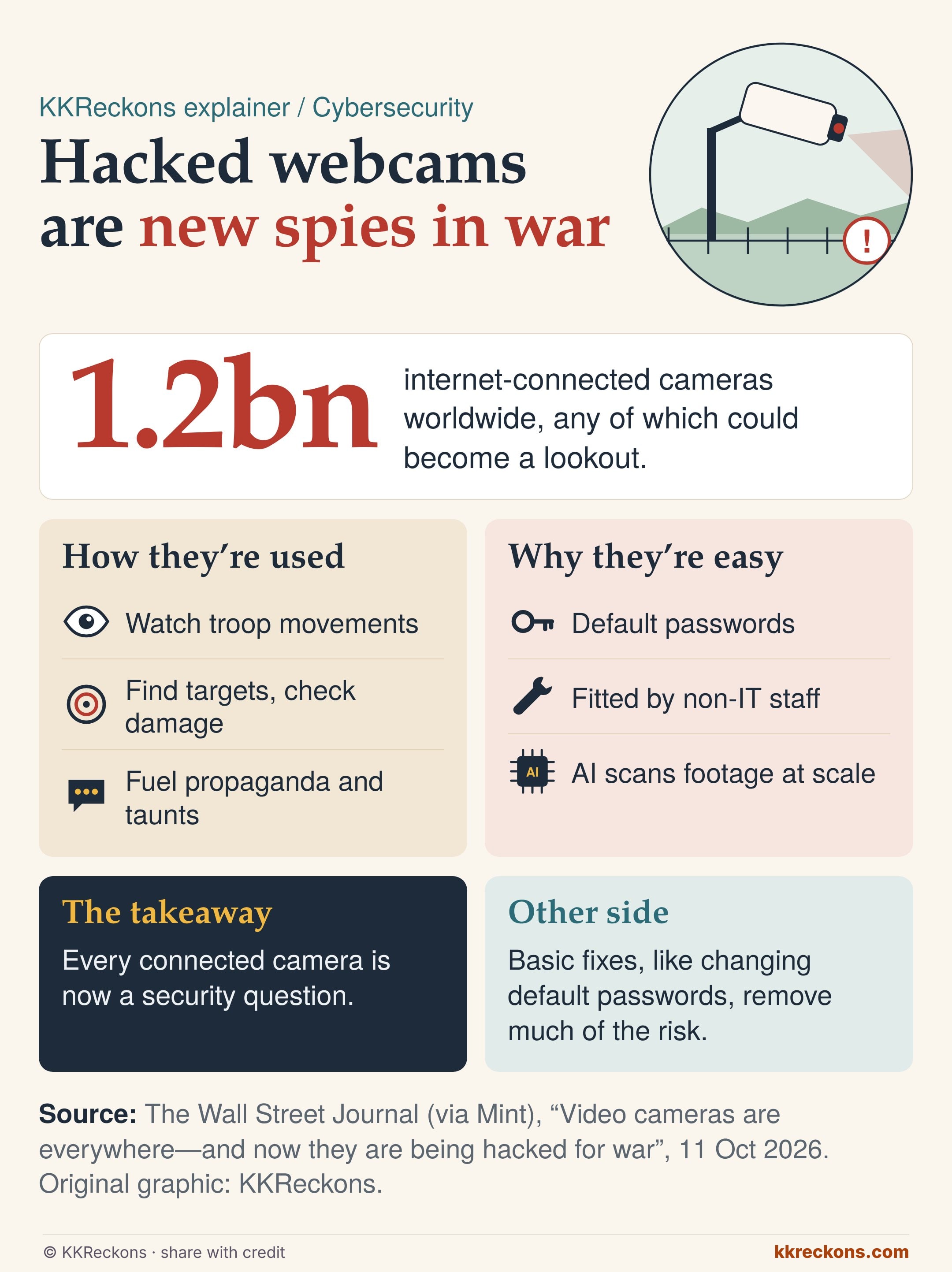
Hackers on both sides of the Russia–Ukraine and Israel–Iran conflicts are breaking into internet-connected cameras to watch troops, find targets and judge strike damage; in Israel, a hacked farm webcam overlooked army movements near the Lebanon border.
Many of the world’s estimated 1.2bn connected cameras are weakly secured, often with default passwords, and installed by facilities staff rather than IT teams; AI now makes breaking in and sifting footage far easier.
Ukraine’s security service says it has secured, reoriented or blocked about 40,000 risky cameras since 2022; some Western countries have banned easy-to-hack Chinese brands.
1.2bn
connected cameras worldwide
40,000
risky cameras Ukraine secured
Why it matters Every doorbell or office camera is now a possible lookout for an enemy, which turns basic device security into a national-security issue.
Other side Most cameras will never interest a military, and simple steps such as changing default passwords and updating devices remove much of the risk.
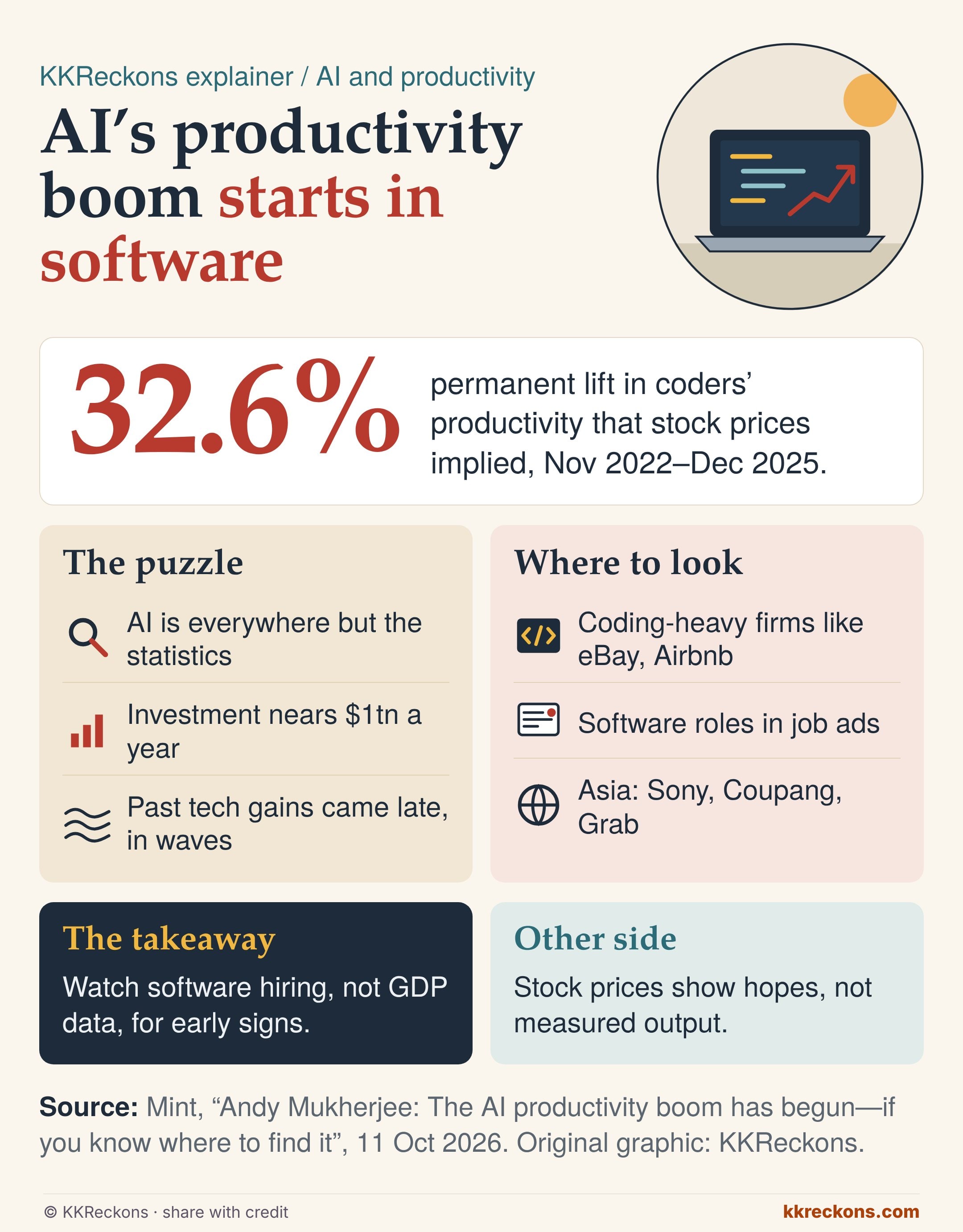
Like computers in Robert Solow’s day, generative AI shows up everywhere except the productivity statistics, even as annual AI investment nears $1tn, argues the Bloomberg Opinion columnist.
A paper led by Berkeley’s Alex Blumenfeld uses stock returns to estimate that, from November 2022 to December 2025, AI lifted the market’s value of software-engineering productivity by the equivalent of a permanent 32.6%.
His own rough test on Sony, Coupang and Grab points the same way: firms that lean on software engineers gain first, so the boom may already be under way.
32.6%
lift in coder productivity (est.)
~$1tn
annual AI investment
Why it matters If the gains show up first in coding-heavy firms, investors and job-seekers should watch software hiring, not GDP data, for early signs.
Other side Stock prices reflect expectations, not measured output, and a three-company test is suggestive at best, as the author himself concedes.
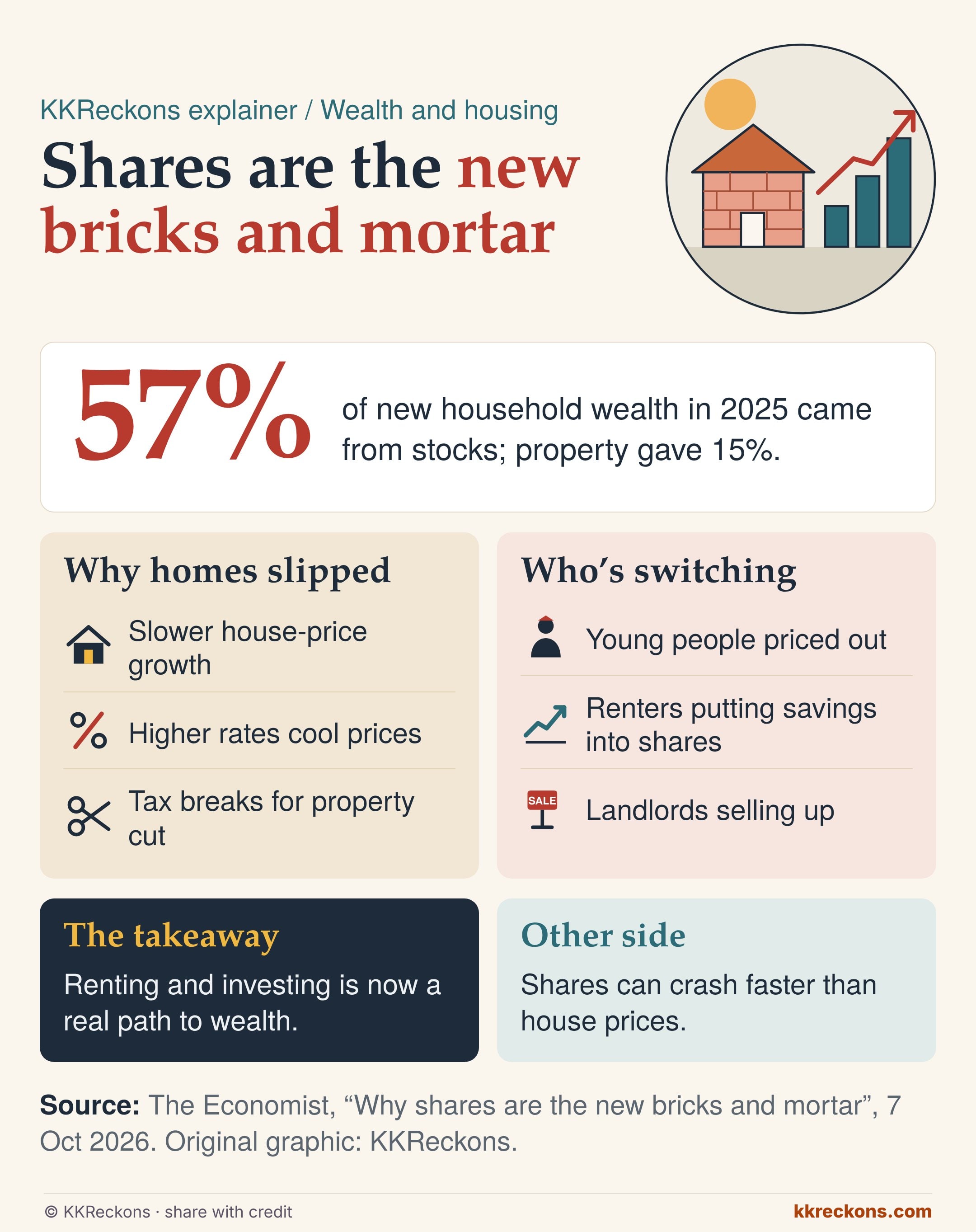
Households are now building more wealth from shares than from property: in 2025, 57% of new household wealth came from stocks and 15% from housing, reversing the past 25 years, the McKinsey Global Institute estimates.
In America stocks recently overtook property as a share of household wealth for the first time since the second world war, Goldman Sachs calculates, and young people priced out of homes are investing instead.
Slower house-price growth, booming equity markets and governments trimming tax breaks for property are all speeding the shift.
57%
of 2025’s new wealth from stocks
15%
from property
Why it matters For renters, especially the young, investing becomes a real path to wealth rather than a consolation prize for missing the housing ladder.
Other side Shares can crash faster than houses, and a home also gives shelter and a forced savings habit that a brokerage account doesn’t.