AI firms tighten guardrails on DIY reverse engineering of gadgets (opens the source in a new tab)
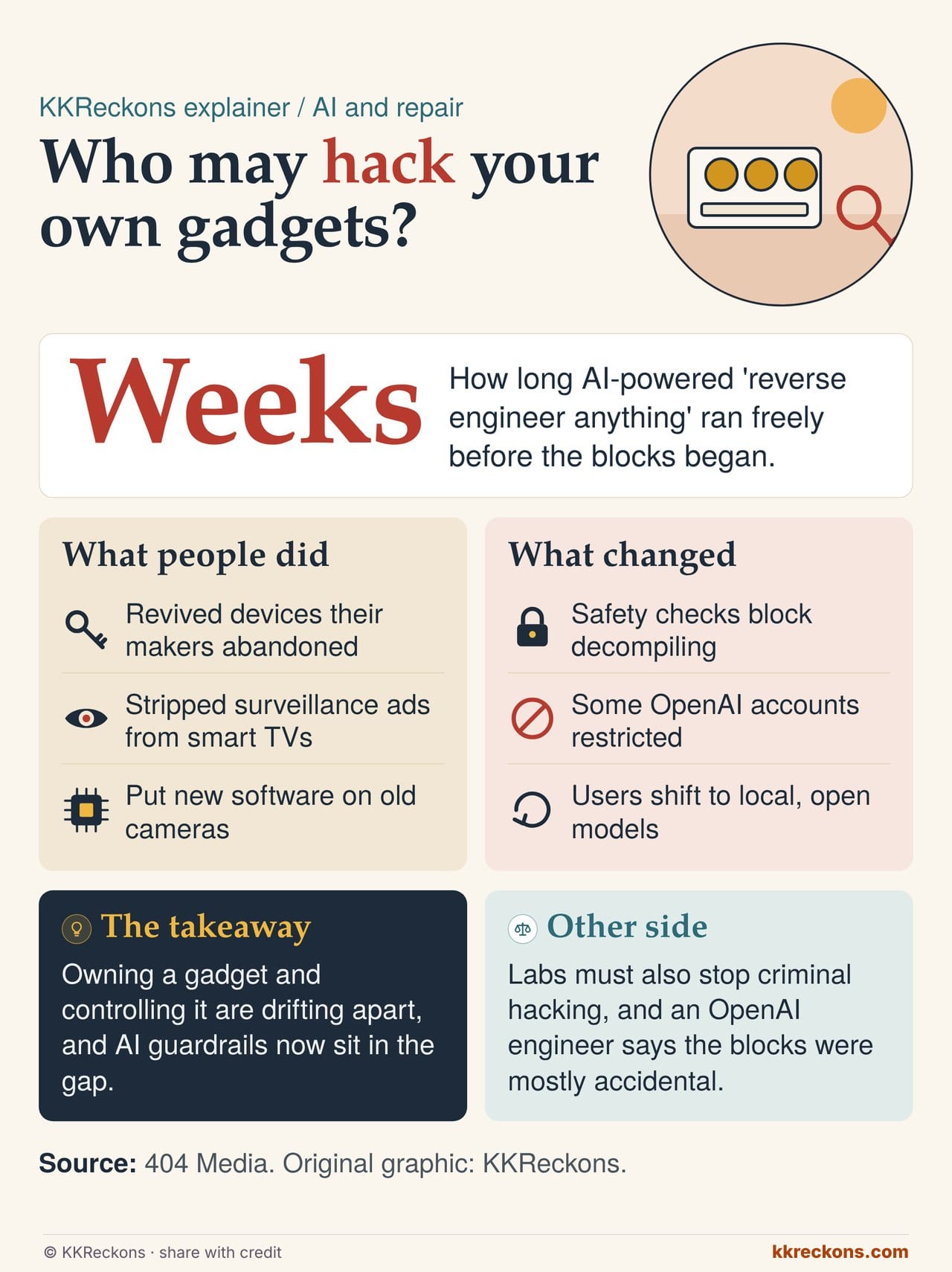
- 404 Media reports that people using Claude Code and OpenAI's Codex to reverse engineer their own gadgets, from reviving abandoned smart devices to stripping ads off smart TVs, are hitting safety checks, warnings and some account bans.
- An OpenAI engineer said the blocks were mostly accidental and are being fixed. Hobbyists and security researchers say they are shifting to local, open-weight models, many from China, that won't lock them out.
- The author argues AI firms are shielding device makers; law professors warn cheap AI reverse engineering will test copyright, trade-secret and anti-hacking law.
Why it matters Controlling a device you bought used to take rare skills. If AI makes it trivial, the guardrails a few labs choose will decide whether right-to-repair goes mainstream or drifts to open models that nobody oversees.
Other side The skills that free a smart TV can also probe someone else's network, and labs under pressure to stop criminal hacking will err on the strict side. The real test is whether they can tell a tinkerer from an attacker.
Source:404 Media (free to read) ↗