The end of cheap money is squeezing America's weakest borrowers (opens the source in a new tab)
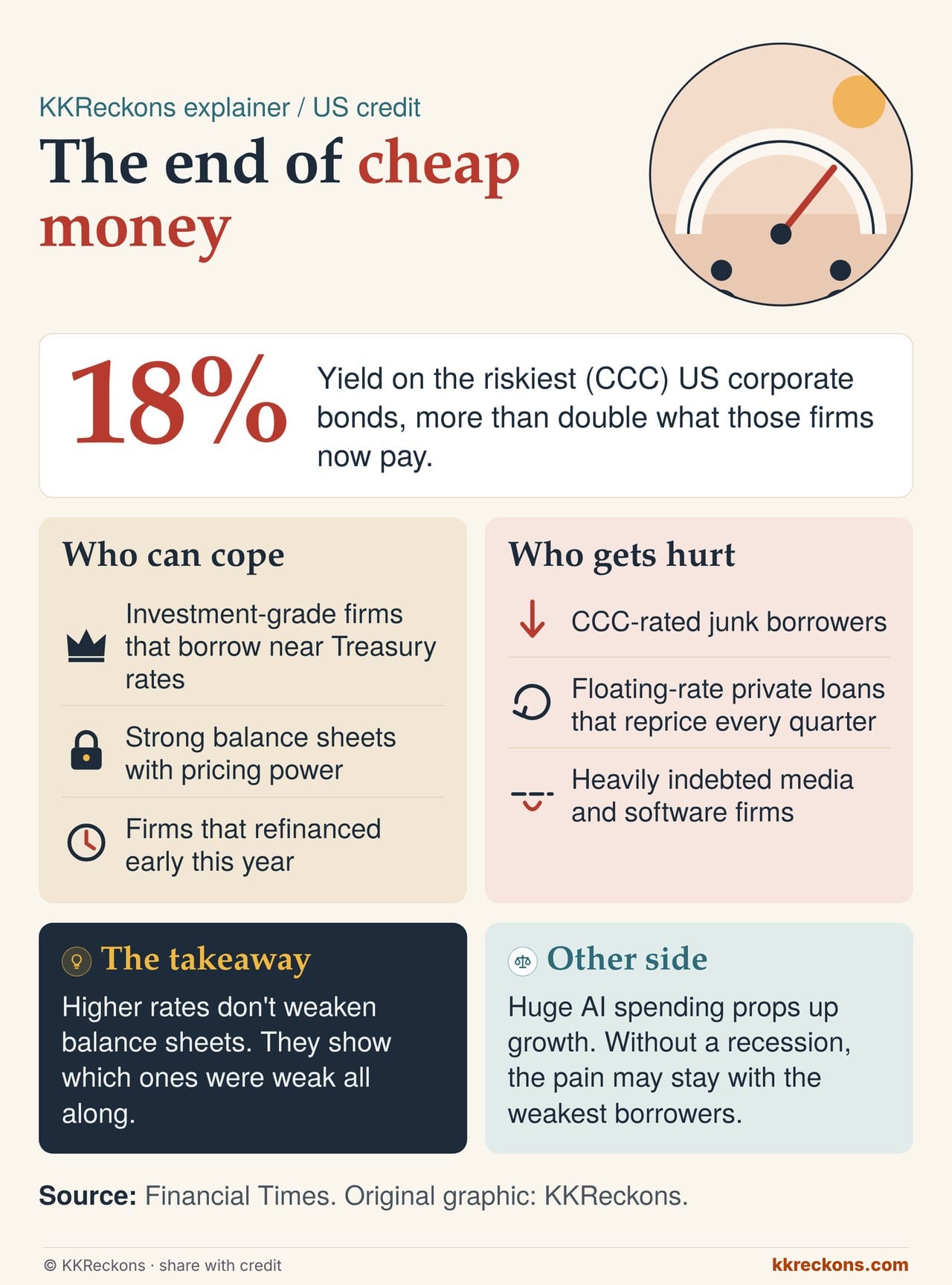
- An FT Big Read says the era of ultra-low borrowing costs is over for US companies: the Fed raised rates in September, markets price in more hikes, and the 10-year Bond yield The annual return a bond pays at today's price; rising yields mean borrowing is getting dearer. topped 5%, its highest since 2007.
- Strong investment-grade firms can absorb it. The pain falls on junk-rated borrowers, above all CCC names, whose bonds now yield almost 18%, and on companies with floating-rate private-credit loans that reprice every quarter.
- Many firms refinanced early to push out due dates, but past quick-fix debt deals often ended in a second default within three years.
Why it matters A decade of buybacks and buyouts ran on cheap debt. If losses in the weakest credits force funds to sell what they can, the selling can spread to safer bonds, which is how a niche problem becomes a market one.
Other side Huge AI capital spending is holding up the US economy, and many investors think a full default wave needs a recession. Until one arrives, the damage may stay with borrowers that were fragile anyway.