AI's power bill means data centres must be designed as energy assets (opens the source in a new tab)
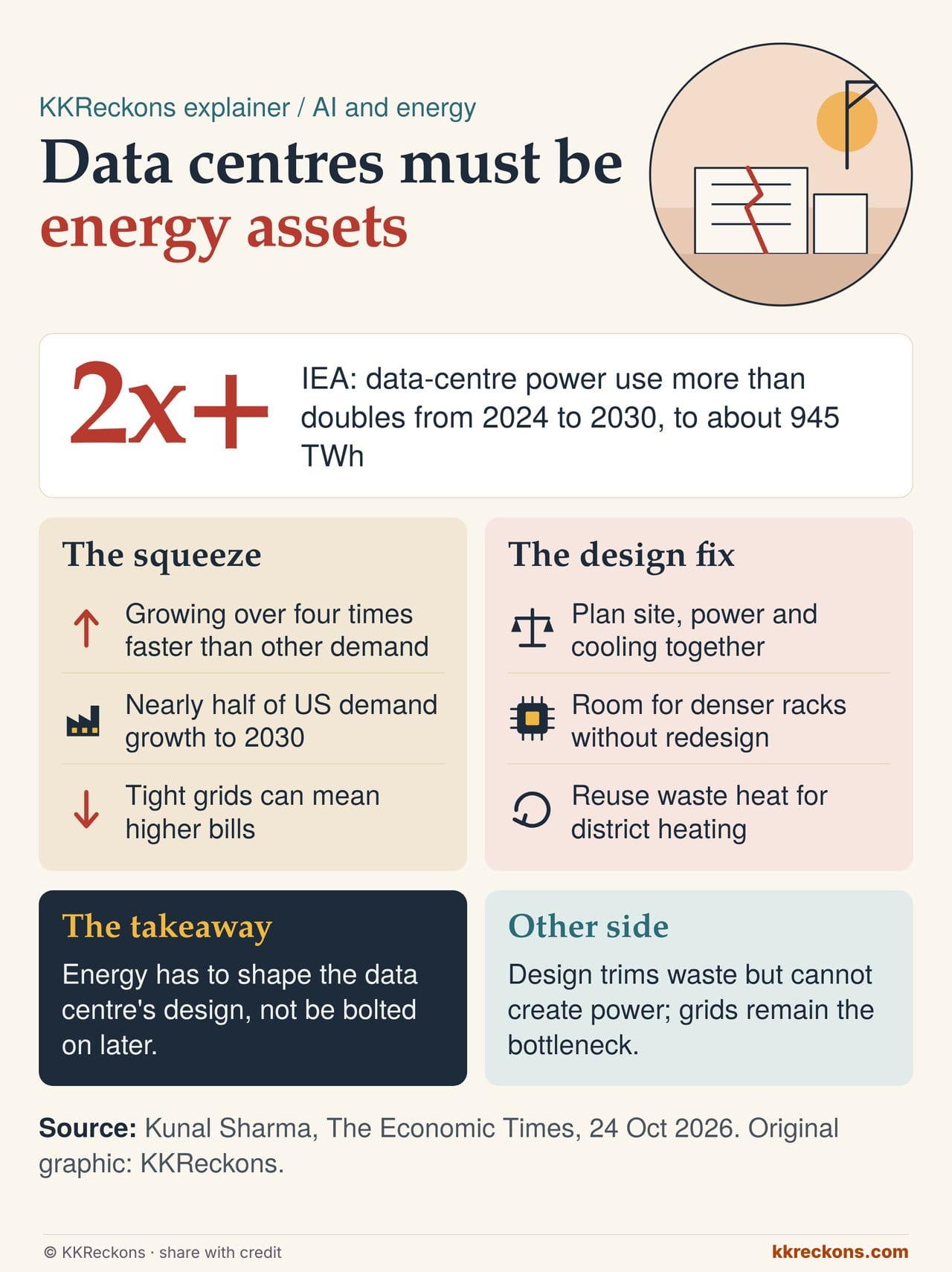
- Flipspaces founder Kunal Sharma notes data centres used about 415 TWh of power in 2024, and the IEA expects that to more than double to roughly 945 TWh by 2030. In the US they could drive nearly half of electricity demand growth.
- He argues energy must shape the building itself: site, rack density, cooling routes and power distribution planned together, so facilities can take denser chips without costly redesigns.
- Waste heat can become a resource: Microsoft projects in Denmark feed surplus heat into district heating networks.
- 415 TWh
- data-centre power use, 2024
- 945 TWh
- IEA outlook for 2030
Why it matters Where AI loads land on already tight grids, someone pays through new investment or higher bills. Designing for efficiency up front decides how much of that falls on neighbours.
Other side Better design trims waste but cannot create electricity; generation and transmission remain the real bottleneck. Heat reuse also needs nearby homes or businesses to take it, which remote sites may lack.