Why the D-Day weatherman is a warning for the AI age (opens the source in a new tab)
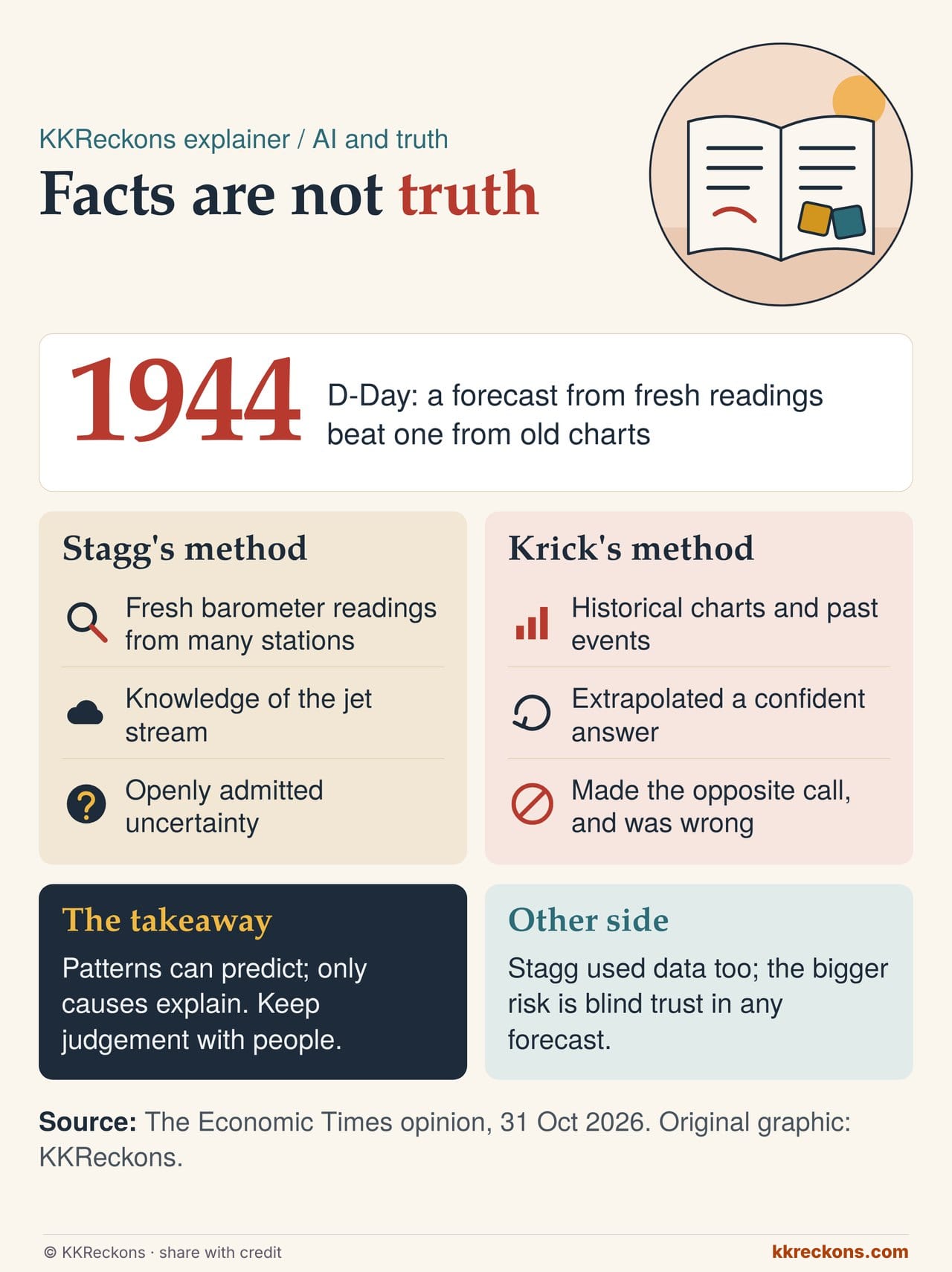
- An ET column uses the film Pressure to retell how the Allies settled the D-Day date: British meteorologist James Stagg built his forecast from fresh readings and the jet stream, while American Irving Krick extrapolated from historical charts. Stagg, who admitted uncertainty, was right.
- The lesson, the writer argues, is that causes come before correlations: numbers and statistics are facts, not truth, in weather as in language, behaviour and markets.
- The worry is commercial hype that thinking and creativity can be handed to AI's pattern matching, costing truth first, then reasoning and the scientific temper.
Why it matters Many AI systems predict from past patterns, much as Krick did. The column asks readers to prize methods that explain why, above all where the stakes are high.
Other side Stagg relied on data too, so the line between reasoning and pattern-matching is blurrier than the parable suggests. The real risk may be blind trust in any forecast, human or machine.