France's riots meet a debt squeeze, and youth want the system fixed (opens the source in a new tab)
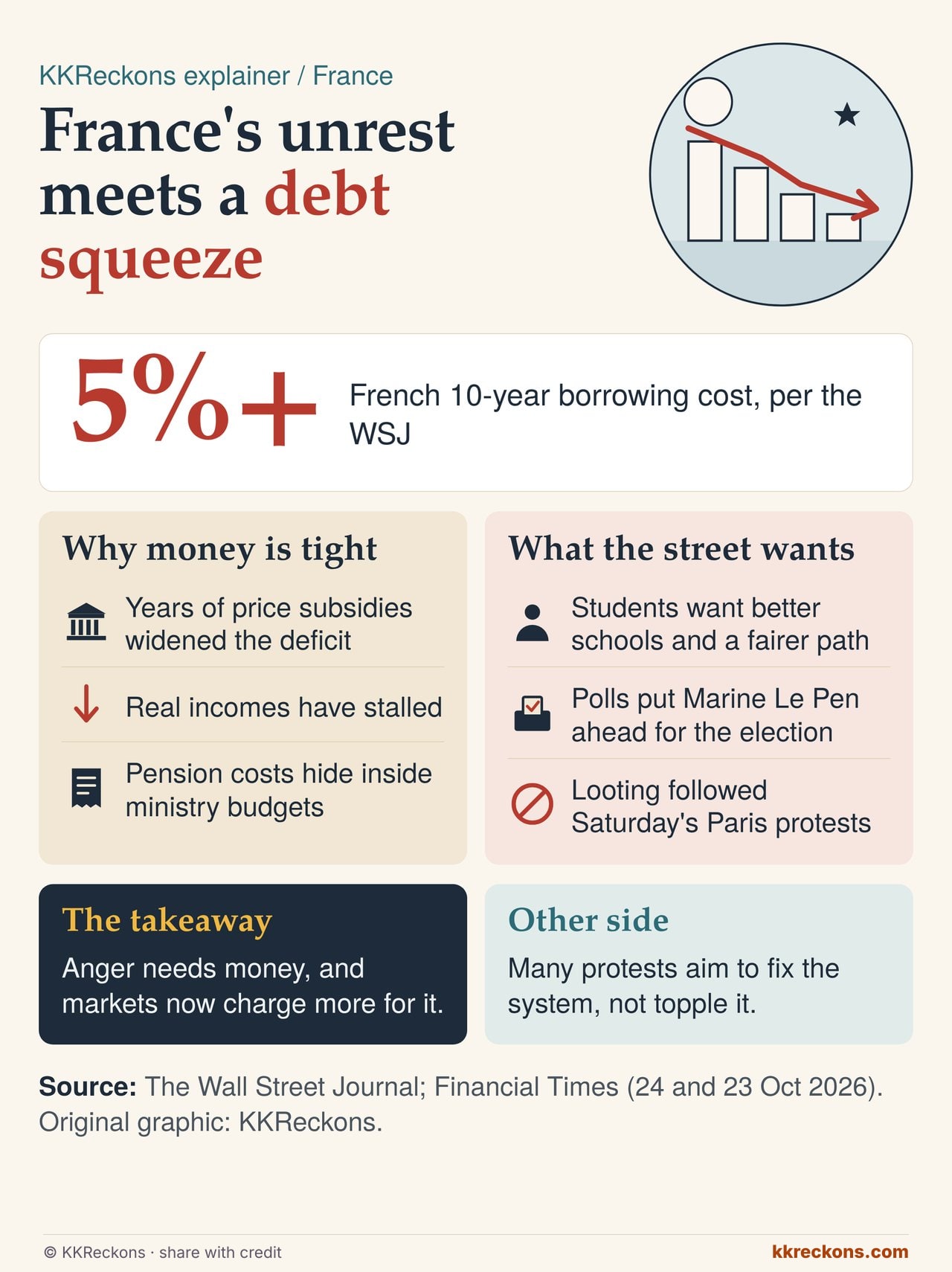
- The WSJ says years of subsidies to cushion prices have left France with one of Europe's biggest deficits, and investors have pushed its 10-year borrowing costs above 5%.
- It adds that stagnant real incomes, a heavy tax burden and pension costs hidden in ministry budgets leave little room for new help.
- The FT's Simon Kuper describes looting in Paris and polls that put Marine Le Pen in line to win next year's election, while a Janan Ganesh column argues the young protesters mostly want a fairer system, not a new one.
- 5%+
- French 10-year borrowing cost (WSJ)
Why it matters Protests need money to answer them, and markets are now charging France more to borrow it. That narrows the choices for whoever wins next year.
Other side Kuper notes the French often talk radical but act conservative, and Ganesh reads the protests as a bid to make the existing system work. So the anger may be answerable through budget choices, but the bond market may not wait for them.