Why does America hate AI? Gillian Tett on the US and Asia attitude gap (opens the source in a new tab)
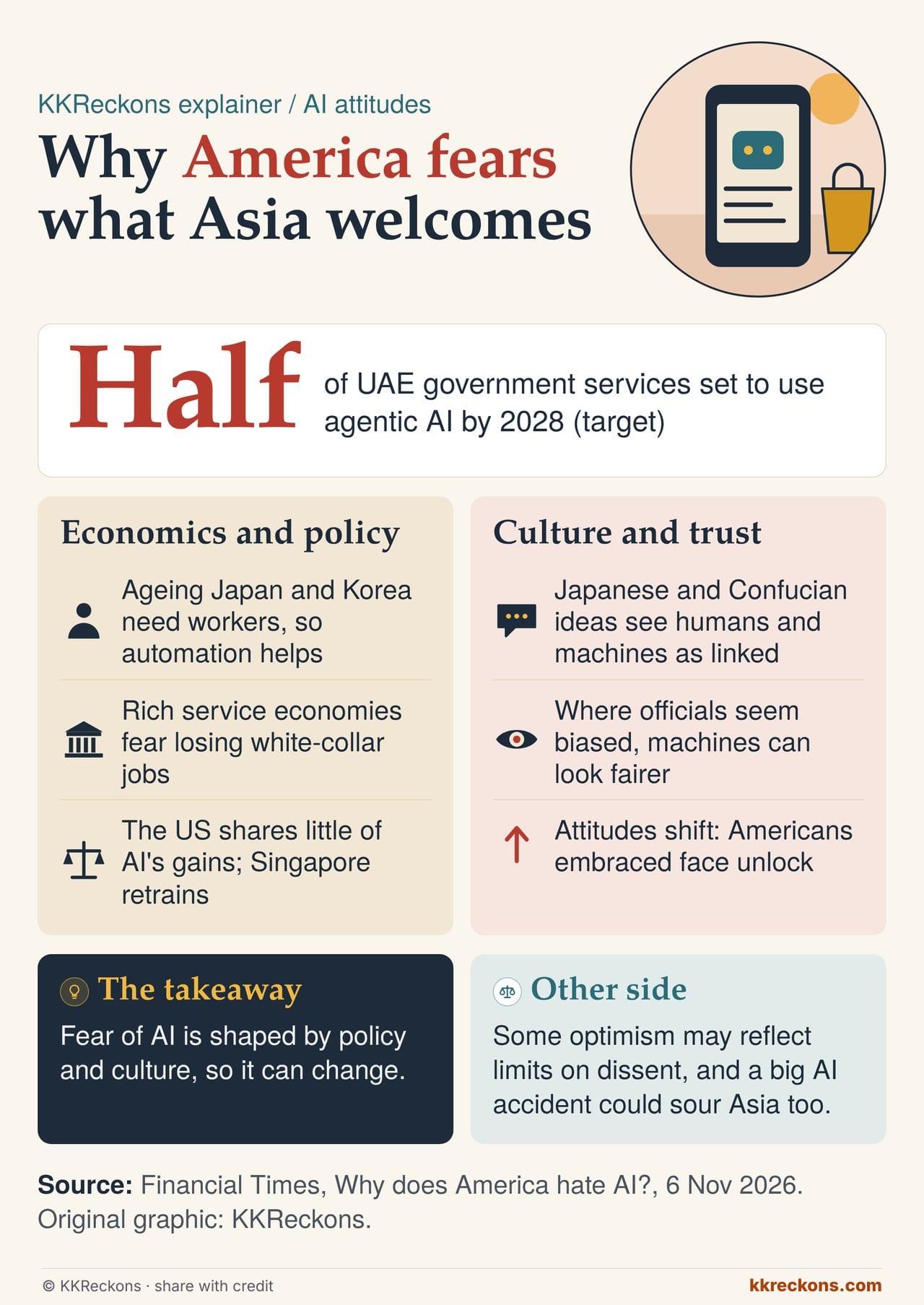
- In an FT Weekend essay, Gillian Tett argues American hostility to AI is not universal. Anger at data centres helped shape this week's midterms, yet China, much of Asia and most emerging markets are far more optimistic.
- Her first explanation is economics and policy: ageing Japan and Korea welcome automation, rich service economies fear for white-collar work, and the US does little to share AI gains or retrain workers, unlike Singapore.
- Her second is culture: traditions that see humans and machines as linked, and low trust in officials, make machines feel less threatening. Attitudes can shift, she adds.
- Half
- UAE government services due to use agentic AI by 2028 (target)
Why it matters Where the public is hostile, AI rollouts meet moratoriums and angry voters; where it is welcomed, adoption moves faster. Tett's point is that the fear is partly a policy choice, which means governments can still change it.
Other side Survey optimism can reflect less freedom to object, as Tett notes for China. And enthusiasm in Asia and emerging markets could fade quickly if AI starts taking jobs there too, or a major AI accident hits.