Private AI rises: Eternal's Dark.ai and the startups selling privacy (opens the source in a new tab)
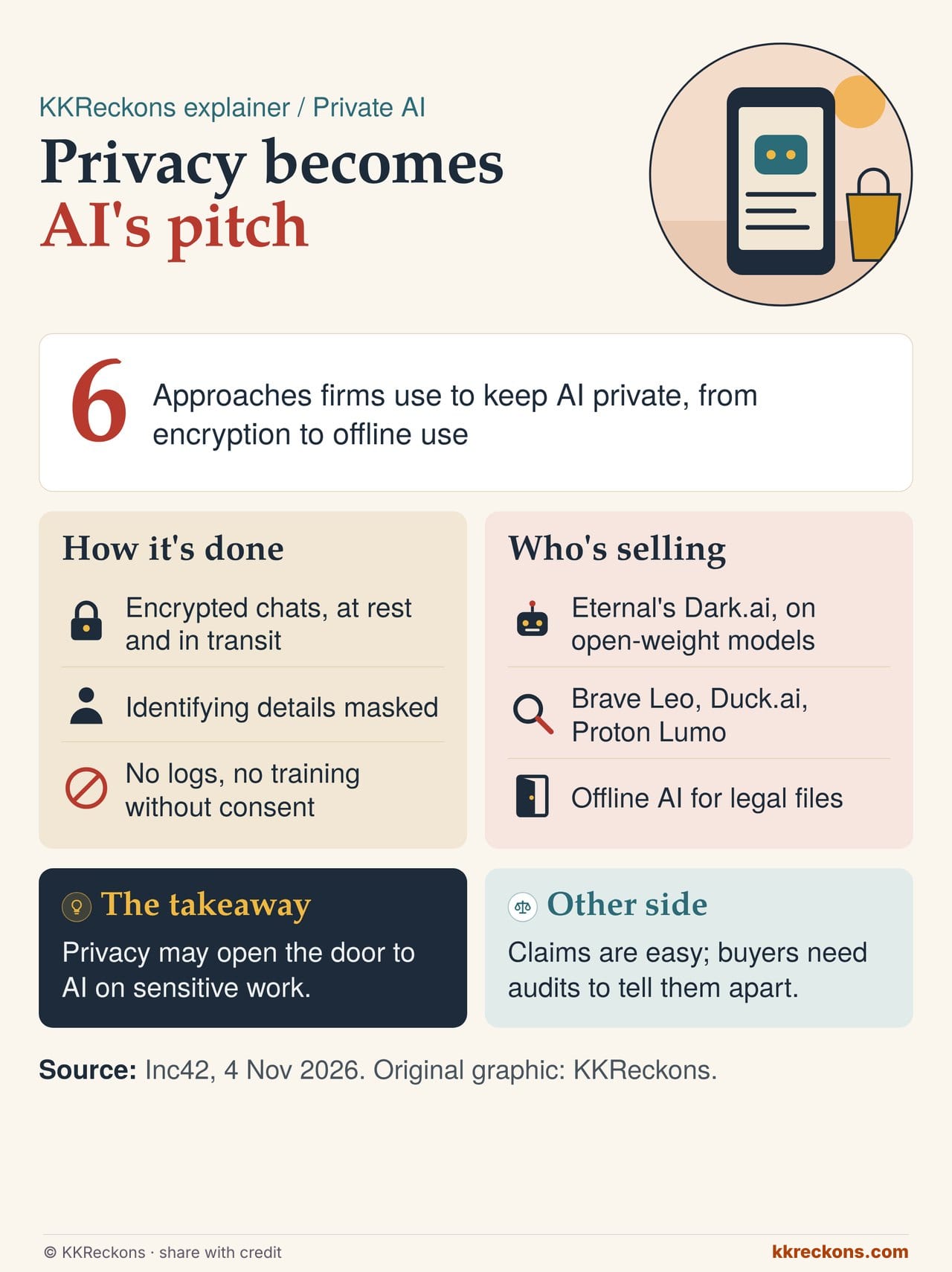
- Eternal launched Dark.ai in October, a privacy-focused assistant built on open-weight models and pitched around end-to-end encryption. Brave Leo, Duck.ai and Proton Lumo make similar promises abroad.
- There is no single fix: firms keep data on the device, mask identities, encrypt chats, keep no logs or run AI offline. Lexlegis.ai's founder says some legal clients won't let files leave their own systems.
- Founders and investors say privacy wins buyers only when the product is already useful, and it adds security and compliance costs, including under India's DPDP rules.
- 6
- Approaches firms use to keep AI private
Why it matters For law firms, lenders and anyone handling confidential records, a credible private option could decide whether AI is used on sensitive work at all. Privacy looks less like a feature and more like the door to enterprise adoption.
Other side 'Private' is easy to claim and hard to check. Without independent audits, buyers can't tell a sealed system from good marketing. And will most users really trade capability for privacy when the better assistant is a tap away?
Source:Inc42 (free to read) ↗