Tim Harford on what stolen sweets and parking fines say about cheats (opens the source in a new tab)
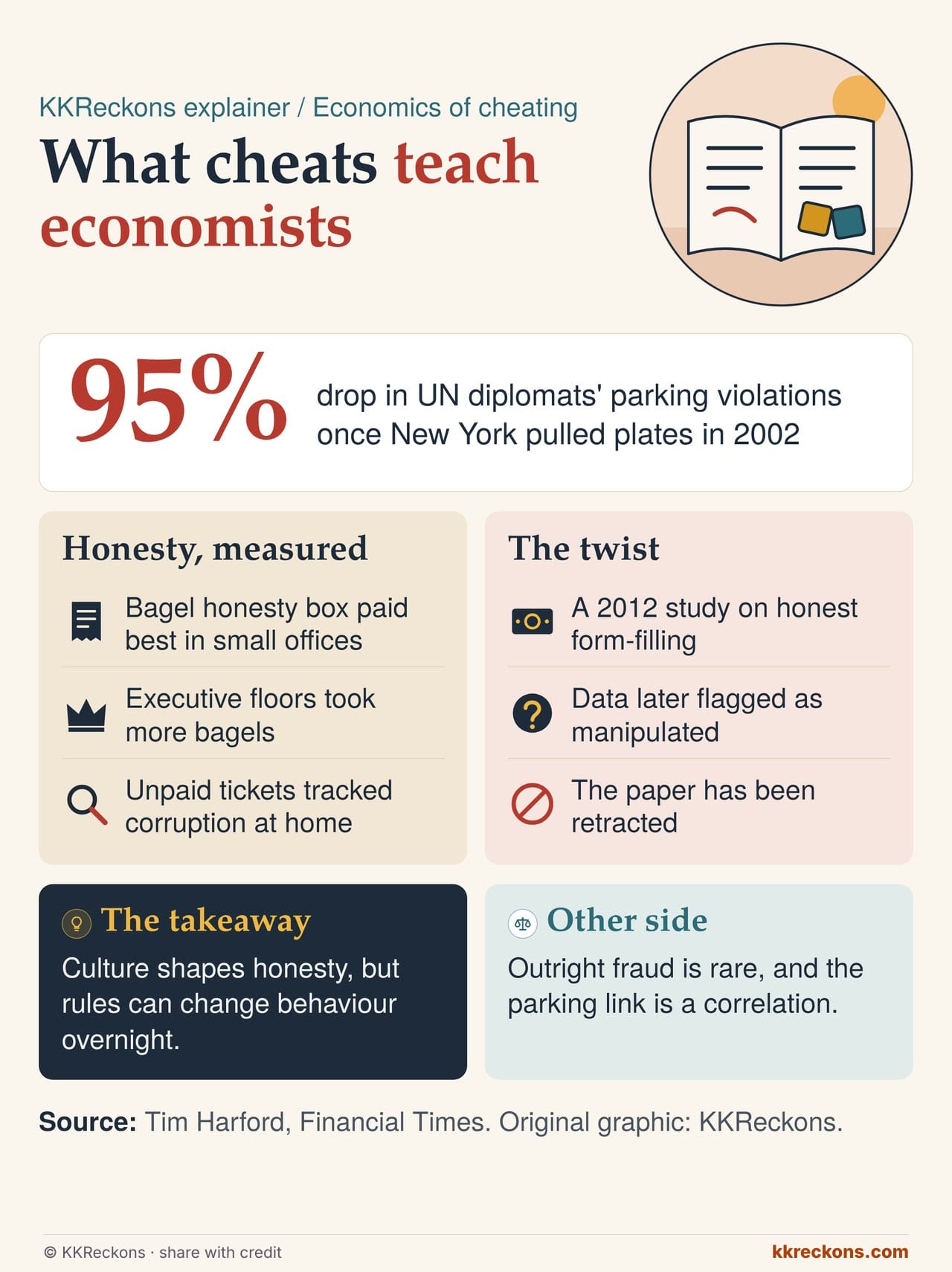
- Tim Harford cheers this year's Ig Nobel economics winners, who found upper-class people more likely to take sweets from children, and says the spoof prize shows what makes economists tick.
- He recalls classic cheating studies: a bagel seller's honesty box paid best in small offices with well-liked bosses, and UN diplomats' unpaid parking tickets tracked corruption at home until New York pulled plates and violations fell 95%.
- His darkest example is a 2012 paper on signing forms honestly, retracted after data sleuths flagged manipulated data; both researchers who supervised the questioned studies deny wrongdoing.
- 95%
- drop in UN diplomats' parking violations
Why it matters Honour systems, from office tea funds to self-assessed tax returns, work better when someone occasionally checks. And if research on honesty can itself be faked, a single striking study deserves caution.
Other side Laughing at cheats can hide how rare outright fraud is; most research is honest, and the parking link is a correlation, not proof that any one diplomat or country is dishonest.