S&P warns European banks lean too hard on risk transfer deals (opens the source in a new tab)
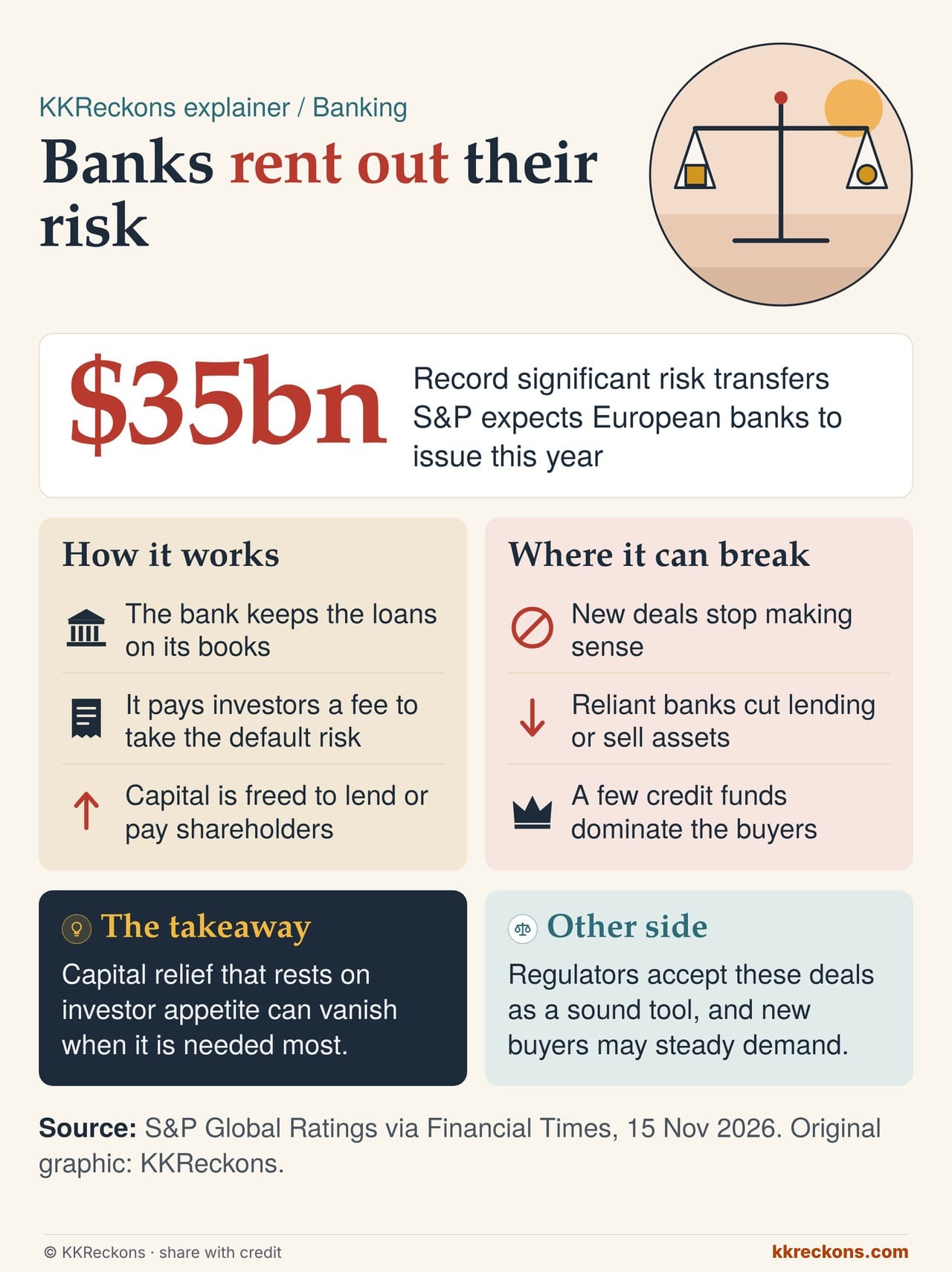
- S&P Global Ratings expects European lenders to issue a record $35bn of significant risk transfers this year. In these deals banks pay outside investors to take the default risk on a pool of loans, freeing capital.
- The motive has changed: after 2008 they were a gentler alternative to selling shares; now banks use them to lift returns, pay shareholders and lend more. Santander, BNP Paribas and Barclays lead issuance.
- S&P's main worry is forced deleveraging: if new deals stop making sense, reliant banks may have to cut lending or sell assets. A handful of credit funds dominate buying, and regulators have flagged banks financing funds that buy other banks' risk.
- $35bn
- record SRT issuance forecast this year
Why it matters When capital relief depends on investors' appetite, credit for households and firms can tighten quickly if that appetite turns. And if banks fund the buyers, the risk may never leave the banking system.
Other side Regulators broadly accept these deals as an effective balance-sheet tool, and banks now generate more capital from earnings than they need. New buyers such as insurers and pension funds could make demand steadier, not shakier.