e-NAM's lesson for AI in India: apps don't fix markets (opens the source in a new tab)
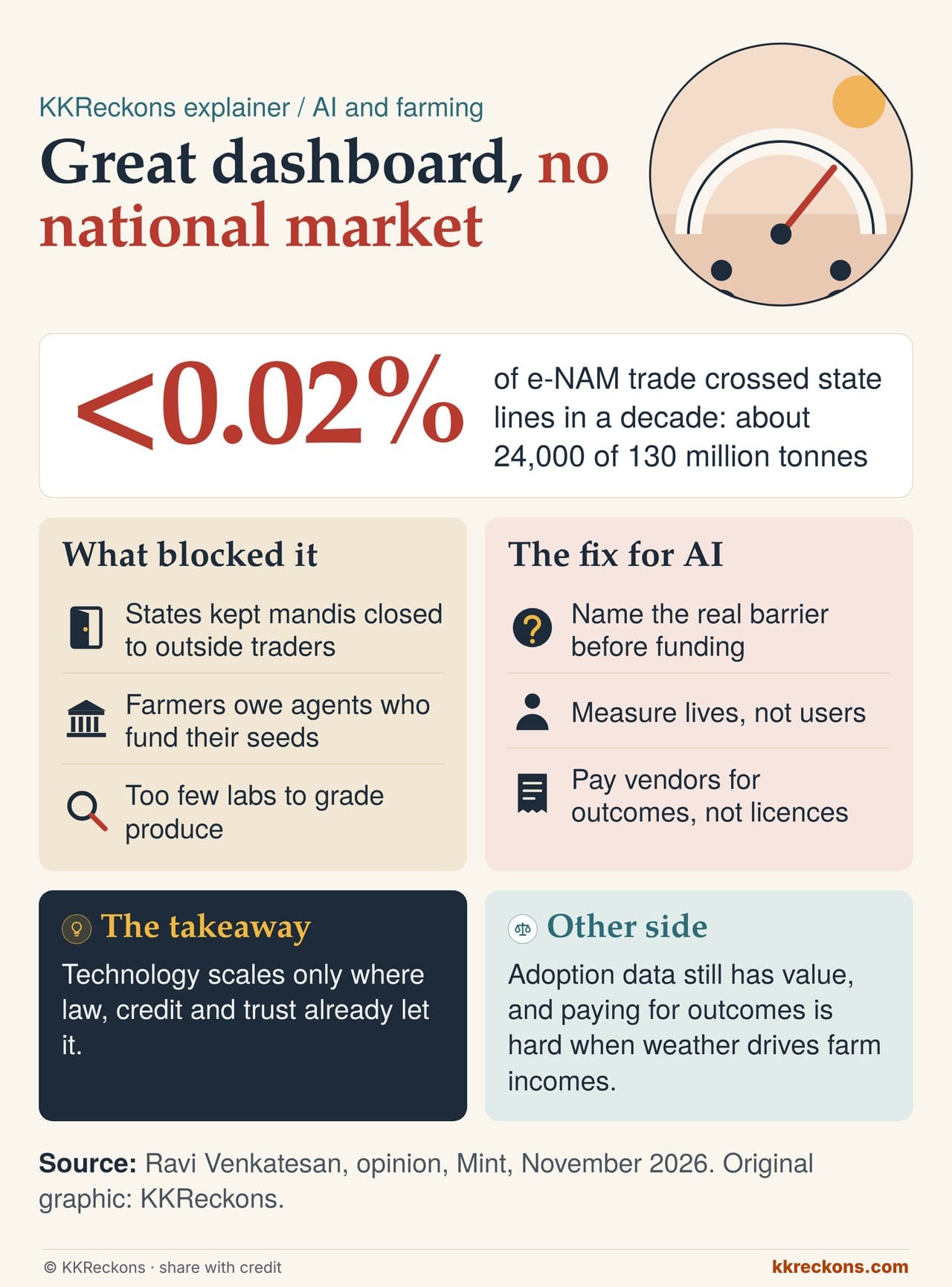
- Ravi Venkatesan, former Microsoft India chairman, argues that e-NAM, the online farm market launched in 2016, looks like a hit, linking over 1,600 mandis and 18 million farmers. Yet trade across state lines, its core purpose, is about 24,000 tonnes out of more than 130 million.
- The blocks are law, credit and trust: most states haven't opened mandis to outside traders, small farmers owe commission agents, and too few labs grade produce.
- He warns AI-for-good projects risk the same trap, citing a Kenyan trial where an AI mentor helped stronger businesses and hurt weaker ones. His fixes: tackle the real barrier first, measure lives not users, and pay vendors for outcomes.
- <0.02%
- e-NAM trade that crossed state lines
- 18mn
- farmers registered on e-NAM
Why it matters India is betting on AI for farming and public services. If success is judged by downloads, it could repeat e-NAM: a working platform and an unchanged market. Paying for income gains would change what vendors build.
Other side Adoption still counts: e-NAM built price transparency and digital habits that later reforms can use. Paying only for outcomes is hard when weather and prices swing farm incomes, and could steer vendors away from the hardest regions.
Source:Mint (free to read) ↗