Rich countries slam the brakes on migration as populations age (opens the source in a new tab)
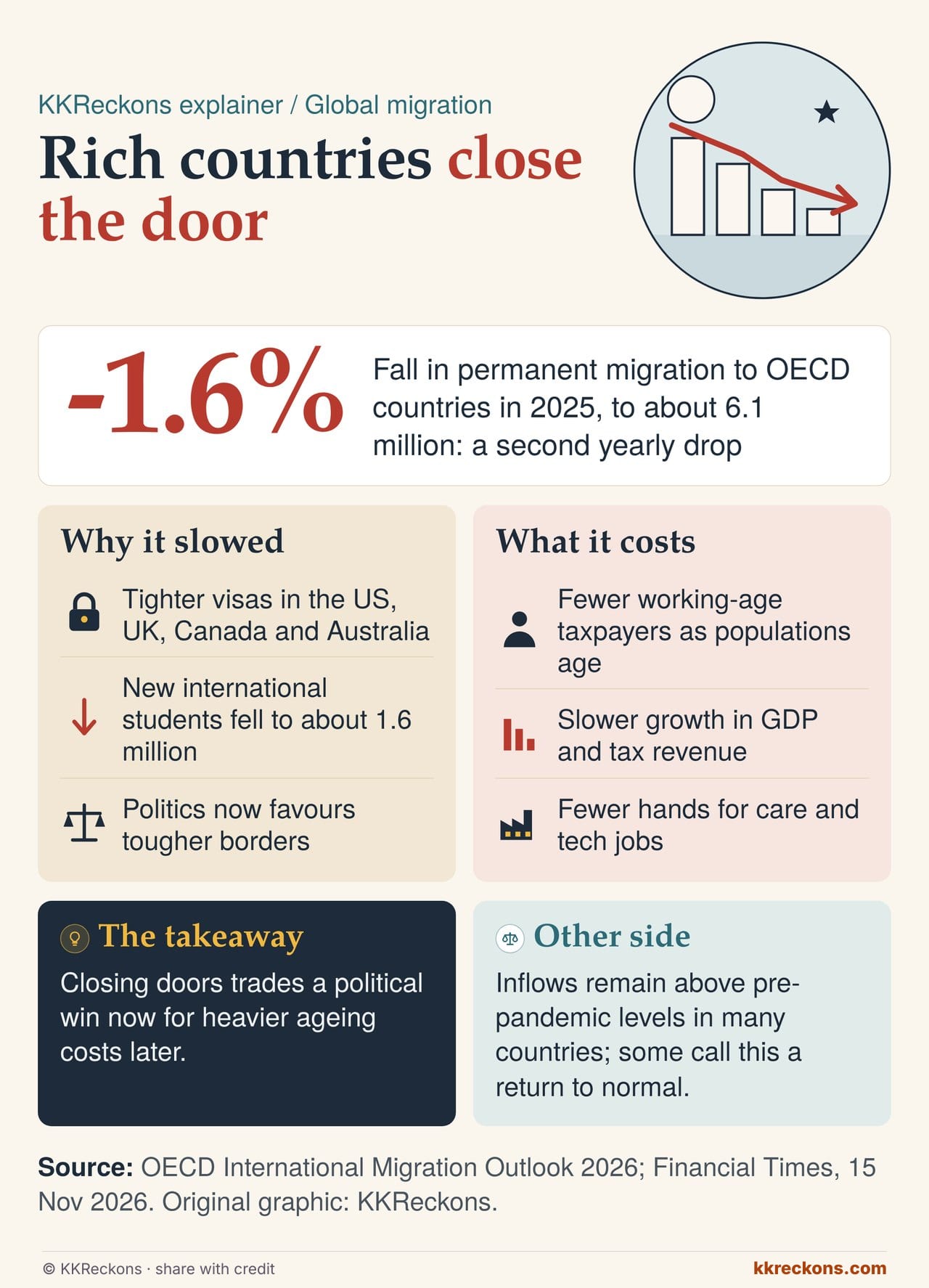
- OECD data show permanent migration to its members fell 1.6% in 2025 to about 6.1 million, a second yearly drop, though still above 2019. New international students fell to about 1.6 million.
- The FT links the slowdown to tighter visa rules in the US, UK, Canada and Australia, while Spain, Portugal and Italy keep recruiting workers. Politics points to more restriction, not less.
- Migrants ease the cost of ageing by paying taxes in their working years, but rapid inflows can strain housing, as Canada found. In India, the top country of origin, students are weighing Germany, Ireland and the Netherlands over the US.
- -1.6%
- permanent migration to OECD countries, 2025
- 1.6mn
- new international students, 2025
Why it matters For Indian families, a foreign degree is now a bet on rules that keep shifting. For rich countries, closing doors trades a political win today for slower growth and heavier pension bills later.
Other side Some economists see this as a return to normal after a one-off post-pandemic surge, and inflows remain above pre-pandemic levels in many countries. Slower arrivals can also ease pressure on housing and services.