McKinsey: a quarter of $19 trillion in imports is trade's weak spot (opens the source in a new tab)
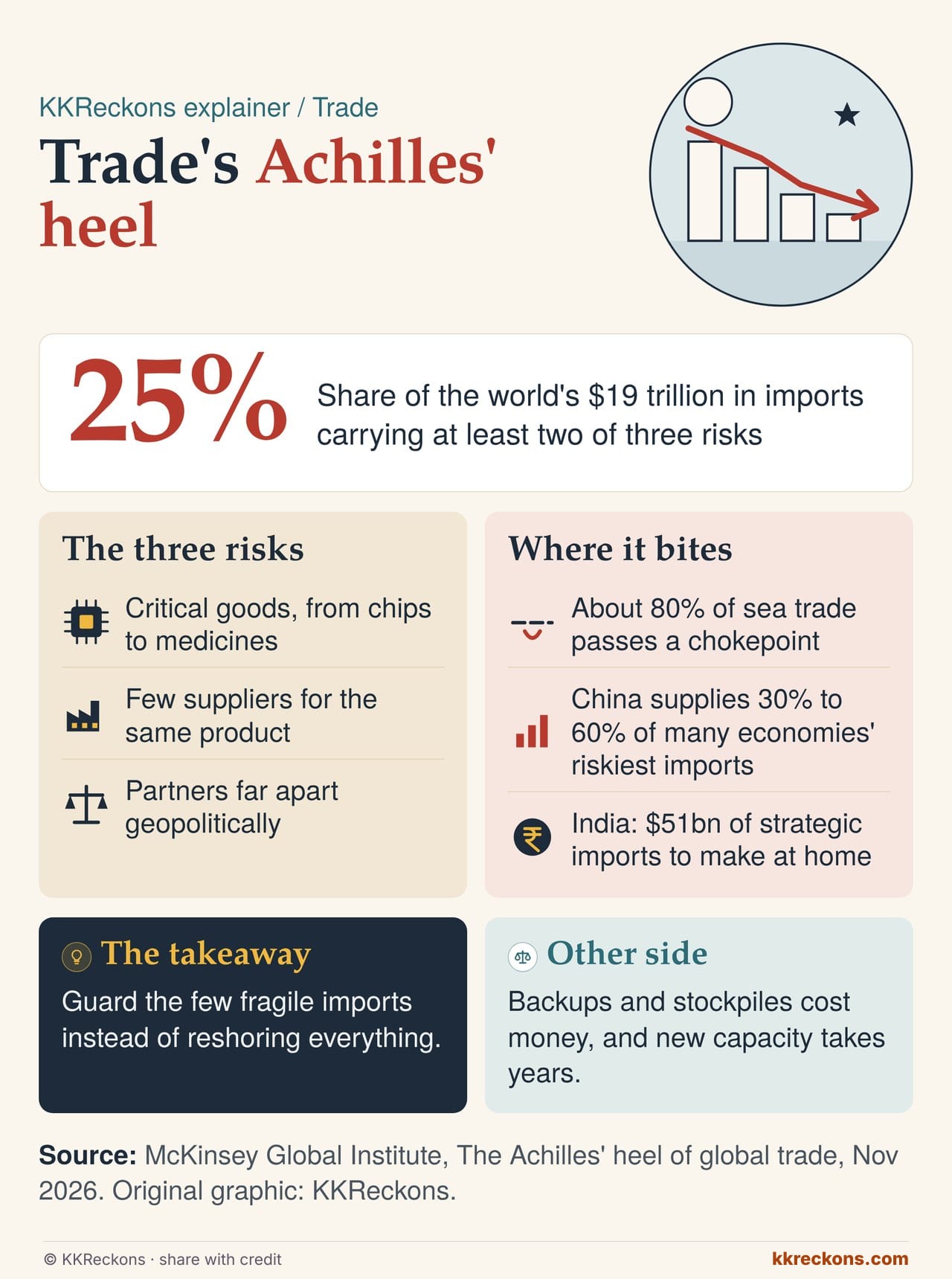
- About 25% of the world's $19 trillion in imports is highly exposed, the McKinsey Global Institute finds: these goods carry at least two of three risks, being critical, coming from few suppliers, or from geopolitically distant partners.
- Around 80% of seaborne trade passes a chokepoint. China supplies 30% to 60% of many economies' most exposed imports, but dependence runs both ways: Australia sends over half of China's iron ore imports.
- India's product exposure is below the global average, yet its energy leans on Gulf routes, and it has flagged about $51 billion of strategic imports to build at home.
- 25%
- Imports at high risk
- 80%
- Sea trade via chokepoints
- $51bn
- India's make-at-home list
Why it matters Supply shocks now come from both what you buy and the route it takes. Knowing which few imports are truly fragile lets governments and companies protect those, rather than paying to reshore everything. India's $51 billion list is a map of where new factories may follow.
Other side Resilience is not free: backup suppliers, stockpiles and home production raise costs, and the report itself says ramping up output can take years. Push too hard and fragmented trade could cost more than the shocks it guards against.