How bonds got interesting again for savers near retirement (opens the source in a new tab)
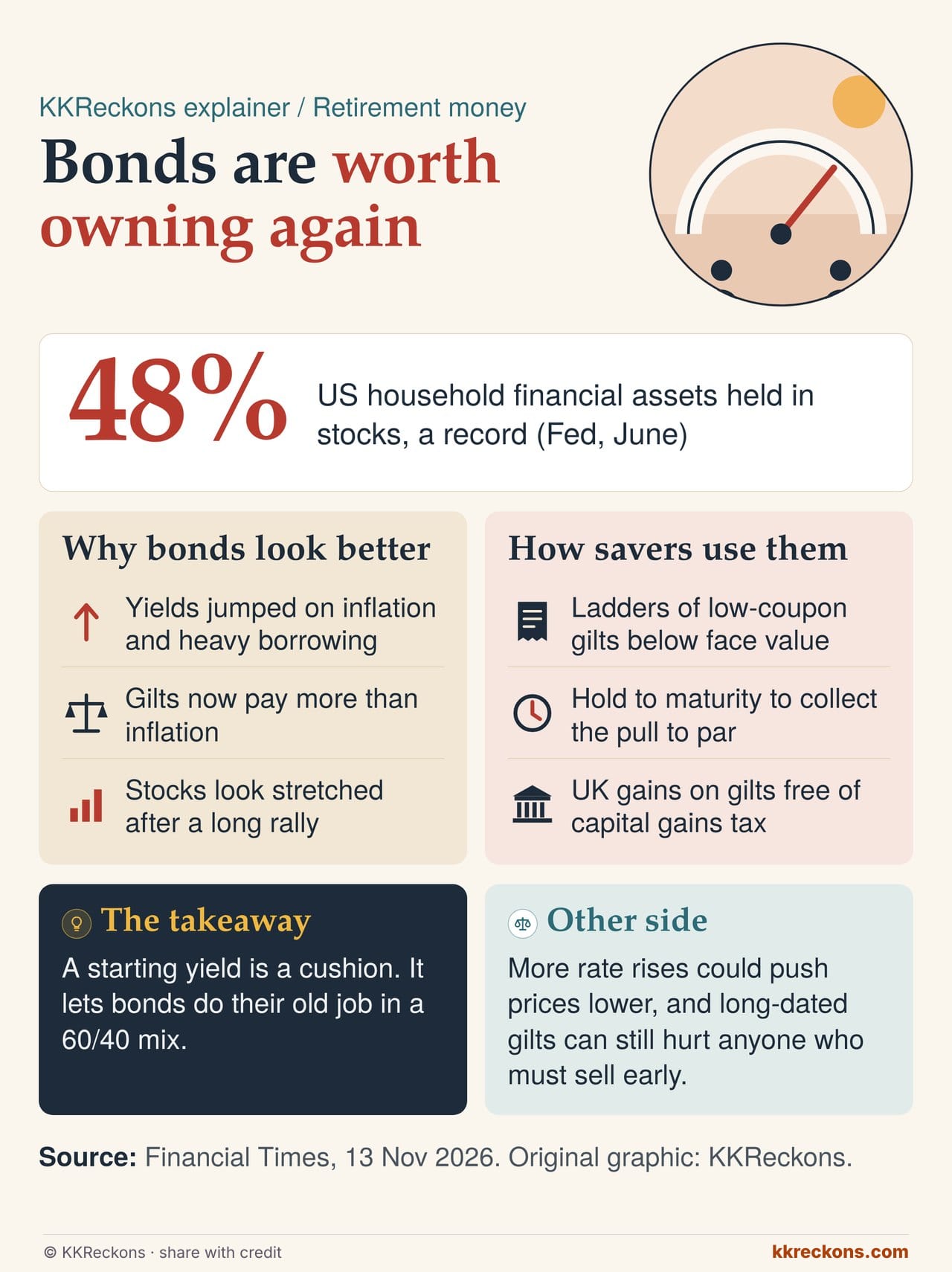
- Bond yield The annual return a bond pays at today's price; rising yields mean borrowing is getting dearer. jumped this year as a Middle East-driven inflation surge, firmer growth and heavy borrowing by governments and tech giants dashed hopes of rate cuts. UK pension managers now say gilts pay 2% or more above inflation.
- Stocks look stretched, they argue: Americans hold a record 48% of financial assets in equities. Some advisers suggest ladders of low-coupon gilts from 2020-21, which trade below face value and whose gains are free of UK capital gains tax.
- Others stay cautious: with more Bank of England rate rises likely, several managers would only load up on bonds if a recession looked near.
- 48%
- US financial assets in stocks, a record
Why it matters For anyone close to retirement, a decent starting yield is a cushion that can absorb further rate rises. That gives the classic 60/40 mix its old balance back after the losses of 2022.
Other side Yields could climb further if inflation sticks, and very long-dated gilts can still hand big losses to anyone forced to sell early. Cheap only pays if you can hold to maturity.