Cashless Nation review: the decisions that made UPI work (opens the source in a new tab)
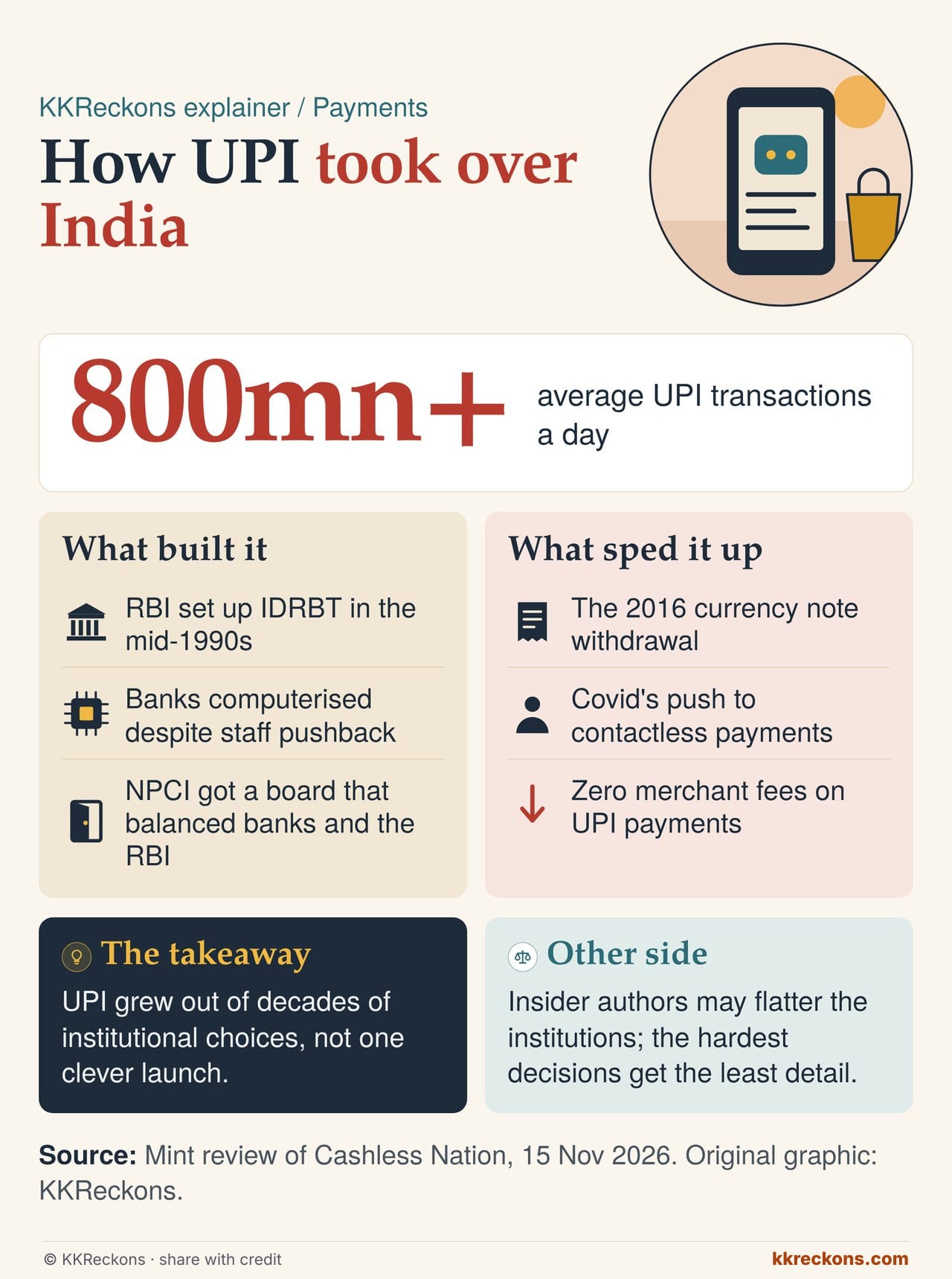
- Ravi Krishnan reviews Cashless Nation by Santanu Paul and B. Sambamurthy, two former NPCI board members, who trace UPI Unified Payments Interface: India's instant mobile payment system, run by NPCI. to choices going back to the mid-1990s, when the RBI set up IDRBT, through bank computerisation and the birth of NPCI.
- The book credits three accelerants: the 2016 note withdrawal, Covid's push to contactless payments and zero merchant fees. UPI now averages over 800 million transactions a day.
- The reviewer finds it clear-eyed on adoption but thin on process, with little on why the RBI backed an open, interoperable system or how banks adapted as cheque revenue faded.
- 800mn+
- UPI transactions a day
Why it matters The timing matters: the government plans a 0.4% merchant fee on some UPI payments while roughly half of adults are still not on it. Zero fees were one of the three things that drove adoption.
Other side Free payments still cost someone: banks and payment firms carry the bill, and a small fee could fund the reliability users take for granted. Insider authors may also give institutions more credit than critics would.
Source:Mint (free to read) ↗