Hacks on Binance and freezers expose a fragile connected world (opens the source in a new tab)
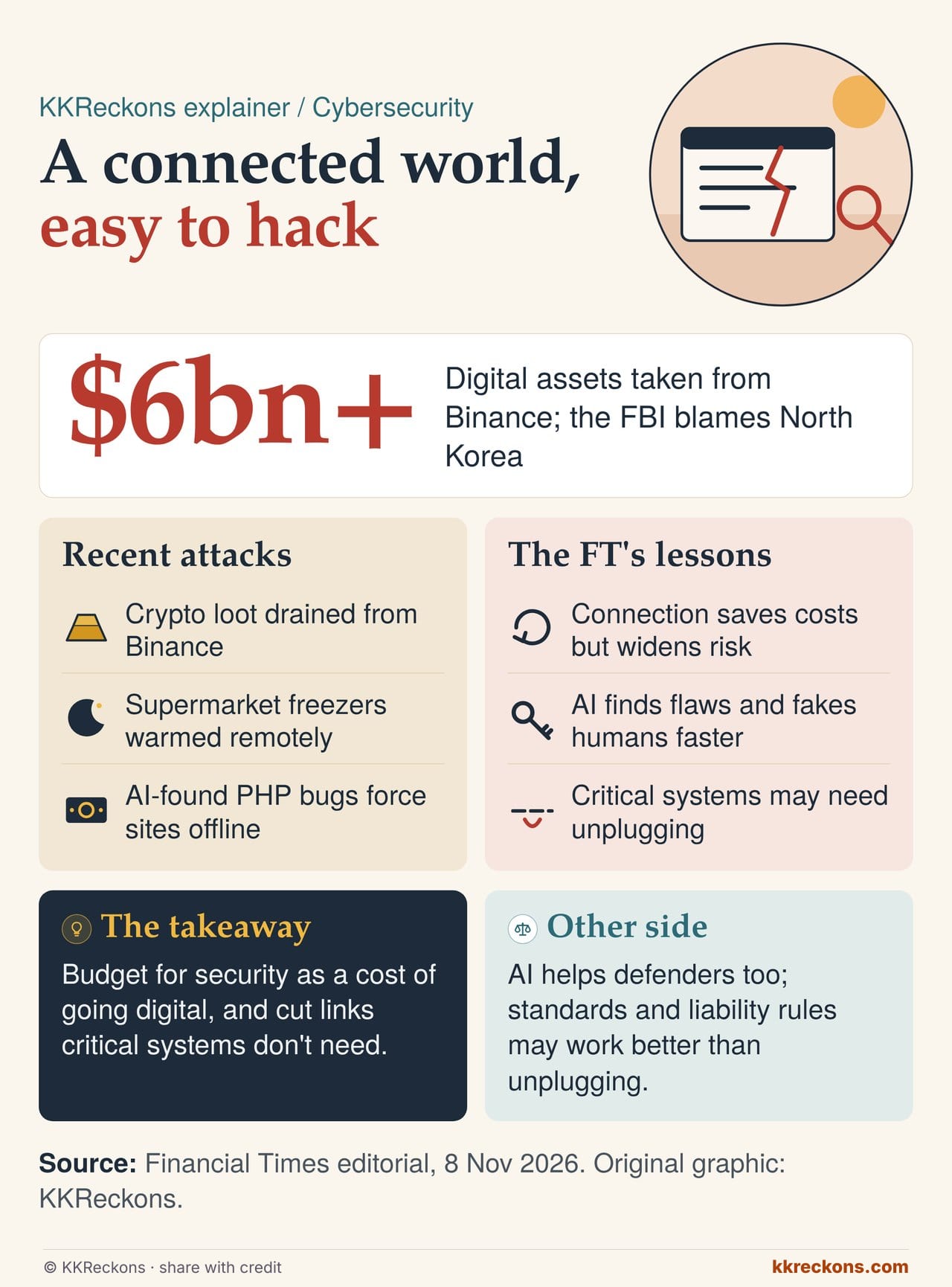
- An FT editorial links a run of attacks: hackers the FBI ties to North Korea took over $6bn in digital assets from Binance, supermarkets in several European countries had fridges and freezers warmed remotely, and about €100mn was drained from a Crédit Mutuel Arkéa account.
- Its first lesson: wiring up money, data and infrastructure saved costs but widened the attack surface, and decentralisation is no cure, since Binance worked much like a conventional bank.
- Its second: AI makes it worse, spotting bugs such as two that forced PHP websites offline and helping fraudsters pass as humans, so security budgets must rise and critical systems may need cutting off.
- $6bn+
- Taken from Binance (FBI blames North Korea)
- €100mn
- Drained from a Crédit Mutuel Arkéa account
Why it matters The same network that lets a chain tune every freezer from one office lets an attacker do it too, and AI now finds weak spots faster than most firms can patch them.
Other side AI helps defenders find and fix bugs too, and unplugging throws away real savings. Tougher standards and liability rules, which the editorial also backs, may do more than a retreat from connectivity.