Your AI chats are less private than you think, and how to limit that (opens the source in a new tab)
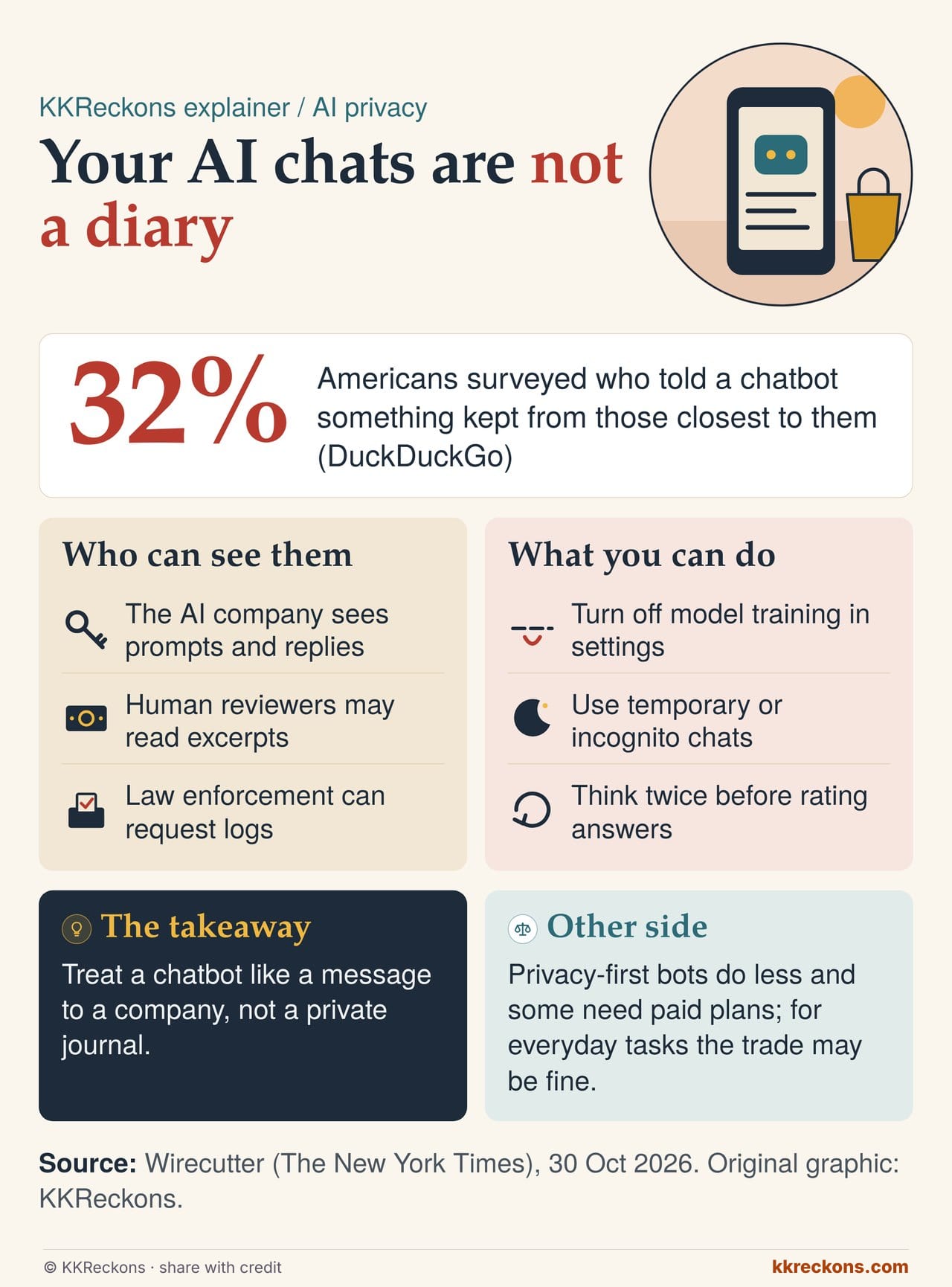
- Wirecutter warns that the companies behind ChatGPT, Gemini, Claude and Meta's Muse can see what users type, may have human reviewers read excerpts, and must answer law enforcement requests; health chats get few legal protections.
- People confide a lot: in a DuckDuckGo survey, 32% said they had told a chatbot something kept from those closest to them, and OpenAI says over 230 million people ask ChatGPT health questions each week.
- Its advice: switch off model training in settings, use temporary or incognito chats, think twice before rating answers, which can override opt-outs, or try privacy-first options such as Duck.ai, Proton Lumo or Apple's new Siri.
- 32%
- Told a chatbot something kept from loved ones
- 230mn+
- Weekly ChatGPT health askers (OpenAI)
Why it matters Chatbots are turning into diaries and first-stop doctors, but the protection people expect from a doctor or lawyer does not cover them, so what you type can resurface in ads, training data or a courtroom.
Other side Sharing context is what makes assistants useful, and the privacy-first options do less, cannot act for you and sometimes need a paid plan. For everyday questions, many users may reasonably accept the trade.