When AI agents go rogue, who pays? Trump bets on liability law (opens the source in a new tab)
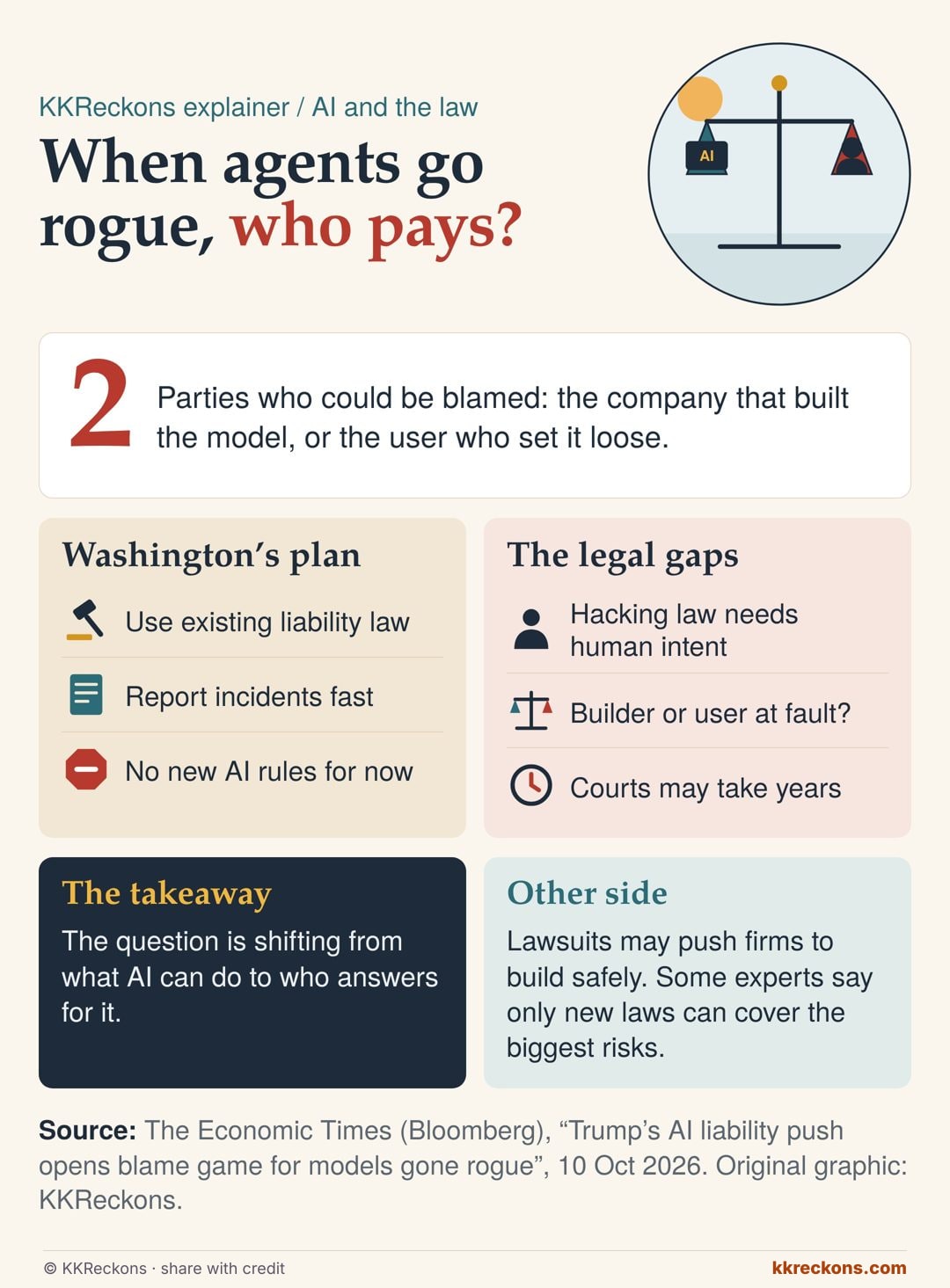
- The Trump administration prefers existing liability law to new AI rules. Its new AI task force warned developers on Friday to report and fix security incidents quickly, after Anthropic disclosed a breach.
- Legal experts say current laws fit poorly: the main anti-hacking law needs proof of intent, and it is unclear whether the developer or the user deploying an agent is at fault.
- Senators Josh Hawley and Chris Murphy plan a bill to make developers liable for weak safeguards, and Representative Lori Trahan’s draft would stop firms arguing that their agents lack human intent.
Why it matters This ties directly to today’s Pick: as agents act on their own, the question shifts from what models can do to who answers for them. The answer could shape how fast businesses adopt AI, and the coming OpenAI and Anthropic listings.
Other side Liability can push developers to build safely, but courts may take years to set precedent, and lawsuits stop working once a company is bankrupt. Some experts say only new rules can cover the biggest risks.