Long read: how space became a front line in Ukraine's war (opens the source in a new tab)
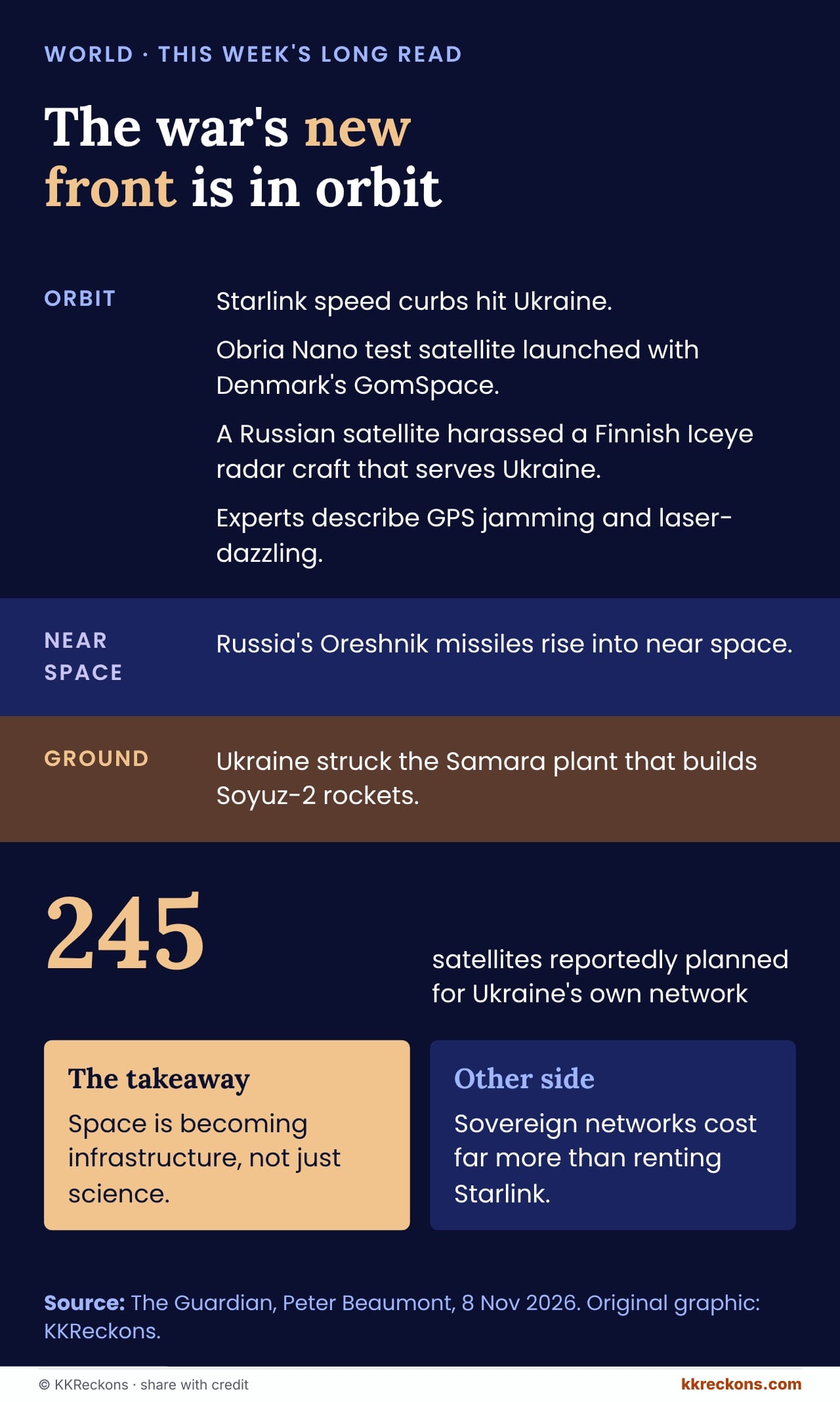
- The Guardian's Peter Beaumont traces how the war has spread into orbit: Ukraine struck the Samara plant that builds the Soyuz-2 rockets launching Rassvet, Russia's Starlink replacement, while Russia has fired Oreshnik missiles that rise into near space.
- After Starlink speed curbs, Ukraine and Denmark's GomSpace launched Obria Nano, a test satellite for a sovereign network reportedly of about 245 satellites.
- Experts describe GPS jamming, laser-dazzling and a Russian satellite harassing a Finnish Iceye radar craft that serves Ukraine; everyone now wants their own Starlink, one says.
- 245
- satellites reportedly planned
Why it matters Space is turning into infrastructure. For investors, look beyond defence contractors: satellite building and launch, earth observation, secure communications, space surveillance and connectivity are separate markets with different business models, capital needs and risks.
Other side If a private company can shape a country's access to communications and intelligence, who holds the high ground? Going sovereign is costly too: a Ukrainian MP admits funding is a significant issue.