Neutral atoms speed the race to a working quantum computer (opens the source in a new tab)
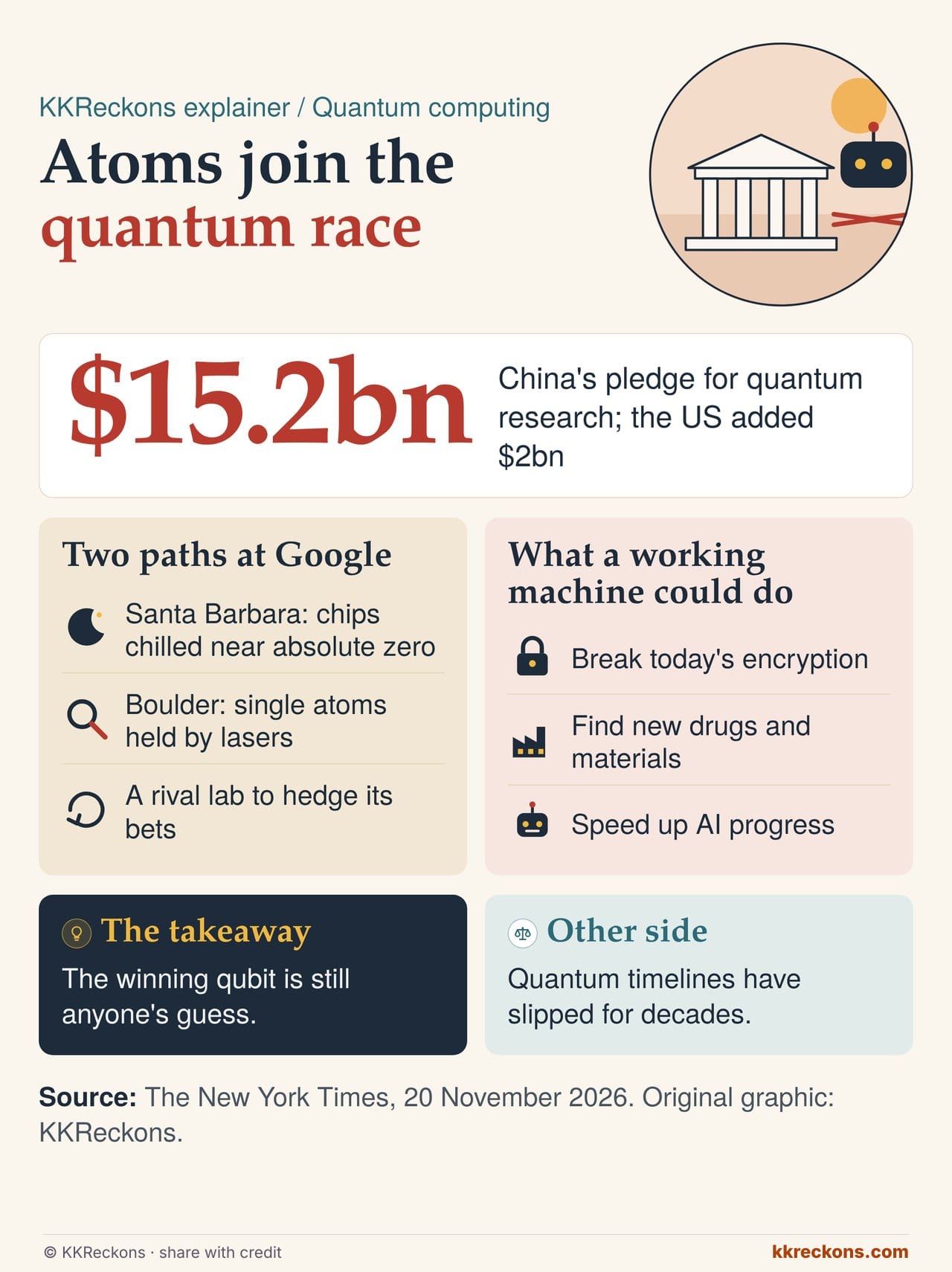
- Many experts now think a usable quantum computer could arrive by the end of the decade or soon after, the NYT reports. China has pledged more than $15.2bn to quantum research and the US has put $2bn into start-ups and chipmakers.
- The twist is Google: after a decade on superconducting chips chilled near absolute zero, it opened a rival lab in Boulder this year to work on neutral atoms, single atoms trapped and moved with lasers.
- Backers say movable atoms make error correction, the field's biggest hurdle, easier. Harvard's Mikhail Lukin says Chinese companies are piling into the same approach.
- $15.2bn
- China's quantum pledge
Why it matters A working machine could speed up drug, materials and AI research, and would eventually threaten today's encryption, which is why Google has pledged to overhaul its own before 2030.
Other side Quantum timelines have slipped for decades, and no approach has yet corrected errors at a useful scale. Google's own lab head still expects superconducting qubits to win in the long run.