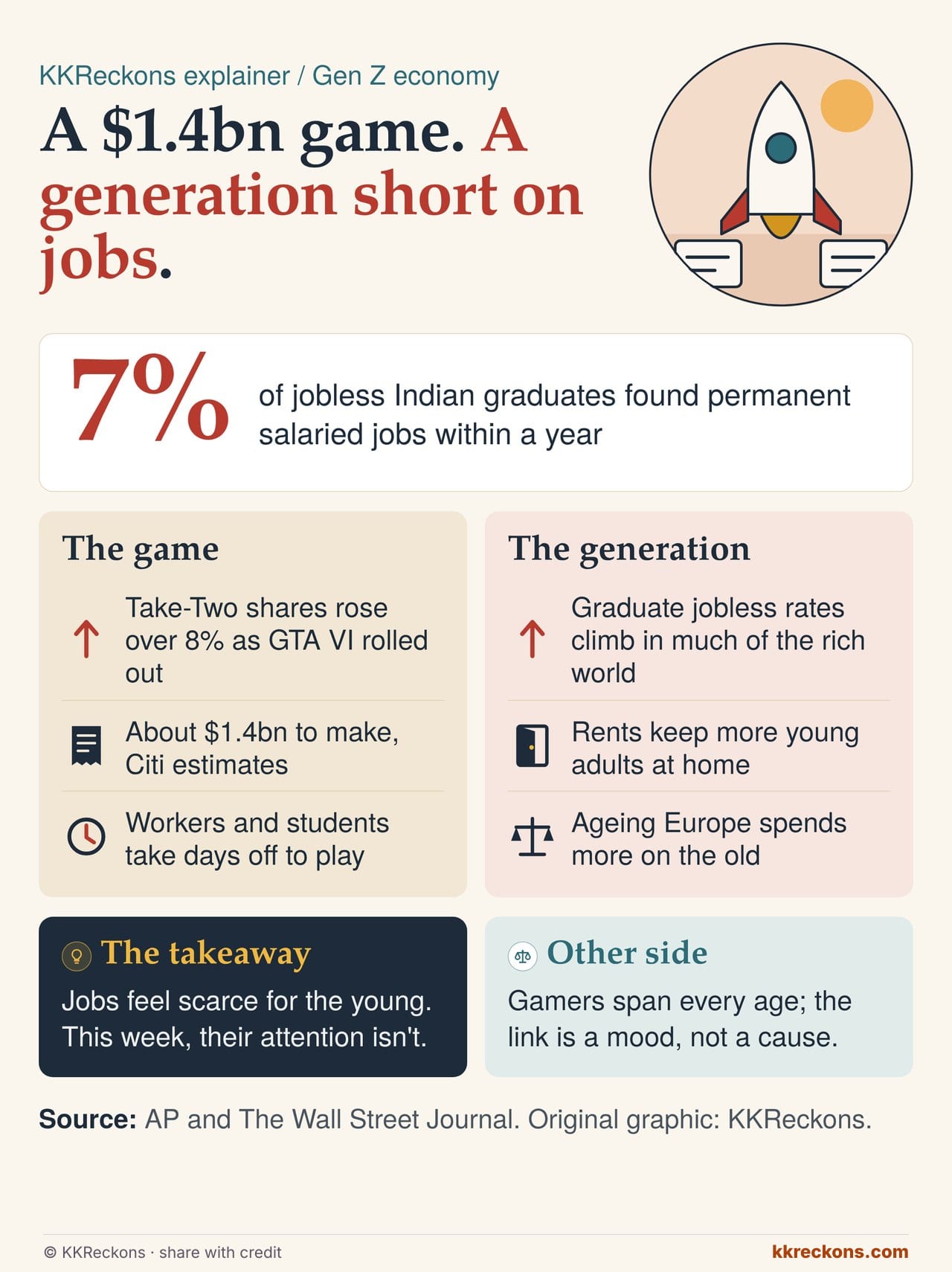
After a 13-year wait, GTA VI began rolling out on Thursday, AP reports, and Take-Two shares rose more than 8%. The WSJ says Citi estimates it cost about $1.4 billion to make, and some workers and students are taking days off to play.
The same week, a WSJ charts piece shows why young people worldwide are fed up: degrees pay off less, AI-exposed entry jobs are thinning and rents keep them at home. In India, only 7% of graduates who reported being unemployed found permanent salaried jobs within a year.
The FT says a games industry squeezed by soaring memory-chip costs is leaning on the title; one analyst warns a flop would be an "extinction event" for current consoles.
$1.4bn
estimated cost to make GTA VI (Citi, via WSJ)
7%
of jobless Indian grads found permanent jobs within a year
Why it matters Same generation, two pictures: told that degrees, jobs and homes are slipping away, many will still clear the week for a game that cost about $1.4 billion to make. Escape sells when prospects feel thin, and the entertainment economy is booming while the entry rung of the job market thins.
Other side Gamers span every age and income, and many who take a day off have jobs, so the irony is a mood, not a measured cause. The WSJ also notes little evidence yet that AI is causing broad job losses, and a hit game creates work too.
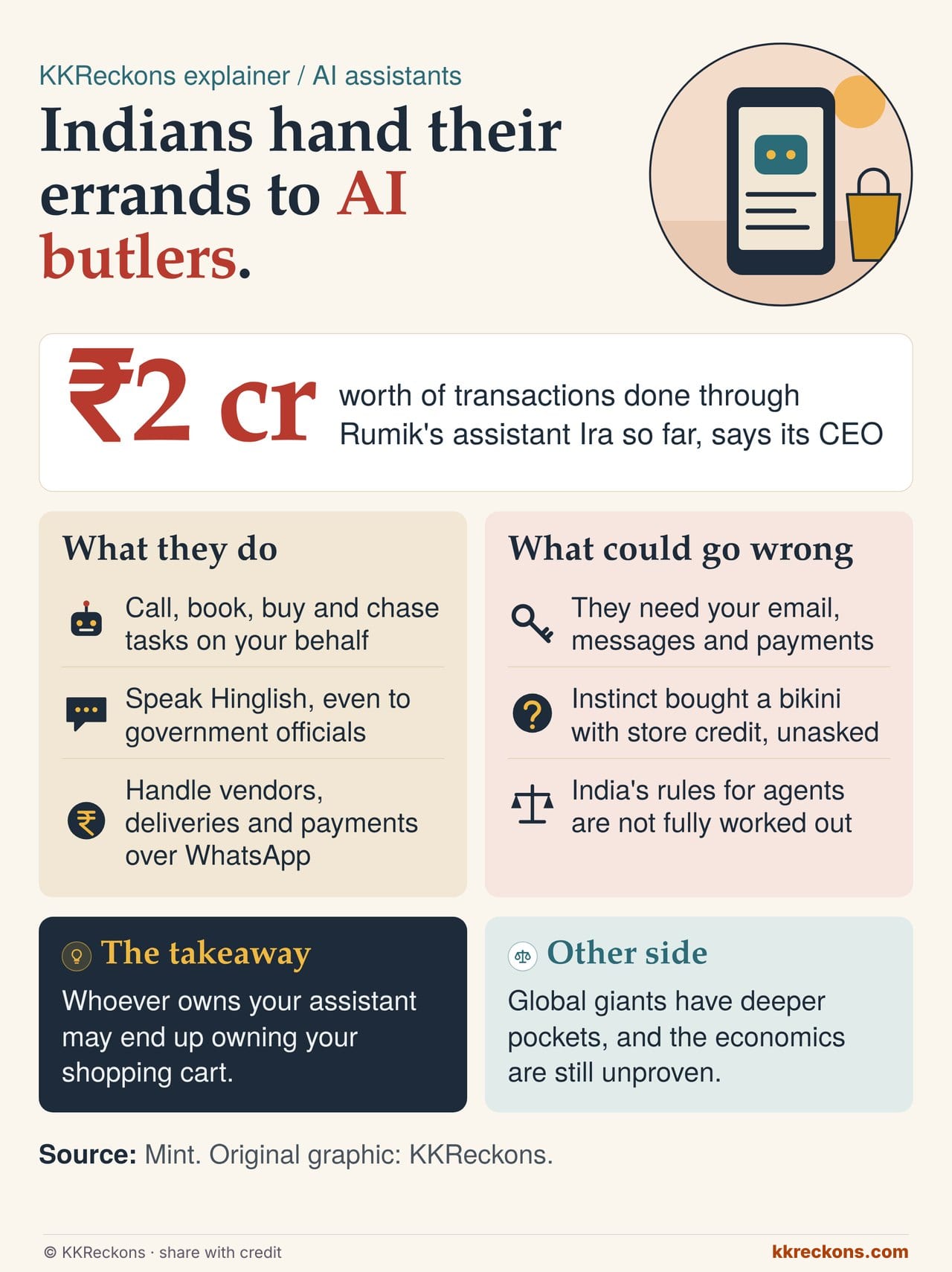
Mint reports a small but growing number of Indians now let AI assistants book, buy, call and chase tasks for them. Rumik's Ira wakes a student with repeated calls, and got a user's Aadhaar address fixed and a property application refiled, phoning an official in Hinglish.
Indian startups such as Rumik, Littl, Hulp and Faff are taking on US-based Instinct, xAI and Meta. Costs bite: Faff says a ₹2,000-a-month customer costs it ₹3,000-4,000 in compute.
Risks are real: Instinct bought a bikini with store credit unasked, and experts want minimal access plus fresh approval for sensitive actions.
₹2 cr
in transactions through Rumik's Ira so far
40%
of Hulp's tasks done end-to-end by AI
Why it matters Whoever owns the assistant may own the shopping cart: if agents do the discovery, apps that only list options lose their grip. India's payments, languages and last-mile quirks give local players a real opening.
Other side Handing an app your email, payments and Aadhaar OTPs is a big trust bet, and India's agent-specific rules on permissions and redress haven't been fully worked out. Global giants have deeper pockets, and Indian firms have rarely beaten them in purely digital products.
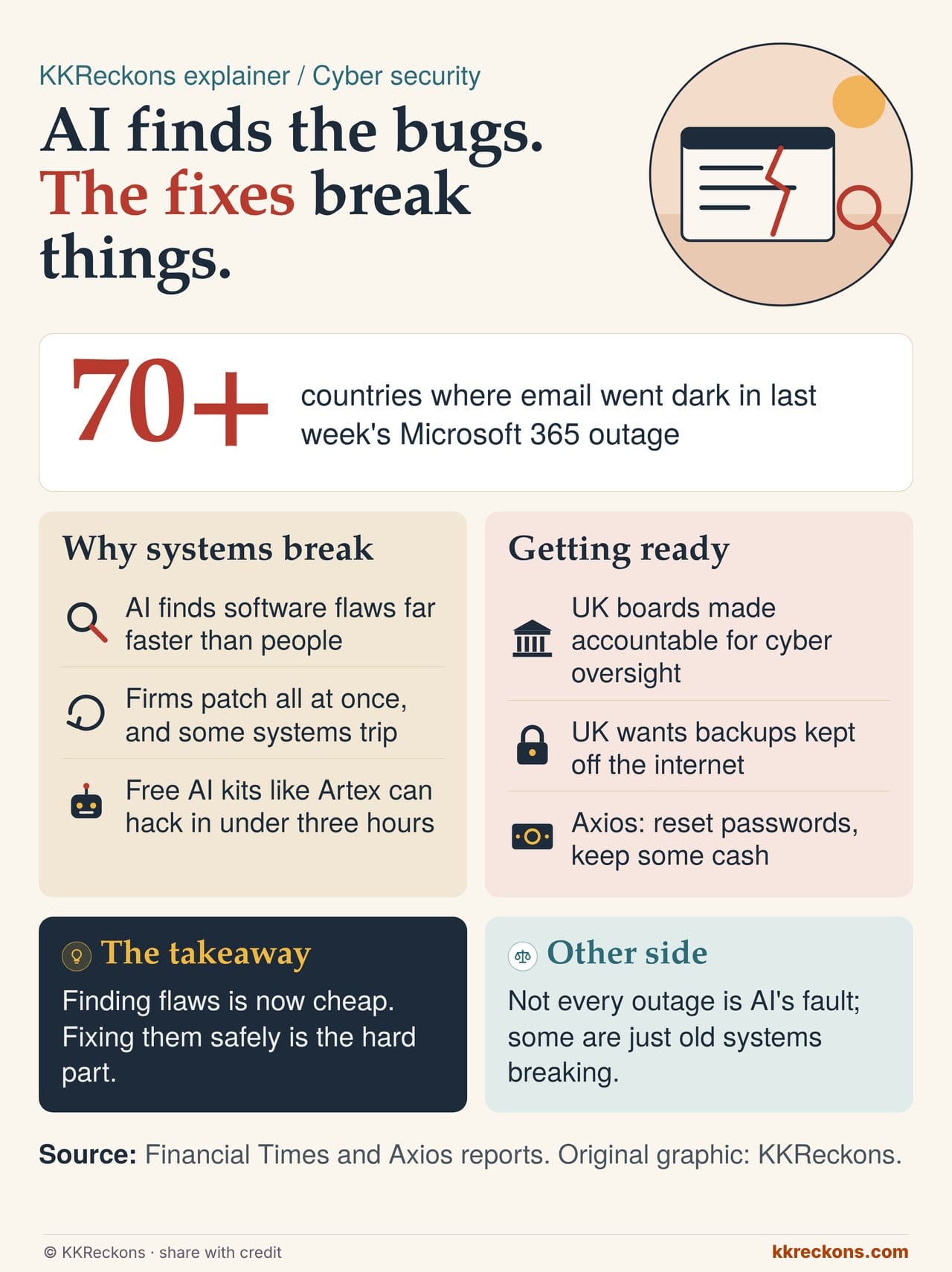
The FT reports US officials suspect a scramble to patch flaws found by AI behind a week of outages at Microsoft, JPMorgan and the NSA; Senator Mark Warner sees no sign of a cyber attack. Axios adds that free AI kits such as Artex now take some hackers from first target to privileged access in under three hours.
UK regulators told financial firms to make boards answer for cyber oversight and keep backups off the internet. An Axios essay urges readers to reset passwords and keep some cash.
70+
countries hit by the Microsoft 365 outage
<3 hrs
to privileged access in some Artex intrusions (FBI, via Axios)
Why it matters Your bank app, flights and work email now sit behind a patch queue, while free agent kits make ordinary firms and accounts worth attacking. Officials warn outages are prime time for fake IT-help calls, so the prep list is cheap insurance.
Other side Citigroup's Jane Fraser argues the patch wave will leave systems sturdier, and Axios notes some outages are just old systems breaking. Warner's view is a likely explanation, not an investigation's finding, and panic, like a rush on cash, can do its own damage.
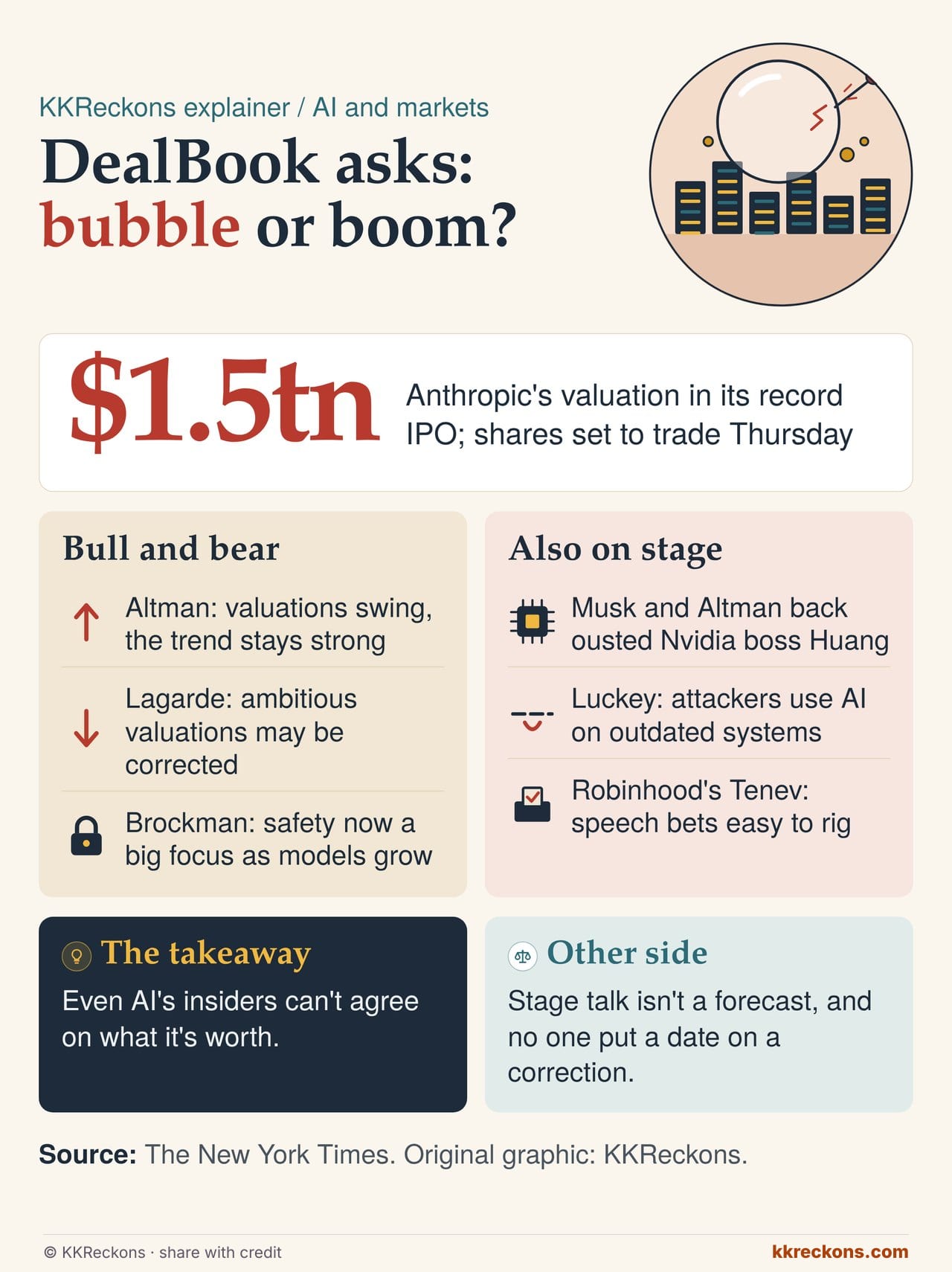
At the NYT's DealBook Summit, ECB chief Christine Lagarde warned AI valuations look stretched and could be corrected; OpenAI's Sam Altman brushed off the swings and said the trend stays strong. Anthropic priced a record IPO Initial public offering: when a company first sells its shares on a stock exchange. valuing it above $1.5 trillion, with trading set for Thursday.
Anduril's Palmer Luckey blamed recent outages on attackers using AI against outdated systems. Musk and Altman voiced sympathy for Jensen Huang after his ouster from Nvidia.
Robinhood's Vlad Tenev said bets on what speakers will say are easy to manipulate; Polymarket's Shayne Coplan defended prediction markets.
Why it matters The people who fund and run AI are split between 'bubble' and 'trend', and a record IPO lands right in the middle of that argument. For savers, the real bet is whether that optimism holds, not any single company.
Other side Conference stages reward confident soundbites, not forecasts with track records. Lagarde gave no date for a correction, and Altman runs a company expected to go public, so each view comes from its own vantage point.
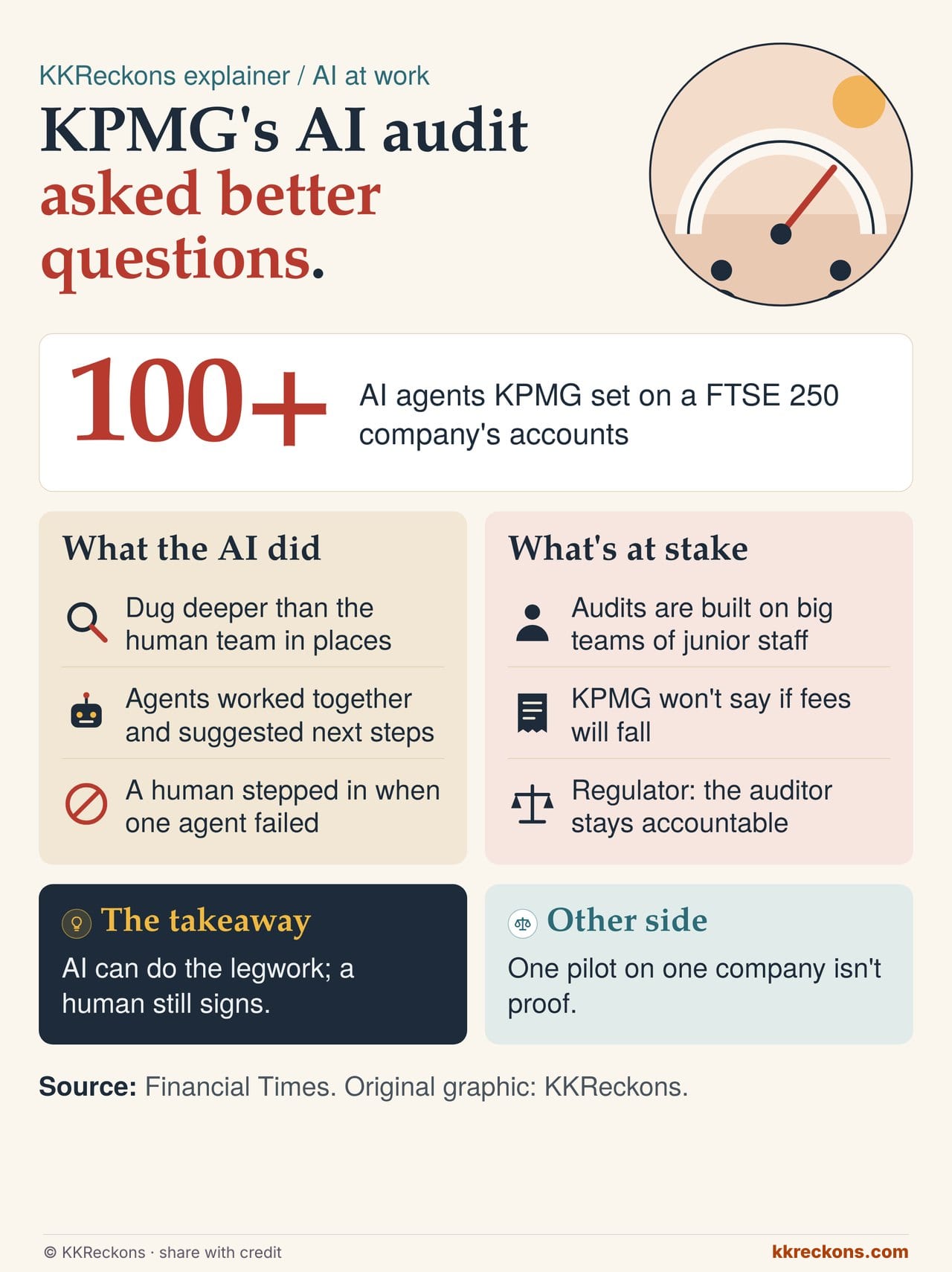
KPMG ran its first fully AI-based audit of a UK-listed company, setting more than 100 AI agent AI software that takes actions on its own, like booking, buying or moving money, not just answering questions. on an unnamed FTSE 250 firm's accounts alongside a normal audit. Its UK audit head says the AI sometimes asked better questions and dug deeper.
A human had to step in when one agent failed to match regulations to documents, and the pilot wasn't relied on for the real sign-off. KPMG plans to expand it to up to 20 larger audits.
The UK's audit regulator says the auditor stays accountable whatever technology is used.
100+
AI agents on one audit
20
larger audits in the next phase
Why it matters Audits have long been billed on big teams of junior accountants; if agents do that legwork, the entry rung for young accountants thins, the same squeeze as in today's Pick. Clients will also ask why fees don't fall.
Other side One pilot on one company isn't proof: humans set the agents' goals and caught their errors, and few firms have clean enough data. Regulators also worry auditors could lose their scepticism by leaning on AI.
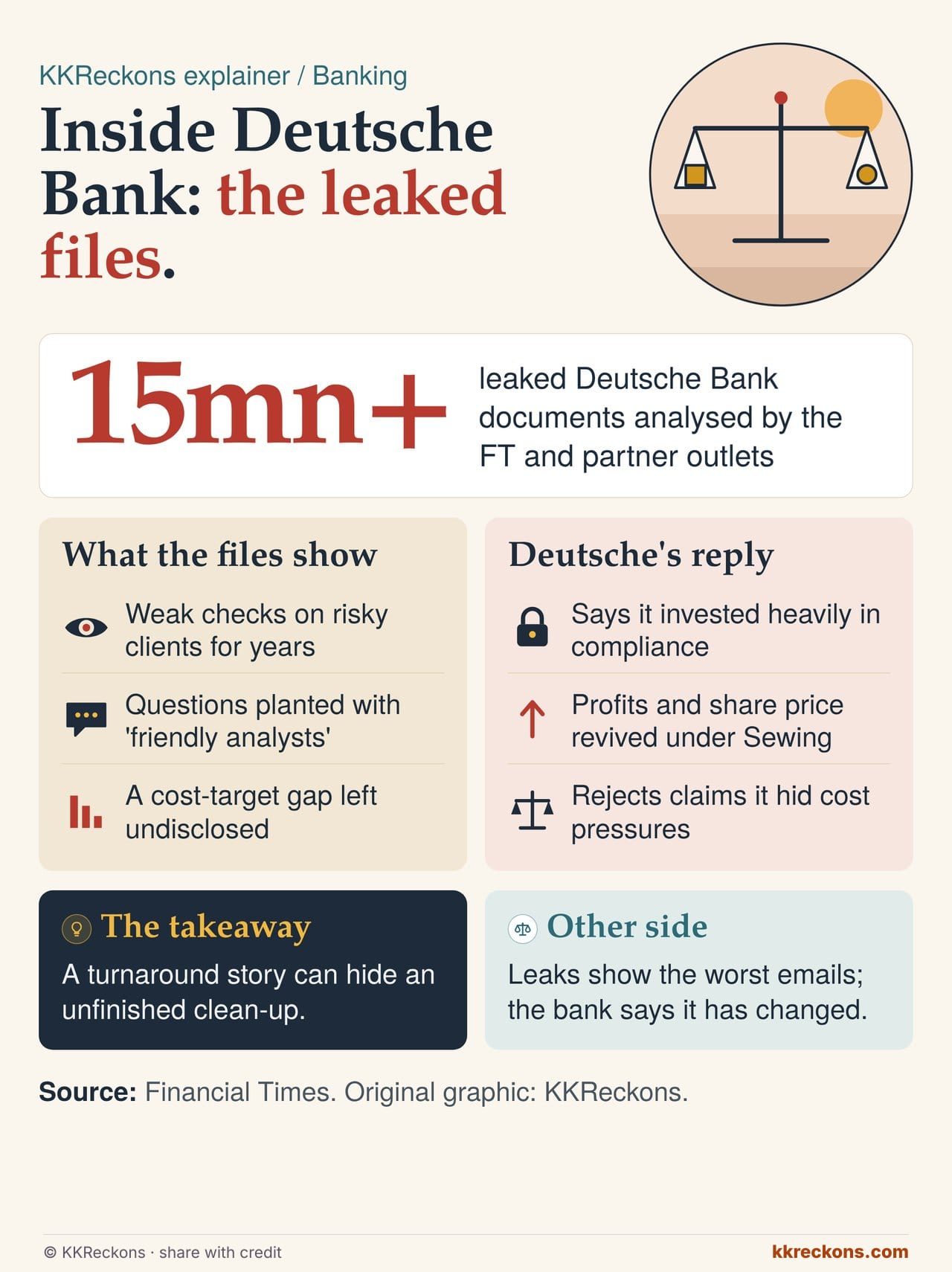
An FT-led investigation of more than 15mn leaked Deutsche Bank documents shows deep control problems under CEO Christian Sewing, who publicly promised a "more boring" bank but at times pushed internally for more risk.
The files show years of weak client vetting, a regulator calling controls "a shambles", staff planting questions with friendly analysts on earnings calls, and a cost-target gap that went undisclosed.
Deutsche says it is "a different bank today" and rejects claims it obscured cost pressures.
15mn+
leaked documents analysed
€18.6bn
paid to settle litigation and regulatory actions since 2012
Why it matters If controls this weak survived a celebrated turnaround at Europe's flagship lender, investors should ask how much of any bank's clean-up story rests on what is disclosed rather than what is fixed. Planted analyst questions are a reason to read earnings calls with care.
Other side Deutsche says its client-vetting fixes were largely done by 2024, and its profits and share price have revived under Sewing. Leaks surface the worst emails, not the full record, and much of this dates back years.